
Mara: Mara is a malignant celestial Asura king in Buddhist mythology who personifies the forces of desire, death, and rebirth.
-8e69bafd-5254-471a-b649-660f2188fd05_small.webp "Mara - Mara embodies the forces of desire, death, and rebirth, serving as a perpetual obstacle to spiritual awakening in Buddhist teachings.")
Mara
Mara - Mara embodies the forces of desire, death, and rebirth, serving as a perpetual obstacle to spiritual awakening in Buddhist teachings.
Origins & First Encounters
Mara stands as a formidable figure in Buddhist tradition, emerging as the malignant celestial Asura king whose very presence challenges the path to enlightenment. His origins are interwoven with tales of the cosmic struggle between desire and spiritual awakening, where he epitomises the forces that obstruct inner liberation. Early Buddhist scriptures record his interference during the meditative ascent of Prince Siddhartha, setting the stage for his enduring role as the tempter. His narrative reflects a deeper cultural allegory, where the battle against Mara symbolises the human quest to overcome self-delusion and passion. The myth of Mara encapsulates the interplay of death, rebirth and desire, inviting spiritual aspirants to confront their inner shadows. Within the rich tapestry of Buddhist cosmology, his interventions are seen not only as external temptations but as manifestations of internal hindrances. The legend conveys a timeless message about the persistence of doubt and the necessity for inner vigilance. Across the centuries, Mara's story has resonated with audiences eager to decode the perennial obstacles on the journey toward spiritual awakening.
Source Texts & Tale Variants
Ancient texts such as the Pali Canon and later Mahayana sutras offer a diverse account of Mara’s persistent challenges against the spiritual pursuit of enlightenment. His story is recounted with vivid detail in narratives that describe his attempts to seduce the future Buddha with visions of irresistible beauty and splendour. Various versions of his tale reveal his multifaceted personality, with some texts focusing on his overt aggression while others highlight his insidious inner influence. The canonical accounts commonly depict him as a literal celestial antagonist whose interventions underscore the inherent struggles of the human spirit. Alternative story variants found in commentarial literature and regional folklore expand his character into a metaphor for the internal conflicts that hinder spiritual growth. Many of these texts present Mara as not only an external force but as a symbolic personification of the temptations and distractions that arrest mental clarity. Over time, retellings have infused his narrative with layers of allegorical meaning that continue to be explored by both practitioners and scholars alike. The enduring interest in his myth has fostered a dynamic body of literature in which poetic and doctrinal interpretations contribute to his complex character. His story remains a central motif in discussions on the nature of suffering, desire, and the ultimate quest for liberation.
Form & Powers
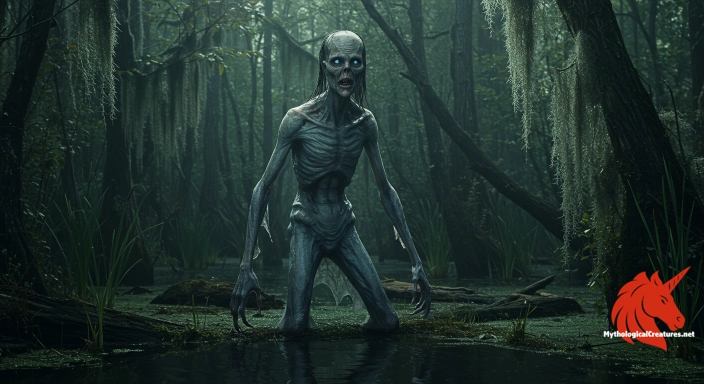
Mara is often depicted in traditional Buddhist art with a striking and ominous appearance that skilfully blends elements of beauty and terror. His form is portrayed as both commanding and unsettling, with features that evoke a sense of otherworldly power. Iconography frequently presents him with intense, penetrating eyes and a grim, fanged visage that reflects his role as the embodiment of temptation and death. Some depictions include multiple limbs or heads, symbolising the manifold challenges he poses to the spiritual seeker. The presence of ornate, sometimes menacing armour underscored by motifs of decay and darkness further enhances his terrifying allure. His celestial regalia is intermingled with symbols of impermanence, encapsulating the dual aspects of seductive allure and formidable dread. Artists often choose rich, dark colours combined with flashes of ethereal light to convey his ambiguous nature as both a disruptor and a reflection of internal fears. Across various media – from ancient frescoes to intricately carved sculptures – Mara’s visual representation varies subtly, yet always communicates his fundamental essence as a force of disruptive desire and existential peril. These detailed artistic portrayals invite viewers to contemplate the deeper spiritual lessons embodied by his spectral form.
Regional Faces
Mara’s portrayal exhibits striking variations across the regions where Buddhism has taken root, reflecting the unique cultural lenses of each area. In South Asia, where Buddhism first flourished, he is often rendered with an intensity and raw power that emphasises his primal, antagonistic nature. East Asian traditions, particularly within Chinese and Japanese Buddhism, tend to portray him with a more nuanced, almost spectral quality, aligning his image with local artistic sensibilities. In Tibet, Mara is sometimes merged with indigenous deities of desire and illusion, resulting in rich, colourful iconography that marries traditional symbolism with local myth. His character is adapted in myriad ways, with some cultures focusing on his military aspect and others stressing his metaphorical representation of inner obstacles. Local legends have sometimes reimagined Mara as a composite of both external villainy and internal tumult, blending the boundaries between myth and psychological allegory. The accompanying celestial army, including figures such as his reputed daughters, is also subject to regional reinterpretation, varying in form and symbolic function from one culture to another. Despite these adaptations, the central theme of Mara as the catalyst for spiritual struggle remains consistent, offering diverse yet convergent insights into his nature across the Buddhist world.
Cultural Parallels
Across the mythologies of the world, Mara resonates with numerous figures who represent the temptations and moral dilemmas inherent in the human condition. His character finds a counterpart in the Christian tradition’s depiction of the Devil, a being whose seduction and manipulation mirror Mara’s attempts to derail spiritual progress. In Hindu mythology, the dichotomy between devas and asuras shares common ground with Mara’s luxuriant yet destructive influence, highlighting a shared cultural fascination with the battle between light and darkness. Similar to the archetypal shadow figure in Jungian psychology, Mara embodies those hidden aspects of the self that must be confronted and integrated. Comparative narratives from Greco-Roman traditions also echo the theme of a tempter disrupting the heroic quest, drawing parallels with mythic challenges faced by legendary figures. This cross-cultural analysis underscores a universal motif: the struggle against internal and external forces that impede the journey towards enlightenment or personal transformation. While the specific attributes may differ, the symbolic role of Mara is akin to that of other mythic antagonists who tempt heroes to abandon their noble paths. Contemporary interpretations continue to draw on these parallels, integrating ancient myth with modern insights into human psychology. The enduring resonance of such figures confirms the timeless appeal of narratives that explore the nuanced interplay between desire, temptation, and transcendence.
Legacy & Modern Evolution
The evolution of Mara’s character from ancient scripture to modern cultural expressions reflects a profound shift in how spiritual challenges are understood and articulated. Early depictions in canonical texts cast him as a formidable, almost mythic force external to the individual, a literal adversary challenging the journey to enlightenment. Over time, his representation has broadened, transcending the purely external to become a symbol of the internal battles that characterise the human experience. Modern reinterpretations often portray Mara as a complex amalgam of psychological states – a mirror to the inner doubts, fears, and distractions that beset contemporary life. Artistic and literary modernisations have reimagined his terrifying visage into abstract forms that evoke mental struggles rather than overt demonic figures. In today's globalised culture, Mara appears in films, graphic novels, and digital art, where he is recontextualised as a metaphor for the incessant battle within modern minds. His symbolic weight is now frequently leveraged in discussions on mindfulness and personal development, resonating with audiences eager to understand the dynamics of desire and self-sabotage. The transformation in his narrative illustrates a dynamic cultural journey, reflecting both continuity with ancient spiritual wisdom and an adaptive response to modern existential challenges. As the dialogue between traditional myth and contemporary psychology deepens, Mara remains a potent emblem of the eternal struggle between the light of insight and the shadows of distraction. His legacy endures not only as a mythic adversary but also as an enduring symbol of the inner journey commanded by everyday existence.
Interesting Fact
Mara's role as both a literal and symbolic hindrance to enlightenment highlights the intricate interplay between internal desires and the path to spiritual freedom in Buddhist thought.
Curated sponsor space
One subtle banner. Thousands of myth lovers.
We offer a small number of curated sponsor spots for relevant books, courses, games, and art. No clutter, just well-matched partners.
Partner with usQuick Creature Info
Features:
Associations:
Our Mythic Legendary Rating:

Habitat:
Supernatural Powers:
Physical Attributes:
Abilities:
Behavior:
Weaknesses:
Lore:
Related Creatures, Tales or Lore
- SSatan (Christianity)
- AAhriman (Zoroastrianism)
- YYama (Buddhist/Hindu)
References
Discover Another Mythical Legend You May Not Have Heard Of?
Uncover the mysteries of ancient folklore and expand your knowledge of legendary beings from cultures around the world.
Dare to Meet the Topielec....
Curated by the Mythological Creatures Team
Series editor: Mythological Creatures Directory
Primary desk: Asian & Pacific Myth Cycles Desk
(rev. November 2025)