
Matarajin: Matarajin is a Buddhist god venerated in the Tendai school of Japanese Buddhism.
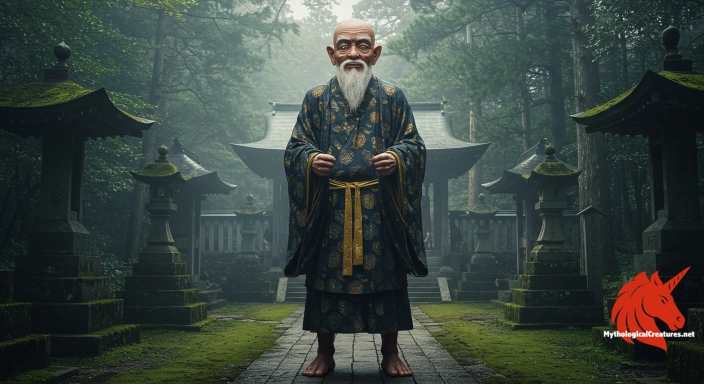
Matarajin
Matarajin - Represents the dual nature of wrath and protection within Buddhist cosmology, embodying both the obstructive and salvific aspects of divine power
the legend in five swipes.
the legend in five swipes.
The Origin Story of Matarajin
Matarajin emerges as a uniquely compelling figure within the tapestry of Japanese Buddhism, especially among followers of the Tendai school. His early character, marked by an intimidating and wrathful mien, was originally designed to obstruct the path to rebirth and challenge the impure forces of the cosmos. Conceived in a time when divine obstacles were both feared and revered, he symbolised the fierce energies needed to temper spiritual waywardness. Over time, however, his persona underwent an intriguing transformation—shifting from a terror-inducing obstacle to a protective guardian of the faithful. This evolution intersects with the broader cultural shifts in Japan, where the divine often assumed dual roles as both adversary and benefactor. Centred in major centres like Enryaku-ji on Mount Hiei, his presence underscores the deep integration of imported Buddhist elements with indigenous spiritual sensibilities. Matarajin’s journey from a formidable god of obstacles to an emblem of protection and cosmic destiny reflects a synthesis of rigorous doctrinal practice with local artistic expression. The melding of his wrathful origins with later, more benevolent depictions illustrates a dynamic narrative that honours both fear and redemption. Ultimately, his enduring myth exemplifies the capacity of religious figures to evolve, adapting ever more harmoniously to the spiritual needs of successive generations.
Which texts first mention Matarajin?
Ancient ritual texts and temple records offer a nuanced insight into the early worship of Matarajin, revealing details of his formidable roles as both an obstacle to impure existence and a guardian of spiritual realms. These sources, often embedded in the liturgical traditions of the Tendai school, highlight his initial depiction in elaborate, multi-armed forms designed to ward off malevolent entities. Ritual manuscripts and the enigmatic Genshi Kimyō-dan rites serve as key textual testimonies to his varied roles, ranging from a deterrent to a divine protector against demonic incursions, including those by tengu. Supplementary folklore, passed down orally and enriched through local traditions, adds layers of interpretation that emphasise both his fearsome and benevolent aspects. Artistic depictions found within temple murals and mandalas further corroborate the layered narratives drawn from these primary sources. The fragmented yet evocative records suggest that his iconography was not static but responsive to the evolving religious climate in medieval Japan. Distinct narratives within these documents illustrate conflicting yet complementary aspects of his nature, thereby inviting continual reinterpretation. As these varied sources intertwine, they weave a vibrant picture of a deity whose mythos adapts to both textual and ritual expressions. In sum, the available sources and story variants help maintain an enduring, albeit enigmatic, presence in the religious memory of Japan.
Matarajin: What Manner of Being?
Matarajin’s physical representations offer one of the richest illustrations of religious transformation in Japanese iconography. In his earliest portrayals, he is depicted with multiple heads and a myriad of arms, each limb laden with symbolic objects that underscore his ability to combat malevolent forces. This multi-faceted appearance was intended to evoke a sense of overwhelming divine power and to instil awe among devotees. Over subsequent generations, however, his fearsome iconography gradually softened into that of a venerable and smiling elderly man, who dons the refined attire of a traditional Japanese aristocrat. This later representation highlights not only a shift in aesthetic values but also a re-interpretation of his role—from terror to safeguard. In many regions, the use of the okina mask during ritual performances symbolically channels his presence, linking him to the realm of performing arts and communal celebration. Variations in size, adornment, and facial expression across different depictions reveal a deliberate attempt to balance ferocity with benevolence. The evolution of his visual form stands as a testament to the mutable nature of myth, wherein physical depictions harmonise symbolic intent with cultural values. Overall, his evolving bodily portrayal encapsulates a journey from overwhelming wrath to approachable wisdom and charm.
The Geography of the Matarajin Legend
Throughout Japan, the veneration of Matarajin reflects a dynamic interplay between central religious doctrine and localized ritual adaptations. In the heartland of Tendai Buddhism on Mount Hiei, his original, ferocious image remains closely linked to temple rites and the safeguarding of sacred spaces. Conversely, in more rural and community-focused settings, his character is celebrated in a gentler light, often interwoven with festivities such as the celebrated ox festival at Kōryū-ji. In these regions, his iconography is sometimes retained in its older, multi-headed form to preserve the ancient aura of invincibility. Yet, other areas have embraced his later, more affable visage, adapting his image to local tastes that value protection blended with benevolence. This regional diversity is further enriched by the syncretic merging of indigenous kami traditions with imported Buddhist symbols. As a result, different communities project distinct aspects of Matarajin’s personality—ranging from a stark guardian against demons to a patron of the performing arts. Such local adaptations not only preserve ancient practices but also encourage innovative reinterpretations tailored to regional spiritual needs. Thus, Matarajin’s varied manifestations illustrate the fluidity of myth, resonant with the multifarious character of Japanese cultural identity.
Do other traditions know Matarajin by another name?
Matarajin’s intricate character invites a wealth of comparative analysis with similar deities across both Buddhist and indigenous traditions. His early, multi-armed, wrathful iconography finds a close parallel in the fierce Mahakala, whose presence in Tibetan Buddhism similarly marries ferocity with a protective purpose. The melding of seemingly contradictory aspects—wrath and benevolence—mirrors the complex duality observed in figures such as Shinra Myōjin, highlighting a shared thematic concern with cosmic balance. An additional point of comparison arises with the Japanese kami Susanoo, whose tempestuous actions and protective tendencies echo Matarajin’s mythic responsibilities. Furthermore, as his image later softened into that of a wise, smiling elder, echoes of Greco-Buddhist iconography become evident, reflecting a cross-cultural dialogue on the transformation from wrath to wisdom. These interwoven narratives reveal that while Matarajin is deeply rooted in the Tendai tradition, his iconographic and mythological traits resonate with a broader Asian aesthetic. The overlapping qualities across these cultural figures underscore universal themes of protection, renewal, and the reconciliation of fear with compassion. By comparing these diverse traditions, one observes a common human endeavour to embody strong yet benevolent forces against the chaos of existence. In this manner, Matarajin remains a potent symbol within a global mosaic of mythological guardians.
How has the image of Matarajin evolved?
The historical journey of Matarajin is marked by a gradual yet profound transformation that echoes the evolving spiritual landscape of Japan. Initially revered as an awe-inspiring god of obstacles with a fearsome aspect, he eventually took on the role of a protective deity, embodying the duality of retribution and benevolence. Despite the decline in his formal worship during the Edo period—prompted by efforts to reform and standardise religious practice—his myth has left an indelible imprint on Japanese cultural consciousness. Localised celebrations, such as the ox festival at Kōryū-ji, continue to draw on his enduring imagery, preserving his legacy through vibrant communal rites. The rare unveiling of his hidden statue at Mōtsū-ji, visible only once every thirty-three years, further accentuates the mystique that surrounds his persona. Modern interpretations in art and literature have reimagined him as a symbol of resilience and the transformative power of myth. In recent times, scholars and devotees alike have revisited his iconography, accentuating the synthesis of ancient terror and modern benevolence. His enduring evolution reflects not only the adaptability of religious figures but also the ever-changing values of society. Ultimately, Matarajin stands as a timeless emblem of the perpetual interplay between divine wrath and compassionate guidance, inspiring reverence and reflection across generations.
Interesting Fact
His hidden statue at Mōtsū-ji can only be seen once every thirty-three years, a rarity that underscores his mystique.
Mythological Treasures
Japanese Yokai: A field guide to the spirits and demons of Japanese folklore
Fifteen spirits, with the signs to watch for and what the old tales say to do if you meet one.
Egyptian Legends: A field guide to the gods and monsters of ancient Egypt
Guardians of the living and devourers of the dead, with the role each played in judgement.
Chinese Beasts: A field guide to the dragons and demon kings of Chinese myth
From river dragons to demon kings, with the legends that shaped five thousand years of storytelling.
the legend in five swipes.
For serious mythcraft
Your project belongs among the legends
If your work deepens how people understand, play with, or teach mythology, a sponsor placement here keeps it in front of the right readers all year.
Submit a sponsorship enquiryQuick Creature Info
Associations:
Our Mythic Legendary Rating:

Also Sometimes Known As:
Habitat:
Supernatural Powers:
Physical Attributes:
Abilities:
Behavior:
Lore:
Related Creatures, Tales or Lore
- FFudō Myōō
- MMahakala
- AAcala
References
Discover Another Mythical Legend You May Not Have Heard Of?
Uncover the mysteries of ancient folklore and expand your knowledge of legendary beings from cultures around the world.
Dare to Meet the Ispolin....

The Mythological Creatures Book Series
Yokai, Greek, Norse, Egyptian & Chinese. Five illustrated field guides to the creatures the old stories either warned or told you about.




Curated by the Mythological Creatures Team
Series editor: Mythological Creatures Directory
Primary desk: Asian & Pacific Myth Cycles Desk
(rev. November 2025)