
Maung Po Tu: Maung Po Tu is a revered figure from the Burmese pantheon of nats, once a tea trader who became deified after a fatal tiger attack.
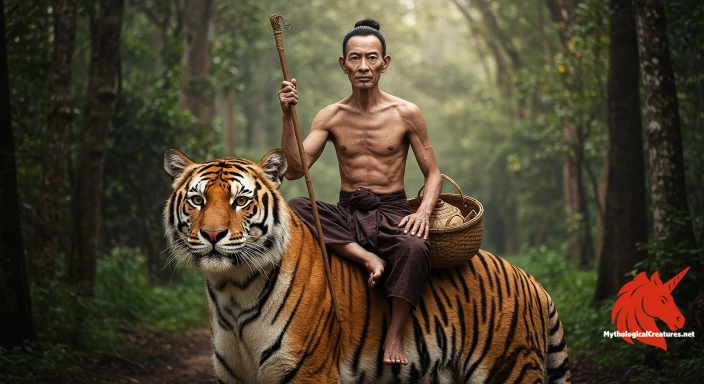
Maung Po Tu
Maung Po Tu - Maung Po Tu is revered for his role in safeguarding traders and ensuring prosperous business ventures, reflecting the blend of mortal life and spiritual elevation in Burmese culture.
the legend in five swipes.
the legend in five swipes.
What culture created Maung Po Tu?
Maung Po Tu stands as one of the revered 37 nats in the Burmese pantheon, embodying the intersection of everyday commerce and transcendent spirituality. He began life as a humble tea trader during the reign of King Minkhaung I of Ava, a period marked by vibrant trade and cultural exchange in Burma. His transformation into a nat is celebrated as a testament to the extraordinary potential hidden within ordinary pursuits. His life, intertwined with the fortunes of local commerce, highlights how even mundane activities can become infused with divine significance. The tragic circumstances of his death—struck down by a tiger on his journey to Shan State—add a layer of poignancy to his legacy. His story has been embraced as a symbol of both sacrifice and protection, endowing the figure of the trader with a celestial aura. The enduring veneration of Maung Po Tu reflects a society that values resilience, determination, and the mysterious workings of fate. Communities continue to invoke his name in times of economic uncertainty, reflecting their respect for his protective influence. The narrative of his life bridges the material and the mystical, ensuring his place in both popular memory and ritual celebration. His legend remains an enduring reminder that the sacred can emerge from the most unassuming origins.
Maung Po Tu in the Historical Record
The presence of Maung Po Tu is recorded in a variety of ancient manuscripts, temple inscriptions, and lively oral traditions that have been passed down through generations. Primary texts from the Ava period briefly allude to his legacy as a trader whose fate was sealed by a dramatic encounter with the wild. Diverse narratives emerging from local performance art further embellish his journey, adding layers of mythic detail to the succinct historical accounts. Variations in his story are evident in folk plays and traditional recitations performed during significant religious festivals. Some accounts underscore his bravery in the face of imminent danger, while others focus on the inevitable nature of his demise. In temple murals and carved statues, subtle differences in iconography capture distinct regional interpretations of his character. These multiple sources contribute to a dynamic and evolving portrayal that has enriched his myth over centuries. Even in regions where written records are sparse, oral histories ensure that his tale is both heard and revered. The synthesis of archaeological evidence and living tradition continues to uphold his status as a guardian spirit. As a result, Maung Po Tu’s story remains a vibrant narrative woven into the fabric of Burmese cultural and spiritual life.
What powers did Maung Po Tu have?
Maung Po Tu is most recognisable through the striking imagery of him seated upon a majestic tiger, a motif that visually fuses human endeavour with the ferocity of nature. He is typically depicted holding a ceremonial stick in his right hand, which symbolises authority and the guidance of commerce. His left hand rests casually on his thigh, reflecting both a gesture of calm control and an implicit readiness for the challenges of trade. Traditional portrayals dress him in garments that mirror the rich cultural aesthetics of Burmese merchants, often adorned in vibrant hues and intricate patterns. His facial expression is rendered with a mix of stoic determination and gentle kindness, hinting at the depth of his earthly experiences. The tiger beneath him is depicted in meticulous detail, its powerful form serving as a dynamic counterpoint to his composed human demeanour. Artists frequently incorporate subtle regional embellishments into his attire and posture, ensuring that his image resonates with local sensibilities. Some representations even include traditional accessories that signify his role as a protector of trade routes and business ventures. The integration of these detailed elements not only enlivens his visual character but also reinforces the symbolic importance of his dual nature. Together, these artistic choices create a memorable and enduring icon that bridges the tangible world and the realm of the divine.
Which communities kept the Maung Po Tu tradition alive?
Regional interpretations of Maung Po Tu reveal a rich tapestry of cultural adaptation and artistic innovation across Myanmar. In areas closer to the Shan State, his narrative often incorporates local traditions that expand his role as a guardian for travellers and merchants alike. Urban centres, with their bustling markets, tend to portray him with more elaborate regalia and vivid iconography that reflects modern artistic influences. Rural communities, by contrast, preserve a simpler depiction that maintains the original elements of his story, ensuring easy recognition on the more modest local altars. Different local festivals and market celebrations add unique nuances to his tale, sometimes emphasising his heroic defiance in the face of natural danger. These regional adaptations often reconcile the ancient myth with contemporary concerns, celebrating commerce as much as spiritual protection. In some local renditions, additional symbols—such as emblems of prosperity or luck—are incorporated to further endear him to the community. Despite minor stylistic variations, the core imagery of him riding a tiger with a commanding presence remains a unifying motif. This convergence of local and traditional elements underscores the enduring versatility of his myth. Ultimately, regional variations serve to keep his legend both relevant and accessible, reflecting the diverse cultural landscape of Myanmar.
Maung Po Tu: Echoes in Other Mythologies
The story of Maung Po Tu shares fascinating parallels with similar guardian figures found across different mythological traditions. Much like the deities revered in East Asian cultures for safeguarding trade and prosperity, he embodies a dual role that intertwines everyday commercial endeavours with spiritual guardianship. His transformation from mortal to divine finds an echo in figures such as those in Indian lore, where extraordinary individuals are often deified posthumously. This intermingling of human frailty and supernatural strength is reminiscent of other cultural icons who have become protectors of specific social roles. The emblematic image of him riding a tiger also draws a parallel with myths in which humans forge deep, dynamic bonds with wild creatures, symbolising control over nature’s unpredictability. In many traditions, commerce is accompanied by invocations of luck and protection, a theme that is clearly present in his story. His myth, therefore, acts as a bridge between local Burmese beliefs and broader pan-Asian spiritual practices that celebrate the divine in daily life. Comparative analysis reveals that while the specific narratives and iconographical details differ, the underlying function of protecting and blessing commercial activity is a common thread. Such cross-cultural resonances underscore a universal desire to secure economic well-being through the intervention of the sacred. In this way, Maung Po Tu’s legacy finds a harmonious dialogue with other traditional protective spirits around the world.
What happened to the legend of Maung Po Tu?
Over the centuries, the legacy of Maung Po Tu has evolved from a solemn tale of untimely demise into a vibrant emblem of commercial protection and communal resilience. His journey from a mortal tea trader to a revered nat is celebrated not only in traditional religious practise but also in various modern cultural expressions. Contemporary artists and craftsmen continue to reinterpret his image, ensuring that his distinctive iconography remains both fresh and relevant. His image, prominently featuring the tiger and the ceremonial stick, has been adapted into modern sculptures, paintings, and even wearable talismans. Modern festivals and market celebrations often include theatrical depictions and ritual honours that reconnect his ancient story with current aspirations. As the economic landscape evolved, traders and entrepreneurs in Myanmar have come to see him as a symbol of safe ventures and prosperity. His enduring popularity is a testament to the powerful blend of historical narrative and cultural symbolism that continues to inspire faith and respect. Films, literature, and popular media have all contributed to reimagining his tale for a new generation while retaining its traditional core. The evolution of Maung Po Tu highlights the remarkable capacity of myth to adapt over time, continually resonating with changing societal values. Today, his legacy not only preserves a historical memory but also inspires ongoing dialogue between the past and the future, affirming the timeless connection between commerce and the divine.
Interesting Fact
Maung Po Tu's unique depiction riding a tiger not only highlights his fierce determination but also symbolises the harmonious blend of human ambition and the wild forces of nature.
Mythological Treasures
Japanese Yokai: A field guide to the spirits and demons of Japanese folklore
Fifteen spirits, with the signs to watch for and what the old tales say to do if you meet one.
Greek Myths: A field guide to the monsters of ancient Greece
Every monster here earned its place in legend, and each gets a full page of artwork and the story behind it.
Norse Sagas: A field guide to the beasts of the Viking world
Drawn from the saga accounts themselves, with the powers, weaknesses and doom of each being set out.
the legend in five swipes.
Curated sponsor space
One subtle banner. Thousands of myth lovers.
We offer a small number of curated sponsor spots for relevant books, courses, games, and art. No clutter, just well-matched partners.
Partner with usQuick Creature Info
Origin:
Features:
Associations:
Our Mythic Legendary Rating:

Habitat:
Supernatural Powers:
Physical Attributes:
Abilities:
Behavior:
Lore:
Related Creatures, Tales or Lore
- MMin Mahagiri
- MMaung Tint De
- BBo Bo Gyi
References
Discover Another Mythical Legend You May Not Have Heard Of?
Uncover the mysteries of ancient folklore and expand your knowledge of legendary beings from cultures around the world.
Dare to Meet the Ianeira....

The Mythological Creatures Book Series
Yokai, Greek, Norse, Egyptian & Chinese. Five illustrated field guides to the creatures the old stories either warned or told you about.

Curated by the Mythological Creatures Team
Series editor: Mythological Creatures Directory
Primary desk: Asian & Pacific Myth Cycles Desk
(rev. November 2025)