
Minoan Genius: The Minoan Genius is a legendary creature from the Bronze Age Minoan civilization in Crete.
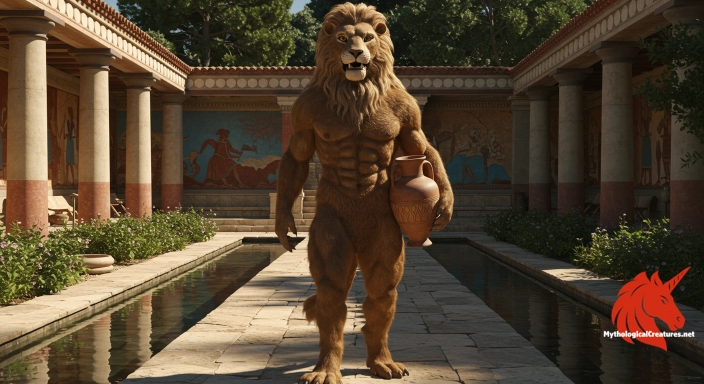
Minoan Genius
Minoan Genius - Represents a benign daemon or genius figure integral to Minoan religious practices and the ritual offering of libations.
Origins & First Encounters
The Minoan Genius emerges as one of the most enigmatic figures within Bronze Age Crete, captivating viewers with its intricate blend of animalistic and divine features. It was conceptualised during a period when religious symbolism permeated every aspect of life, making it a central motif in ritual art. Some of the earliest depictions appear on seals from grand Minoan palaces, where its presence underscored the connection between human and divine realms. The figure is often portrayed as a supporting spirit in depictions of deities, suggesting that it played a significant role in ceremonial libations and offerings. Its very name implies a connection to a benevolent spirit, a daemon that operates within the subtle boundaries between good fortune and natural power. Cultural practices at the time celebrated the mystery of nature, and this creature epitomised the merging of terrestrial and celestial energies. Owing to its composite imagery, scholars often debate whether it symbolised the potency of nature, the wisdom of the divine, or simply the mysteries of the unknown. With its multi-animal features and supportive depictions, the Minoan Genius continues to inspire a sense of wonder about the ancient world. Its legacy is deeply interwoven with the rituals and artistic traditions of a civilisation that valued both beauty and spiritual depth. Ultimately, this figure stands as a testimony to the sophisticated mythologies developed in ancient Crete.
Source Texts & Tale Variants
The primary evidence of the Minoan Genius is found predominantly on seals and small artefacts unearthed at key Minoan sites. Visual representations on these media offer an invaluable window into the symbolic language of the time, as written records remain scarce. Depictions often show the creature in pairs alongside deities, emphasising its role as a supportive or intermediary figure in ritualistic settings. Diverse artistic techniques have preserved multiple variations of the motif, each adding nuances to its perceived function in ceremonies. The recurring motif of the creature bearing water vessels in these images has contributed to interpretations of it as a libation bearer. While the artefacts themselves are fragmented, their consistent presence across different excavation sites attests to its widespread cultural significance. Some story variants, inferred from visual cues, suggest a narrative of benevolence rather than malevolence. The interpretative challenges posed by these sources have spurred lively academic debates that continue to fuel research into Minoan religious practices. These varied depictions have enriched our understanding of how the ancient Minoans visualised the interplay between the natural and the divine. Each fragment serves as a small piece of the broader mosaic that recounts the spiritual artistry of an ancient civilisation.
Form & Powers
The physical form of the Minoan Genius is a study in duality, merging the features of both fearsome beasts and sacred guardians. In some images, its head mirrors the noble visage of a lion, complete with a flowing mane that symbolises power and regality. Other depictions bestow upon it the robust, rounded features reminiscent of a hippopotamus, suggesting strength and an earthy connection. Its body is rendered with an elegant fluidity, combining contours that hint at both vitality and an otherworldly grace. The creature is often adorned with intricate details, including subtle patterns and markings that could denote a ritualistic significance or spiritual protection. It is commonly shown with accessories such as water vessels, which accentuate its role in the ceremonial act of libation. Various artist strokes indicate a size that ranges from modest to monumental, reflecting potential variations in regional interpretations. The blending of animalistic traits with abstract artistic flourishes creates an impression of a form that is neither fully mortal nor divine. Rich with texture and symbolic detail, every aspect of its anatomy appears designed to invoke reverence and awe. Thus, the physical characteristics of the Minoan Genius serve as a visual allegory for the mysteries of nature and the divine order.
Regional Faces
Regional depictions of the Minoan Genius reveal a fascinating diversity that mirrors the local practices and cultural emphases of ancient Crete. In central hubs like Knossos, the creature is rendered with a refined, almost ornamental precision, reflecting the sophisticated aesthetics of palace culture. Rural variations, on the other hand, exhibit a more rugged and elemental style, suggesting influences from local mythologies. Some areas favour the lion-headed variation, which may symbolise sovereignty or regal power, while other regions opt for the hippopotamus-like form, associating it with earthly abundance and fertility. Local variations in scale, posture, and decorative motifs have been identified in artefacts discovered at distinct Minoan sites, thereby enriching the overall narrative. The regional adaptations underscore how different communities tailored the creature’s image to resonate with local religious or natural phenomena. Variations in style offer a unique insight into how local art and symbolism can alter the depiction of a seemingly uniform mythic figure. This interplay of regional characteristics illustrates the dynamic exchange of ideas across the ancient island. In effect, the multiplicity of regional representations supports the interpretation of the Minoan Genius as a multifaceted symbol, adaptable to a range of cultural contexts. Each variant contributes its flavour to the broader tapestry of Minoan religious expression.
Cultural Parallels
The Minoan Genius finds intriguing parallels in other ancient cultures, where hybrid creatures often symbolised liminal spaces between the mortal and the divine. Similar figures appear in Greco-Roman traditions as guardian daemons or genius loci, embodying the protective spirit of a place or a community. Comparisons can also be drawn with composite deities in Egypt and the Near East, where the merging of animal and human traits served to elevate the natural world to a divine status. The creature’s dualistic nature, capturing both ferocity and benevolence, resonates strongly with cross-cultural themes of liminality and transformation. While the Minoan Genius uniquely reflects the artistic styles of Bronze Age Crete, its thematic resonances echo in later medieval and Renaissance artworks that explore the union of nature and spirituality. The shared motif of a libation bearer is similarly present in other ancient depictions where water and nourishment symbolise divine favour. Artistic comparisons further reveal that the hybrid aesthetics, central to the Minoan figure, were later adopted in various regional mythologies. Such cross-cultural comparisons help illustrate a universal desire to bridge the gap between the natural and supernatural worlds. The recurring elements of guardian spirit and ritual facilitator underline a continual human fascination with invoking unseen forces. Ultimately, the Minoan Genius serves as a nexus point linking disparate mythological traditions through its evocative hybrid symbolism.
Legacy & Modern Evolution
The evolution of the Minoan Genius from its ancient origins to its modern reinterpretations underscores the enduring power of myth and art. Over time, its imagery underwent interpretative shifts as later cultures absorbed and transformed the iconography according to new religious and artistic paradigms. As classical traditions emerged, the creature’s role was reframed within the broader narratives of daemons and guardian spirits, bridging antiquity and medieval thought. Its ancient function as a libation bearer and supportive deity figure laid the groundwork for later symbolic expressions in European art. In modern times, revived interest in Minoan civilisation has brought the creature back into the academic and public spotlight, inspiring exhibitions and creative projects. Contemporary artists have reimagined its form in various media, blending historical detail with imaginative reinterpretation. The Minoan Genius now serves as an emblem of both cultural resilience and the timeless quality of myth. Its iconic imagery continues to inform the fields of archaeology, art history, and modern artistic endeavours. This transformation mirrors a broader shift in our understanding of ancient symbols, where reinterpretation fuels both scholarly debates and popular fascination. Ultimately, the legacy of the Minoan Genius remains a compelling reminder of how ancient symbols evolve to continuously inspire new generations.
Interesting Fact
An intriguing aspect of the Minoan Genius is its variable depiction, where it embodies diverse animal traits, reflecting the Minoan belief in the fluidity of divine representations.
Limited sponsor opportunity
One slot, carefully chosen partners
We only feature a small number of relevant sponsors at any time. If you create serious myth content, we would like to hear from you.
Partner with usQuick Creature Info
Origin:
Features:
Associations:
Our Mythic Legendary Rating:

Also Sometimes Known As:
Habitat:
Supernatural Powers:
Physical Attributes:
Abilities:
Behavior:
Lore:
Related Creatures, Tales or Lore
- DDaimon
- RRoman Genius
- GGuardian Spirit
References
Discover Another Mythical Legend You May Not Have Heard Of?
Uncover the mysteries of ancient folklore and expand your knowledge of legendary beings from cultures around the world.
Dare to Meet the Penhill Giant....
Curated by the Mythological Creatures Team
Series editor: Mythological Creatures Directory
Primary desk: Hellenic & Ancient Mediterranean Desk
(rev. November 2025)