
Móði and Magni: Móði and Magni are the formidable sons of Thor in Norse mythology, whose names mean 'Wrath' and 'Mighty' respectively.
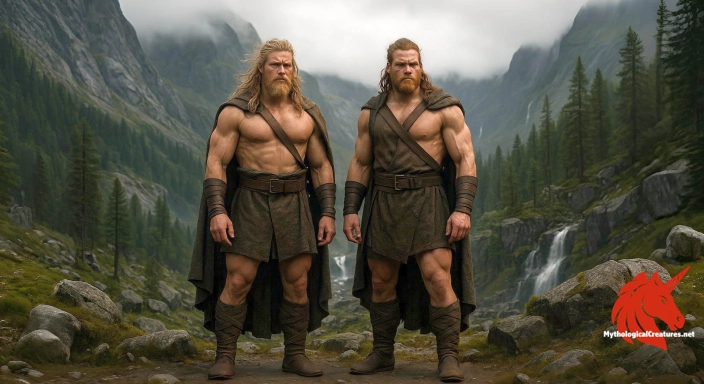
Móði and Magni
Móði and Magni - Represent the continuation and embodiment of Thor's legacy in Norse mythology
the legend in five swipes.
the legend in five swipes.
How did the legend of Móði and Magni begin?
Móði and Magni emerge as compelling figures in Norse mythology, born from the mighty lineage of Thor and embodying profound aspects of his character. Their very names, signifying 'Wrath' and 'Mighty', offer a glimpse into the dual forces of passion and strength that they carry. They were introduced into mythic narratives during an era when divine ancestry and heroic bloodlines were central to understanding the cosmos. In the evolving sagas, these sons of Thor represent not only inherited power but also the volatile temperament inherent in the natural world. Their stories, though not as extensively chronicled as some other deities, reflect the complex interplay between human emotion and divine might. Emerging from poetic kennings and fragmentary texts, they offer insights into the Norse cultural emphasis on both relentless determination and physical prowess. Their origins are intricately linked with a world where divine and mortal realms blend into a tapestry of heroic endeavour. Over time, they have come to symbolize the raw, unbridled forces that resonate deeply within the Norse mythological tradition.
What sources tell us about Móði and Magni?
The legacy of Móði and Magni is preserved through a mosaic of poetic fragments and narrative verses from the ancient Norse corpus. Texts such as Hymiskviða, Þjóðsdrápa, and Hárbarðsljóð provide early references that enshrine their connection to Thor. The recurring use of kennings like 'Móði’s father' and 'Magni’s father' highlights the centrality of their divine heritage in skaldic tradition. Snorri Sturluson’s works, notably in Gylfaginning and Skáldskaparmál, further affirm their roles within the mythic hierarchy. Different recensions and story variants embellish their characters, sometimes focusing on distinct qualities like unyielding fury or overwhelming strength. In various literary fragments, the emphasis on lineage and inherited attributes weaves a rich narrative tapestry around their persona. Some versions even delve into maternal connections, especially in the case of Magni, by linking him with the giantess Járnsaxa. These diverse sources collectively offer a multifaceted view, inviting both ancient audiences and modern readers to interpret their mythic significance in varied lights.
Móði and Magni: What the Legends Describe
Although scarce in detailed physical description, imaginations of Móði and Magni evoke striking visual impressions that underscore their divine heritage. Móði is often envisioned with eyes that burn with the intensity of battle, his expression capturing an inner flame of fierce determination. His features, though not elaborately chronicled, suggest a lithe and agile form that mirrors the volatile nature of wrath itself. In contrast, Magni is portrayed as a paragon of robust physicality, with a stature that hints at an almost superhuman strength. Artistic interpretations sometimes embellish his form with an aura of elemental power, as if every sinew is charged with the force of thunder. Subtle motifs drawn from skaldic imagery even suggest that both bear a distinctive radiance, a hint at their divine origin. Their appearances, although largely the product of literary allusion, continue to offer rich material for visual and symbolic exploration. These enduring images serve as a testament to the creative minds that have long sought to capture the essence of Thor’s potent legacy.
How do regional versions of Móði and Magni differ?
Across the various regions of Scandinavia, the portrayals of Móði and Magni have absorbed unique local nuances, reflecting a rich diversity in mythic reinterpretation. In Iceland, they are sometimes depicted as evoking the untamed spirit of nature, embodying both the unpredictable fury and the steadfast resilience of the landscape. Danish and Swedish renditions often place a greater emphasis on Magni’s physical might, celebrating him as a nearly invincible hero within local lore. In some regional narratives, Móði’s role takes on a more symbolic dimension, representing the inner tumult and decisive passion essential to heroic struggle. Local storytellers have woven their characteristics into the fabric of communal identity, using their names as metaphors for strength and decisive action. Iconography and folk art occasionally capture variations of their likeness, highlighting subtle differences that resonate with regional values and aesthetics. These interpretations underscore a broader tradition where myth adapts to echo the spirit of the people and the stark landscapes they inhabit. In each locale, the duo serves as a cultural touchstone, linking ancient myth with the everyday ideals of power and endurance.
Móði and Magni: Cross-Cultural Comparisons
The dual aspects embodied by Móði and Magni find intriguing parallels in many world mythologies where divine progeny illustrate contrasting forces. Their representation of wrath and might is reminiscent of heroic figures in Greek lore, such as the labours of Heracles, who also personify the fusion of raw emotion and formidable physical strength. Similar narratives in Indo-European traditions often celebrate the offspring of powerful deities as symbols of both fierce passion and enduring power. This contrast between volatile energy and steady might echoes a universal motif found in cultures spanning from the ancient Near East to far-flung Celtic legends. In modern reinterpretations, the interplay of these attributes has even influenced contemporary portrayals of superhero mythos, where characters grapple with the balance of destructive fury and heroic strength. Literary explorations continue to draw comparisons between these Norse figures and other mythic archetypes, cementing their role as embodiments of complex, dualistic forces. The cultural resonance of such duality illustrates not only the timeless appeal of myth but also the enduring human fascination with the balance between chaos and order. Ultimately, their narrative serves as a bridge linking diverse traditions that explore the potent dynamics of inner rage and palpable power.
Móði and Magni: How the Legend Lives On
Over the centuries, Móði and Magni have experienced a subtle yet significant evolution in how they are perceived and celebrated. Their sparse yet evocative descriptions in ancient texts were later revived during the 19th-century wave of Romantic nationalism, when Norse mythology was reimagined as a source of cultural pride. Modern renditions in literature, film, and graphic novels have harnessed their symbolic weight to explore themes of resilience, defiance, and the enduring human spirit. Contemporary artists often reconfigure their images, casting them as archetypal heroes whose raw energy and might speak to modern struggles. The transition from esoteric myth to a more popular cultural icon demonstrates how ancient symbols can acquire renewed relevance in changing societal contexts. Their embodiments of wrath and strength have inspired a range of creative endeavours, influencing both avant-garde interpretations and mainstream storytelling. Academic discussions continue to uncover layers of meaning in their mythic narratives, connecting ancient lore with modern existential themes. As living symbols, Móði and Magni persist in inspiring new generations, serving as a vivid reminder of the power inherent in legends that transcend time.
Interesting Fact
Despite their relatively minor appearances in surviving texts, Móði and Magni are revered in Norse mythology for encapsulating the raw and formidable power of their father, Thor, making them symbols of inherited divine might and the cyclical nature of strength within the pantheon.
Mythological Treasures
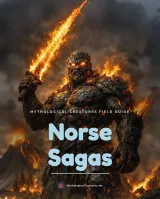
Norse Sagas: A field guide to the beasts of the Viking world
Drawn from the saga accounts themselves, with the powers, weaknesses and doom of each being set out.
Greek Myths: A field guide to the monsters of ancient Greece
Every monster here earned its place in legend, and each gets a full page of artwork and the story behind it.
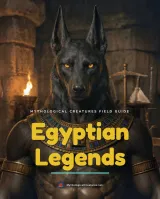
Egyptian Legends: A field guide to the gods and monsters of ancient Egypt
Guardians of the living and devourers of the dead, with the role each played in judgement.
the legend in five swipes.
For authors, artists, and makers
Created something from the realm of myth?
If your book, deck, game, or artwork draws from legendary creatures and lore, you can showcase it here in a tasteful, year-round placement.
Share your projectQuick Creature Info
Origin:
Features:
Associations:
Our Mythic Legendary Rating:

Also Sometimes Known As:
Habitat:
Supernatural Powers:
Physical Attributes:
Abilities:
Behavior:
Lore:
Related Creatures, Tales or Lore
- HHeracles
- SSamson
- CCúchulainn
References
Discover Another Mythical Legend You May Not Have Heard Of?
Uncover the mysteries of ancient folklore and expand your knowledge of legendary beings from cultures around the world.
Dare to Meet the Kumiho....
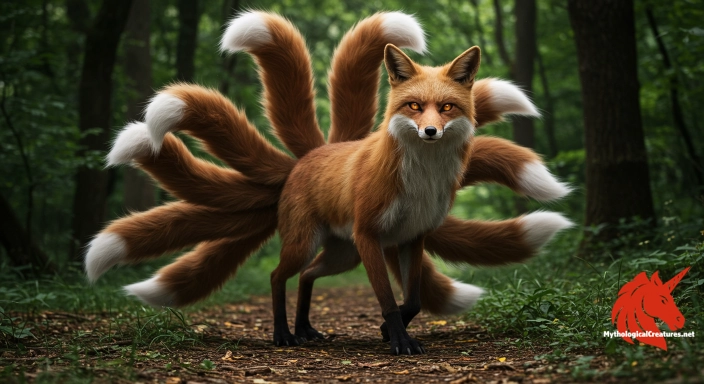
The Mythological Creatures Book Series
Yokai, Greek, Norse, Egyptian & Chinese. Five illustrated field guides to the creatures the old stories either warned or told you about.
Curated by the Mythological Creatures Team
Series editor: Mythological Creatures Directory
Primary desk: Northern & European Folklore Desk
(rev. November 2025)