
Muma Pădurii: Muma Pădurii is an ugly, mad old woman from Romanian folklore who resides deep in the virgin forests of Romania.

Muma Pădurii
Muma Pădurii - A significant folkloric figure representing the duality of nature's nurturing and retributive forces.
Origins & First Encounters
Muma Pădurii is a storied figure in Romanian folklore, embodying the mysterious and often contradictory spirit of the ancient forests. Her origins are deeply embedded in the oral traditions of rural communities, where the natural world was both revered and feared. Often depicted as an ugly, maddened old woman, she transcends simple labels of good or evil by occupying a complex role as both protector and punisher. Her earliest attestation comes from the folk tales passed down through generations within the Carpathian region. Living in the heart of virgin woodland, she symbolises the raw power of nature and the delicate balance required to maintain its integrity. Despite her unsettling appearance and capricious demeanour, she is revered for nurturing the forest, healing its wounds, and safeguarding its creatures. Her actions underline a deep-rooted belief that nature must be respected, a message that resonates with those who have long depended on and feared the wilderness. The legend of Muma Pădurii remains an enduring emblem of the intricate relationship between humanity and the natural environment.
Source Texts & Tale Variants
The narratives surrounding Muma Pădurii are primarily derived from a rich corpus of oral folklore and local folk tales passed down through generations. Multiple versions of her story have been recorded in the annals of Romanian tradition, each adding its own layer of nuance to her character. Village elders and storytellers have long recounted her exploits, ensuring that her legend remains a compelling part of the cultural fabric. In some accounts, she is portrayed as a benevolent keeper of the forest, using her profound knowledge of herbs and potions to heal both flora and fauna. In other renditions, her unpredictable temper and association with witchcraft are emphasised to warn against the perils of disrespecting nature. Written anthologies compiled during the 19th and early 20th centuries have helped to document these diverse perspectives, even if no single source provides a complete picture. Variants of the tale often highlight her duality as both a healer and a harbinger of misfortune for those who disturb the natural order. The multiplicity of these stories reflects not only regional diversity but also the evolving moral landscape of Romanian folklore. As a result, her legend is both a mirror and a moulder of the cultural values intrinsic to the areas she haunts.
Form & Powers
Muma Pădurii is vividly depicted as an ageing woman whose physical form mirrors the untamed essence of the forest. Her weathered skin and deeply etched wrinkles evoke the texture of ancient bark, suggesting a profound connection between her and the woodland. Unruly, tangled hair cascades around a face that is both grotesque and strangely captivating, hinting at the wild forces that reside within her. Her eyes, often described as glowing with an uncanny light, serve as windows to a soul that has witnessed the passage of countless seasons. Clad in tattered garments that appear to have been fashioned from the remnants of foliage and natural fibres, she embodies the raw and unrefined nature of the wilderness. Despite the frailty evident in her aged figure, there is an agile, almost predatory quality in her movements that belies her apparent weakness. Each element of her physical portrayal is deliberately designed to unsettle, combining elements of decay and renewal in a single striking image. The juxtaposition of her repulsive appearance with an undeniable aura of ancient wisdom makes her one of the most memorable personifications of nature’s dual character. In every detail, from the texture of her skin to the wild glimmer in her eyes, Muma Pădurii stands as a living testament to the enduring mystery of the natural world.
Regional Faces
Across the diverse regions of Romania, the character of Muma Pădurii is subject to numerous local interpretations that reflect the varying characteristics of the natural landscape. In Transylvania, for instance, she is sometimes depicted as residing in a secluded cabin built from weathered timber, while in other parts her home is imagined as an ancient, towering tree. Some communities visualise her as a solitary wanderer emerging from the mists during twilight, whereas elsewhere she is firmly rooted in the sacred clearings of the forest. The temperament attributed to her can also change markedly; some accounts focus on her nurturing side, emphasising her role as a healer for injured animals and dying woodlands, while others stress her more fearsome and retributive aspects. Regions with lingering pagan traditions have imbued her tale with additional layers of mysticism, linking her to the cycles of nature and the changing seasons. In the harsher northern landscapes, her legend takes on a tone of survival and resilience, matching the severity of the local environment. Local art and folk songs often capture these regional nuances, providing visual and narrative diversity to her character. This mosaic of regional depictions highlights how Muma Pădurii is continually reshaped by the unique customs and environmental challenges of each locality. Such variations not only enrich her legend but also underscore the complex interplay between human culture and the natural world.
Cultural Parallels
A broader look at European mythological traditions reveals that Muma Pădurii shares intriguing similarities with other legendary forest guardians. Her figure resonates with that of the Slavic Baba Yaga, a mysterious elder whose ambiguous relationship with both nature and humankind blurs distinctions between benevolence and malevolence. Like many woodland spirits across the continent, she embodies the paradox of the natural world, acting as both a nurturer and an avenger. This duality is a common theme in many European myths where the wild is revered as a powerful, yet unpredictable force. In literary traditions, she parallels characters from other cultures who combine elements of witchcraft with an intrinsic connection to nature, such as the enigmatic figures encountered in the darker corners of fairy tales. Her association with healing and potion-making further strengthens her links with the broader tradition of earth-based divinities and guardians in folklore. The blending of fear and respect in her depiction mirrors a universal cultural response to the untamed wilderness. By comparing her to similar mythic figures, one can appreciate the ways in which diverse cultures use folklore to symbolise the precarious balance between human civilisation and the natural environment. Such cross-cultural connections reinforce the idea that the mysteries of the forest form a shared human heritage, transcending regional boundaries.
Legacy & Modern Evolution
Throughout history, the image of Muma Pădurii has undergone a remarkable transformation, evolving from a fearsome symbol of nature’s unpredictability to an emblem of environmental stewardship and resilience. Her early portrayals, steeped in the cautionary traditions of rural folklore, served as stark warnings against the exploitation of the natural world. With the advent of modern ecological awareness, her character has been reimagined as a guardian whose rage is directed solely at those who harm the delicate balance of nature. Contemporary interpretations often highlight her role as a healer of the forest, reflecting a growing appreciation for sustainability and the intrinsic value of the natural environment. Literature, cinema, and visual arts have all drawn on her complex persona, casting her in a light that acknowledges both her historical roots and her modern relevance. In these retellings, her mischievous and enigmatic qualities are balanced with a deep-seated wisdom that speaks to current environmental concerns. Modern festivals and cultural events in Romania sometimes celebrate her as a symbol of nature’s enduring power and mystery. The evolution of her legend illustrates how traditional folklore can adapt to the needs of a changing society, bridging the gap between ancient myth and modern ecological ideals. Today, Muma Pădurii continues to serve as a potent reminder of the need for harmony between human progress and the natural world.
Interesting Fact
Muma Pădurii is often contrasted with the benevolent Zână, highlighting the complex duality of nature’s protective yet punitive forces in Romanian folklore.
Advertising opportunity
Showcase your mythology project
We offer limited sponsor placements for books, courses, games, and creators aligned with our audience.
View partnership optionsQuick Creature Info
Features:
Associations:
Our Mythic Legendary Rating:

Also Sometimes Known As:
Habitat:
Supernatural Powers:
Physical Attributes:
Abilities:
Behavior:
Lore:
Related Creatures, Tales or Lore
References
Discover Another Mythical Legend You May Not Have Heard Of?
Uncover the mysteries of ancient folklore and expand your knowledge of legendary beings from cultures around the world.
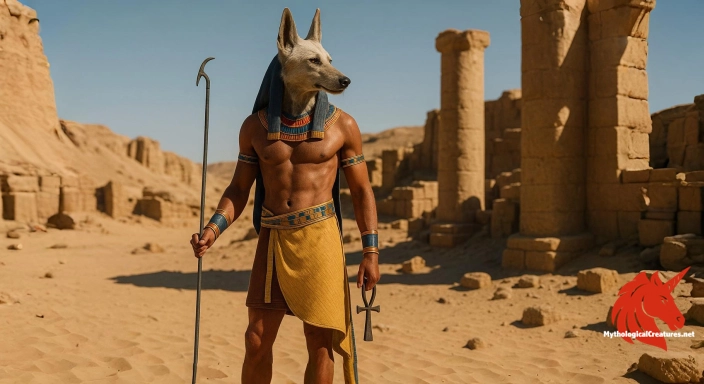
Dare to Meet the Wepwawet....
Curated by the Mythological Creatures Team
Series editor: Mythological Creatures Directory
Primary desk: Northern & European Folklore Desk
(rev. November 2025)