
Myrmecoleon: The Myrmecoleon, or Ant-lion, is a fantastical creature from classical times, known from texts such as the Physiologus and Hortus Sanitatis.
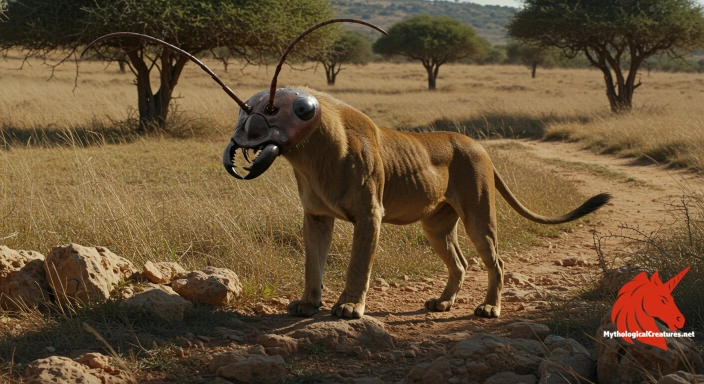
Myrmecoleon
Myrmecoleon - Represents a fusion of disparate natural elements and is an example of translation-induced myth-making from classical texts.
Origins & First Encounters
Myrmecoleon is a captivating creature of ancient lore, its name merging the diminutive ant with the regal lion in a most unusual synthesis. The beast emerges from classical antiquity, its origins steeped in both mystique and textual anomaly. It is believed that a misinterpretation in the Septuagint version of the book of Job may have inadvertently given birth to this fantastical entity.
Over time, early Christians and later medieval scholars embraced this composite figure, weaving it into their allegorical narratives. The Greek Christian Physiologus and subsequent bestiaries provided it with a life that transcended literal description, imbuing it with moral and spiritual meaning. Crafted from the juxtaposition of two starkly different creatures, Myrmecoleon serves as a subtle commentary on the nature of perception and divine irony.
Its enduring presence in myth and art underscores a fascination with the unexpected blending of humble and mighty attributes. The creature’s mythic journey reflects the dynamic evolution of storytelling from classical texts to medieval symbolic tradition. Each retelling adds a layer of complexity, ensuring that Myrmecoleon remains both enigmatic and thought-provoking across the ages.
Source Texts & Tale Variants
Early attestations of Myrmecoleon can be traced back to the Greek Christian Physiologus, a text that dates to the 3rd or 4th century A.D., where it was introduced as an emblem of allegorical meaning. This entity is thought to have originated from a scribal error within a key biblical text, lending an unintended weight to its narrative. Medieval bestiaries, such as the Hortus Sanitatis compiled by Jacob Meydenbach, later embraced the creature, further entrenching it in the lore of fantastical animals.
Throughout the centuries, the creature has appeared under various appellations, including Formicaleon, Formicaleun, and Mirmicioleon, each reflecting slight variations in its interpretation. These diverse names highlight how regional scholars and scribes adapted the myth to fit local allegorical and naturalistic frameworks. The fragmentary nature of the source texts lends a fluidity to its story, inviting endless reinterpretation and imaginative embellishment.
Intriguing narrative gaps have allowed subsequent storytellers to integrate additional symbolic elements into its description. Thus, the Myrmecoleon stands as a testament to the impermanent boundary between error and intentional myth-making, moulded by both scriptural misreadings and creative literature. This rich tapestry of sources and variants illustrates how a singular misinterpretation can blossom into a multifaceted icon within the mythological tradition.
Form & Powers
Myrmecoleon’s physical depiction is a remarkable blend of contrasting elements, drawing equally from the ant and the lion to forge an image that is as startling as it is imaginative. It is commonly illustrated with the muscular frame and noble mane of a lion, infused with the delicate segmented structure reminiscent of an ant’s exoskeleton. The creature’s head is often rendered with a dual character, combining the fierce countenance of a lion with hints of insectile features to evoke both regality and subtle intricacy.
Its eyes are depicted as penetrating and multifaceted, evoking the watchful intensity of a predator while suggesting the complex vision of a tiny insect. Stylised illustrations frequently portray its limbs as a curious hybrid, where the robust power of feline legs meets the wiry, agile quality of insect appendages. The torso, at times cloaked in soft fur, is interlaced with impressions of a hard, chitinous covering that hints at its ambiguous nature.
Additional details such as a uniquely tapered tail and finely clawed paws serve to heighten the creature’s mystique and suggest a transformative fluidity in form and scale. Visual renditions vary significantly, with some artistic traditions amplifying the ant-like attributes while others emphasise the lion’s grandeur. This melding of disparate physical traits not only challenges conventional anatomical categories but also symbolises the intrinsic tension between might and minutiae.
Regional Faces
Regional interpretations of Myrmecoleon reveal a fascinating array of differences as each culture adapts the creature to its own mythic landscape. In Greek traditions, the entity is often portrayed as an allegorical bridge between the higher and lower realms, a symbol of nature’s paradoxes emerging from divine unintentionality. Across the Mediterranean, it is sometimes depicted as a modest predator whose identity is simultaneously elevated by its lion-like majesty and diminished by its ant-like minuteness.
Central and Western European illuminated manuscripts lend a layer of elaborate visual ornamentation, transforming the creature into an emblem of moral ambiguity and intellectual curiosity. Local folklore has occasionally reimagined Myrmecoleon as a cautionary figure, embodying themes of unexpected strength arising from seemingly insignificant origins. In some regions, the creature’s dual nature is used to evoke the tension between humility and power, reflecting broader cultural values and the complexities of hierarchy.
The visual and narrative elements can vary dramatically, sometimes focusing on its diminutive aspect to underscore themes of invisibility and survival. Other portrayals lean into the lion’s symbolism of nobility and might, thus creating a layered character that adapts to the societal context. This regional plurality not only enriches the myth but also highlights how local interpretations can dramatically alter the meaning and presentation of a single legendary being.
Cultural Parallels
Within the broader scope of mythological hybrids, Myrmecoleon occupies a distinctive niche that invites comparison with other composite creatures across cultures. Its dual composition recalls the allure of the griffin, whose blending of lion and eagle attributes similarly defies natural expectations. Comparisons have also been drawn with the manticore, another creature whose amalgamated features serve as a metaphor for the coalescence of contradictory forces.
Such figures resonate with an age-old human impulse to explore the boundaries between the sublime and the mundane by merging disparate natural elements. These mythic amalgamations serve as allegories for inner conflict, transformation, and the reconciliation of opposites within the human psyche. The ant-lion, by virtue of its playful yet paradoxical composition, is seen as a symbol of the unexpected and the mysterious in natural order.
Intercultural studies reveal that many traditions use similar composite creatures as moral or philosophical devices, much like Myrmecoleon does in its narrative context. Such comparative analysis examines how disparate cultures utilise animal symbolism to encapsulate complex ideas about power, humility, and the nature of existence. Ultimately, Myrmecoleon stands as a compelling counterpart to these legendary creatures, underscoring a shared human fascination with the illogical union of the powerful and the petite.
Legacy & Modern Evolution
The legacy of Myrmecoleon reflects a long process of transformation from an ambiguous textual error to a storied emblem of myth and allegory. Initially confined to classical and early Christian literature, the creature evolved within the rich pages of medieval bestiaries, where its fantastical nature captured the imaginations of scholars and artists alike. Over time, its depiction adapted to reflect emerging artistic styles and evolving cultural ideologies, shifting from literal description to symbolic representation.
In modern times, Myrmecoleon has found a place within the realms of fantasy art and literature, where its hybrid form prompts meditations on the nature of identity and transformation. Contemporary renditions often highlight its dual symbolism, casting it as both a critique of misinterpretation and an emblem of the unexpected unity between disparate forces. This evolution mirrors broader trends in myth-making where traditional stories are continually reimagined to resonate with present-day sensibilities.
Modern storytellers and visual artists draw upon its richly layered imagery to explore themes of metamorphosis, the blurring of boundaries, and the reconciliation of opposites. Such reinterpretations ensure that the spirit of Myrmecoleon endures, adapting to new contexts while preserving its enigmatic allure. Today, the creature's mythic status endures as a bridge between the ancient world and modern fantasy narratives, inviting ongoing reinterpretation and creative exploration.
Interesting Fact
An interesting facet of the Myrmecoleon is that its name literally means 'ant lion', a direct reference to its composite origins and a reminder of the complexities of historical translation.
Partner with Mythological Creatures
Bring your myth-based world into ours
From game settings to narrative worlds, we work with partners who treat myths with care. Share your project for a potential sponsor slot.
Partner with usQuick Creature Info
Origin:
Features:
Our Mythic Legendary Rating:

Also Sometimes Known As:
Physical Attributes:
Abilities:
Lore:
Related Creatures, Tales or Lore
References
Discover Another Mythical Legend You May Not Have Heard Of?
Uncover the mysteries of ancient folklore and expand your knowledge of legendary beings from cultures around the world.
Dare to Meet the Kawas....
-d5501511-0ee9-435a-894b-401ff9816eaf_small.webp "Depiction of Kawas")
Curated by the Mythological Creatures Team
Series editor: Mythological Creatures Directory
Primary desk: Hellenic & Ancient Mediterranean Desk
(rev. November 2025)