
Narfi: Narfi is a jötunn from Norse mythology, known primarily as the father of Nótt, the personification of night.

Narfi
Narfi - Narfi is significant in Norse mythology for his role as the father of Nótt, linking primordial giant forces to the cyclical nature of night and day.
Origins & First Encounters
Narfi emerges from the murky depths of ancient Norse tradition as a formidable jötunn whose legacy is intertwined with the eternal cycle of night and day. He is chiefly recognised as the father of Nótt, the personification of night, which infuses his character with both mystique and primordial power. His origins, though shrouded in ambiguity, suggest a connection to the ancient forces of nature that permeated the early Scandinavian worldview. Variations of his name—Nörfi, Nari, and Norr—attest to a rich tapestry of oral tradition and linguistic evolution over time. Early attestations in skaldic verse and saga literature hint at a figure whose presence was as significant for his familial ties as for his embodiment of natural phenomena. In the cultural landscape of the Norse, giants were not merely adversaries but also integral agents in the cosmic interplay between order and chaos. His myth reflects an enduring fascination with the ephemeral nature of light and the encroaching certainty of darkness. Despite the fragmentary nature of his story, Narfi stands as a symbolic link between the tangible world and the uncharted realms of myth. The enduring allure of his figure challenges modern audiences to reconsider the complex dynamics that govern the interplay of cosmic elements.
Source Texts & Tale Variants
Ancient texts offer only fleeting glimpses into Narfi’s myth, leaving scholars with a mosaic of hints rather than a complete narrative. Mentions of his name appear in various Old Norse sources, where his role is typically confined to his connection with Nótt, the personification of night. These primary records, though limited, reflect an oral tradition rich in symbolic complexity and regional variation. The multiple variations of his name found in the sources highlight how storytellers across different Scandinavian communities preserved his legacy. Some accounts present him almost as an enigmatic precursor, whose only known offspring brings the darkness of night. Though the original texts do not provide elaborate accounts of his deeds, they imply that giants were essential in framing the cosmic order. Variations of his narrative have been detected in both the poetic and saga traditions, suggesting that his myth was fluid and subject to reinterpretation. The scattered literary records serve as a reminder of the challenges in capturing oral lore in written form. Each fragment of mention keeps alive a legacy that continues to intrigue those who study Norse mythology.
Form & Powers
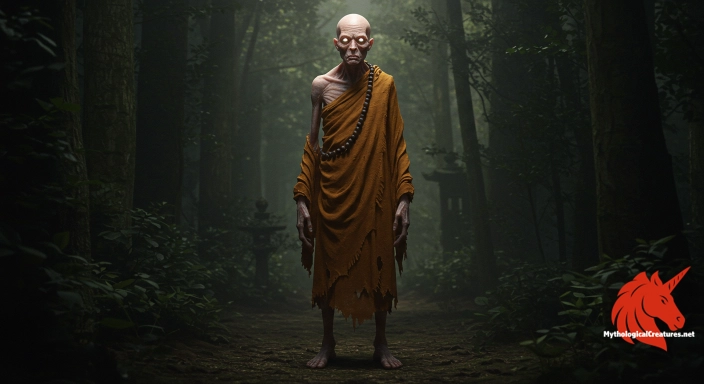
While explicit physical descriptions of Narfi are scarce, the archetypal image of a jötunn informs modern reconstructions of his appearance. He is often envisaged as towering and robust, embodying the wild, untamed aspects of the natural world. His visage, imagined with rugged and weather-beaten features, hints at a timeless endurance that transcends the mortal coil. Artists and storytellers have often portrayed him with deep-set, penetrating eyes that suggest the mysterious glimmer of a starlit sky. The timeless quality of his form reflects the harsh, dramatic landscapes of ancient Scandinavia. Traditional imagery sometimes lends him a dark, almost stony complexion, which symbolically ties him to the depths of night. Although the ancient sources leave much to the imagination, the visual legacy of giants encourages interpretations that emphasise raw physical power and primordial grace. His formidable stature, combined with an aura of both isolation and elemental might, serves to remind us of the profound symbolism inherent in Norse myth. The sparse but evocative details invite modern reimaginings, ensuring that his physicality remains as enigmatic as the forces he represents.
Regional Faces
Across the Scandinavian regions, Narfi appears under varied names and subtle narrative shifts that reflect local cultural colours. In Icelandic renditions, his name and myth are interwoven with the stark natural imagery that characterises the island’s folklore. Norwegian and Swedish traditions, while recognising his primary role as the progenitor of night, sometimes infuse his character with additional regional symbolism linked to seasonal cycles. Variations such as Nari and Nörfi showcase the fluidity of oral tradition, allowing local communities to adapt his image to their unique environmental contexts. In some areas, his myth is expanded by associating him with the wild and rugged landscapes that have long inspired Norse storytelling. The differing portrayals indicate that while the core myth remains intact, local adaptations emphasise various aspects of his character—from raw natural force to the quiet mystery of the distant twilight. These regional differences underscore how myth can serve as a mirror to the environment and culture in which it is told. As communities passed down these stories, the mutable nature of his legend helped preserve an enduring link between the cosmic and the earthly. Such diversity in narrative ensures that Narfi continues to resonate with those who cherish the rich cultural mosaic of Norse heritage.
Cultural Parallels
Narfi’s role in Norse mythology invites illuminating comparisons with mythic progenitors found in diverse cultural traditions. His connection to the embodiment of night resonates with similar themes in Greek mythology, where the primordial deity Nyx personifies the darkness of night. Unlike the Greek narrative, however, the Norse myth situates Narfi as a father figure, creating a unique dynamic between mortal ancestry and the forces of nature. Comparative studies reveal that many ancient cultures sought to imbue natural cycles with divine ancestry, positioning figures like Narfi at the heart of the cosmic narrative. Much like the titanic figures of other mythologies, his legacy underscores the interplay between creation and dissolution. Global mythologies frequently invoke the image of a forebear from whom essential aspects of the world—such as day and night—are derived. The subtle nuances in these parallels highlight both universal themes and the distinctive cultural inflections that shape them. In reflecting on his myth alongside other traditions, one recognises how the conceptualisation of darkness, and its origins, plays a central role in humanity’s understanding of the cosmos. Thus, Narfi not only embodies a Norse mythic principle but also contributes to a broader dialogue on the origins and symbolic meanings of natural phenomena.
Legacy & Modern Evolution
Over the centuries, the figure of Narfi has experienced a quiet evolution from an obscure jötunn to a subject of renewed interest in modern myth-making. Although early sources offer only brief mentions, his role as the progenitor of night has made him an intriguing figure for contemporary artists and writers. Modern reinterpretations frequently cast his myth in a new light, merging the ancient with the innovative to explore themes of cosmic balance and environmental change. In literature, graphic novels, and video games, he is sometimes reimagined as a symbol of the eternal dance between light and darkness. His legacy has further been embraced by neo-pagan and revivalist movements that seek to reclaim the profound symbolism of ancient Norse lore. Scholars and enthusiasts alike appreciate the subtle complexities of his narrative, which speak to the timeless appeal of myth that bridges the natural world with transcendent ideas. Contemporary portrayals imbue him with a duality that resonates with current environmental and existential concerns. This modern legacy serves as a testament to the enduring power of myth, where even the most fleeting mentions in early texts can inspire a rich tradition of reinterpretation. As a figure both enigmatic and elemental, Narfi continues to invite new generations to explore the mysterious interplay between heritage, nature, and the cosmos.
Interesting Fact
An intriguing aspect of Narfi is that, despite his relatively modest mention in myths, his role as the progenitor of the personified night underscores a profound cosmological symbolism in Norse tradition.
For authors, artists, and makers
Created something from the realm of myth?
If your book, deck, game, or artwork draws from legendary creatures and lore, you can showcase it here in a tasteful, year-round placement.
Share your projectQuick Creature Info
Origin:
Features:
Our Mythic Legendary Rating:

Also Sometimes Known As:
Habitat:
Supernatural Powers:
Physical Attributes:
Abilities:
Lore:
Related Creatures, Tales or Lore
- YYmir
- TThrym
- SSuttung
References
Discover Another Mythical Legend You May Not Have Heard Of?
Uncover the mysteries of ancient folklore and expand your knowledge of legendary beings from cultures around the world.
Dare to Meet the Miage-nyūdō....
Curated by the Mythological Creatures Team
Series editor: Mythological Creatures Directory
Primary desk: Northern & European Folklore Desk
(rev. November 2025)