
Nghê: Nghê is a mythological creature from Vietnamese culture that blends elements of a lion and a dog.

Nghê
Nghê - Symbolises protection and auspiciousness, serving as a deterrent to evil in communal and residential settings.
the legend in five swipes.
the legend in five swipes.
Nghê: Where the Legend Started
The Nghê occupies a storied place in Vietnamese cultural tradition, celebrated as a guardian that blends the noble presence of a lion with the loyal demeanour of a canine. It has been revered since ancient times, with early artistic expressions found in communal temples and village gates. The creature is believed to originate from a confluence of older mythic symbols drawn from local spirituality and imported artistic traditions. Early attestations in carved stone and ceramic relics underscore its longstanding role as a protector and emblem of community safety. The Nghê’s imagery has been interwoven with the domestic and religious life of Vietnamese communities, offering reassurance and defence against malevolent forces. Its myth is not confined to a single narrative but rather evolves through generations, embodying regional interpretations while remaining a steadfast symbol of guardianship. Local lore speaks of its mystical power to secure households and public spaces alike, thereby reinforcing social harmony. The creature’s dual nature as both fierce and benevolent continues to inspire respect and admiration. Its enduring appeal testifies to a deep cultural resonance that transcends mere decorative artistry.
What sources tell us about the Nghê?
Traditional records and local temple inscriptions offer some of the earliest glimpses of the Nghê in Vietnamese cultural memory. Stone statues and carefully crafted ceramics found at village entrances and temple gates serve as tangible evidence of its historical significance. Folkloric narratives passed down orally have enriched the sparse textual documentation, leading to a range of story variants that attribute diverse powers to the creature. Some community legends portray the Nghê as a spiritual intermediary whose presence ensures the safety of its people. In detailed temple guides and historical surveys, the animal is often acknowledged as a symbol that bridges myth and reality. Its depiction in ancient art is occasionally juxtaposed with other regional symbols of power and protection. The recurrence of the Nghê in both sacred and domestic spaces hints at a deep-seated belief in its protective influence. Despite the limited nature of surviving ancient manuscripts, the consistency of its thematic presence across various sources lends weight to its mythic stature. Over time, these sources have collectively helped to crystallise the Nghê’s status as an enduring cultural icon.
What did the Nghê look like?
The visual representation of the Nghê is both captivating and intricate, combining the majestic features of a lion with the alertness of a dog. Its robust body is typically carved in stone or cast in ceramic, displaying an impressive blend of strength and grace. The creature’s head is often rendered with a fierce expression, complete with carefully sculpted eyes that exude both vigilance and compassion. Decorative manes and delicate horns are incorporated into its design, reinforcing an image of martial authority intermingled with mysticism. The snout may exhibit subtle canine characteristics, imbuing the creature with a unique charm that distinguishes it from other guardian figures. Artists traditionally ensure that every curve and contour reflects a balance of ferocity and benevolence, making the Nghê a compelling subject in Vietnamese art. Its tail, elegantly curved, further accentuates the fluidity and dynamism of its form. Variations in size range widely, from imposing monuments guarding communal temples to smaller forms placed before individual households. Each depiction is meticulously detailed, mirroring the craftsmanship of local artisans and the symbolic importance attributed to this mythical protector.
How did location shape the story of the Nghê?
Across different regions of Vietnam, the Nghê takes on variations that reflect local cultural preferences and aesthetic traditions. In northern Vietnam, the creature is predominantly represented as a large, imposing stone statue that graces the entrance of village gates and communal temples. These stone versions are imbued with an almost solemn quality, signifying an unwavering commitment to communal protection. In contrast, in the southern countryside, adaptations of the Nghê are often more modest, with ceramic dog statues serving as household guardians. This regional distinction highlights a thoughtful adjustment to local architectural styles and the practical needs of village life. The northern depictions tend to be more formal and monumental, whereas the southern counterparts often exude a friendly, approachable essence. Both styles, however, reflect a broader cultural motif that values protective symbols designed to ward off adverse energies. Such variations underscore the fluid nature of myth, whereby a single figure can embody multiple interpretations depending on its cultural context. This diversity in representation illustrates the rich tapestry of Vietnamese folk traditions and their capacity to evolve over time.
Is the Nghê unique, or found elsewhere?
When viewed through an international lens, the Nghê shares several notable similarities with other guardian creatures in East Asian and Southeast Asian mythologies. It is often compared to the Chinese guardian lions that likewise blend elements of various animal forms to create figures emblematic of protection and power. Like its Chinese counterpart, the Nghê is not merely ornamental, but a symbolic embodiment of spiritual guardianship that blesses both public and private spaces. Its dual nature—incorporating the qualities of a lion and a dog—mirrors a broader trend in regional folklore where hybrid creatures serve as mediators between the earthly and the divine. Other cultures in the region, including Japan with its komainu, echo similar roles for mythical beasts in their religious iconography. Such parallels highlight a shared cultural impetus to incorporate multifaceted animal symbolism into local art and religious practices. Comparative analyses reveal that while these creatures originate from diverse cultural backdrops, they share an overlapping visual language that speaks to universal ideas of protection and prosperity. This cross-cultural dialogue not only enriches the narrative of the Nghê but also situates it within a dynamic framework of mythological guardians throughout Asia. The exchange of artistic motifs and cultural ideals across borders has thus contributed to the enduring legacy of such hybrid guardian figures.
Nghê: The Legend's Second Life
The historical evolution of the Nghê reflects a rich interplay between ancient ritual practice and modern cultural identity in Vietnam. Initially, the creature was deeply embedded in religious contexts, serving as a talisman at the gates of temples and villages. As time passed, its visual and symbolic attributes were reinterpreted by successive generations, securing its place as a vibrant emblem of communal resilience. Modern renditions of the Nghê appear in diverse media, from traditional stone carvings to contemporary artistic installations that adorn public spaces. Its image has also found a place in modern festivals and cultural celebrations, where it continues to evoke sentiments of protection and good fortune. The evolution of this mythical animal illustrates how traditional symbols can adapt to reflect contemporary values while maintaining a connection to their ancestral roots. Today, many urban areas and cultural centres in Vietnam proudly display depictions of the Nghê, reaffirming its role as a bridge between past and present. The creature’s legacy is thus not merely a relic of folklore but an active element of modern Vietnamese cultural expression. Its reimagining in contemporary art and popular culture underscores a broader trend of reclaiming traditional symbols to fortify national identity. In this way, the Nghê remains a powerful testament to the unifying spirit of myth and the enduring allure of Vietnamese heritage.
Interesting Fact
An intriguing fact about Nghê is its similarity to other Asian guardian creatures like the Chinese Fu Lion and Japanese Komainu, reflecting a shared cultural motif across East and Southeast Asia.
Mythological Treasures
Japanese Yokai: A field guide to the spirits and demons of Japanese folklore
Fifteen spirits, with the signs to watch for and what the old tales say to do if you meet one.
Greek Myths: A field guide to the monsters of ancient Greece
Every monster here earned its place in legend, and each gets a full page of artwork and the story behind it.
Norse Sagas: A field guide to the beasts of the Viking world
Drawn from the saga accounts themselves, with the powers, weaknesses and doom of each being set out.
the legend in five swipes.
Mythology-aligned partners
Showcase your myth-friendly brand here
Run a store, studio, or platform that lives in the world of myth and folklore? A curated sponsor panel on these pages may fit.
Explore partnership optionsQuick Creature Info
Origin:
Features:
Associations:
Our Mythic Legendary Rating:

Habitat:
Supernatural Powers:
Physical Attributes:
Abilities:
Behavior:
Lore:
Related Creatures, Tales or Lore
- FFu Lion (Chinese Guardian Lion)
- KKomainu (Japanese Guardian Dog)
- FFoo Dog (Chinese Mythology)
References
Discover Another Mythical Legend You May Not Have Heard Of?
Uncover the mysteries of ancient folklore and expand your knowledge of legendary beings from cultures around the world.
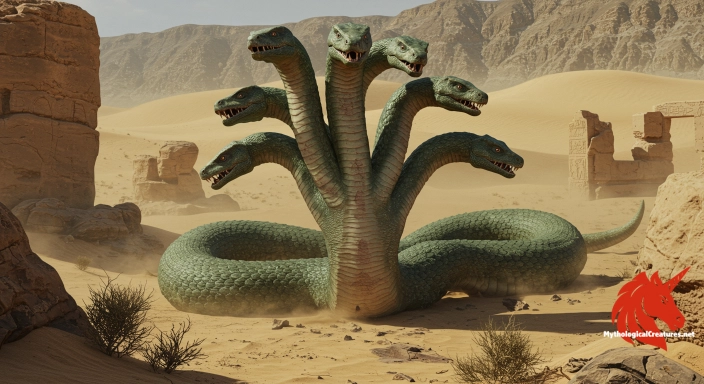
Dare to Meet the Seven-headed serpent....
The Mythological Creatures Book Series
Yokai, Greek, Norse, Egyptian & Chinese. Five illustrated field guides to the creatures the old stories either warned or told you about.
Curated by the Mythological Creatures Team
Series editor: Mythological Creatures Directory
Primary desk: Asian & Pacific Myth Cycles Desk
(rev. November 2025)