
Odontotyrannos: Odontotyrannos is a mythical three-horned beast known from apocryphal Alexandrian legends.
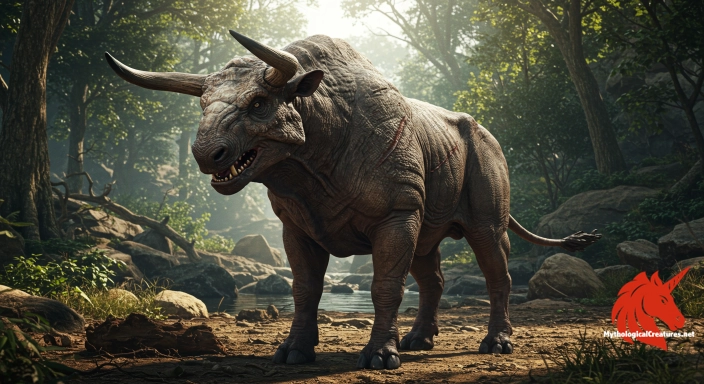
Odontotyrannos
Odontotyrannos - Odontotyrannos serves as a testament to the fantastical dangers in the ancient world and the cross-cultural mythic narratives between Greek and Eastern legends.
Origins & First Encounters
Odontotyrannos, a creature whose very name combines the notions of tooth and tyranny, emerged as a compelling figure on the fringes of ancient myth and history. Born from a blend of Greek imaginative narrative and the encounters of Alexander the Great with the known world, this beast first haunted literary tradition in accounts that straddled historical possibility and fabulous invention. Its early mentions in apocryphal correspondence have since been embroidered by later medieval storytellers, who saw in its three horns and formidable presence a potent symbol of the untamed forces lurking in remote lands. In an era when the boundaries of civilisation were expanding, the legend of this monstrous entity captured the collective imagination of those both in the West and beyond. The creature is enshrined within a cultural context that values the exotic and the mysterious, serving as a dramatic counterpoint to the ordered world of human achievement. Tales of its ferocity and the terror it sowed among Alexander’s ranks provided a dramatic allegory for the perils of venturing into the unknown. The enduring fascination with Odontotyrannos reflects a deep-seated human taste for myths that blend history with the fantastical. Its legacy continues to be a source of debate and wonder in modern mythological studies.
Source Texts & Tale Variants
The primary literary source that introduced Odontotyrannos into the mythic corpus is the apocryphal Letter from Alexander to Aristotle, a document that casts the creature in an aura of both mystery and menace. This piece of narrative expertly intertwines fact with fable, offering just enough detail to spark the imagination while leaving ample room for later embellishments. Over the centuries, medieval chroniclers and romantic scribes revisited this early text, each time amplifying the creature's terrifying attributes with dramatic flourishes. Various manuscript traditions, emerging from both Eastern and Western cultural milieus, have preserved alternate versions of the Odontotyrannos legend. Some variants choose to focus on its three imposing horns while others elaborate on the mystical properties of its oversized teeth. In oral recountings, the beast is portrayed as a harbinger of doom, a creature whose appearance foretells calamity for even the mightiest of men. The stories evolved as they passed from one culture to the next, accumulating layers of symbolic meaning. Through these diverse sources, the enchanting yet fearsome image of Odontotyrannos has been maintained and often transformed to suit the narrative needs of different eras.
Form & Powers
The physical form of Odontotyrannos is as arresting as its name suggests, defined by the sinuous interplay of natural ferocity and mythic exaggeration. Its three horns, arranged in a menacing triangular configuration, are depicted with such sharpness that they evoke the image of polished, deadly weaponry. Massive rows of teeth, each gargantuan and serrated, lend the beast an air of primordial brutality that has captured imaginations for centuries. Visual depictions from medieval manuscripts sometimes blend reptilian scales with the hints of coarse fur, adding an unpredictable texture to its otherwise stark anatomy. It is often portrayed as having a bulky, muscular silhouette that hints at both immense power and the capacity for swift, predatory action. The creature’s broad, gaping maw and potent limbs further contribute to the formidable image that underscores its name, the tooth-tyrant. These elaborate details not only serve to terrify but also symbolise the chaotic dangers of the unknown. Variations in size and proportion across different artistic traditions indicate that while Odontotyrannos is a singular mythic entity, it has been flexibly adapted to embody varied aspects of fearsome strength and nature’s caprice.
Regional Faces
The myth of Odontotyrannos transforms notably when set against the backdrop of diverse regional traditions. In some eastern narratives, the creature’s fearsome nature is softened by an infusion of local symbolism, where it is sometimes linked to spirits of the wilderness or river guardians in remote landscapes. Indian folklore, for instance, reinterprets the beast as a spectral sentinel, interweaving it with regional legends that celebrate the mystical forces of nature. Mediterranean adaptations tend to emphasise its role as a harbinger of chaos, integrating the creature into stories that mirror the anxieties of a world in flux. Byzantine accounts focus sharply on its unnatural and foreboding aspects, portraying the creature with an added layer of otherworldly malice. Meanwhile, medieval European retellings have gradually shifted the emphasis from historical episodes to allegorical representations of nature’s danger. These regional iterations enrich the basic narrative of Odontotyrannos, as local traditions tweak details to reflect the unique cultural, ecological, and spiritual concerns of their communities. The result is a multifaceted myth that, while retaining its core identity as a three-horned beast, continues to absorb and reflect the colour of its regional environments.
Cultural Parallels
Odontotyrannos shares intriguing parallels with a number of other mythological creatures from a variety of cultural traditions. Much like the Chimera, whose hybrid form served as an embodiment of chaotic natural forces, the tooth-tyrant highlights the tension between the known and the unknown in human experience. Its distinctive three-horned appearance brings to mind certain northern European legends where similar monstrous figures were depicted as omens during times of tumult and transition. The emphasis on its prodigious dentition also finds echoes in the imagery of the manticore, a creature renowned for both its physical menace and its symbolic role as an arbiter of misfortune. In comparing these myths, one can trace a common human impulse: to externalise internal fears through the creation of beasts that combine familiar and fantastical elements. These cross-cultural comparisons underscore a universal pattern in which horns and teeth serve as metaphors for power and danger across disparate mythic landscapes. Such analogies not only enrich our understanding of Odontotyrannos but also offer insight into the broader human fascination with the monstrous. Ultimately, the creature’s enduring archetypal features reveal how different societies have historically used myth to negotiate their place in a seemingly unknowable and unpredictable world.
Legacy & Modern Evolution
The evolution of the Odontotyrannos myth is a compelling narrative in its own right, charting a path from shadowy ancient manuscripts to vibrant modern reimaginings. Throughout the medieval period, the creature’s image was elaborated upon with dramatic new details that served to underscore the dangers faced by those venturing beyond the familiar. Its powerful symbolism as an emblem of nature’s untamed ferocity resonated deeply during times of exploration and cultural transformation. During the Renaissance, artists and writers revived the beast’s legend, infusing it with an exotic allure that mirrored contemporary fascinations with the East. In modern times, the myth has been reinterpreted in diverse ways, appearing in fantasy literature, film, and visual art as a symbol of both primordial chaos and mystical wonder. The shifting depictions of Odontotyrannos reflect broader changes in aesthetic and cultural priorities, with modern interpretations often highlighting the allegorical and ecological dimensions of the tale. As contemporary mediums continue to draw inspiration from ancient lore, the creature’s fearsome image endures as a bridge between myth and reality. Its continuing presence in popular culture testifies to the timeless human need to mythologise the natural world and to confront, in symbolic form, the inherent mysteries that it holds.
Interesting Fact
An interesting aspect of Odontotyrannos is its cross-cultural mythological presence, bridging Greek legend with Indian encounters during Alexander's campaigns.
Sponsor this space
Tasteful, fixed-fee placements for myth projects
No bidding wars or flashing banners. We offer simple placements for a small set of creators and brands aligned with our readers.
Request further detailsQuick Creature Info
Origin:
Features:
Our Mythic Legendary Rating:

Also Sometimes Known As:
Habitat:
Supernatural Powers:
Physical Attributes:
Abilities:
Behavior:
Lore:
Related Creatures, Tales or Lore
References
Discover Another Mythical Legend You May Not Have Heard Of?
Uncover the mysteries of ancient folklore and expand your knowledge of legendary beings from cultures around the world.
Dare to Meet the Limnoreia....
-9962f9da-289e-47c2-b596-17291fadbc11_small.webp "Depiction of Limnoreia")
Curated by the Mythological Creatures Team
Series editor: Mythological Creatures Directory
Primary desk: Hellenic & Ancient Mediterranean Desk
(rev. November 2025)