
Onocentaur: The Onocentaur is a legendary hybrid creature with the upper body of a man and the lower body of a donkey.
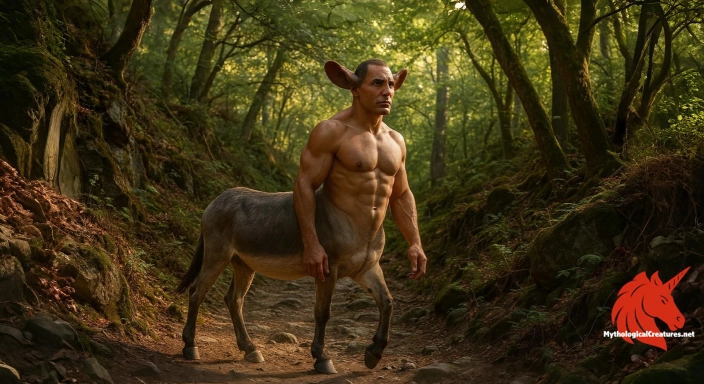
Onocentaur
Onocentaur - Represents the fusion of human intellect with the base instincts of the animal realm, often serving as a cautionary symbol of unnatural hybridity.
Origins & First Encounters
The onocentaur emerges as one of the more enigmatic figures in ancient myth, its hybrid nature blurring the lines between human sophistication and the earthy qualities of the animal realm. Its name, derived from a blend of Latin and Ancient Greek, hints at its half-donkey, half-centaur origins and underscores a longstanding tradition of combining disparate entities to explore human nature. Born from ancient folklore and cemented in medieval bestiaries, the creature served as a vivid symbol of the complexity inherent in life’s dualities. Early depictions placed it within the context of classical myth, where allegorical tales used it to illustrate the tension between intellect and raw instinct. In these stories, the onocentaur often symbolised the struggle to reconcile the higher aspirations of the human spirit with baser physicality. Its presence in literary and artistic traditions across millennia reflects a fascination with beings who challenge the norms of form and function. The figure’s ambiguous physical and metaphorical delineations invited audiences to reconsider the boundaries between the civilized and the wild. Subtle variations in its portrayal also allowed artists to project contemporary societal concerns onto a timeless myth. As a result, the onocentaur retains a powerful allure, standing as a testament to the enduring human quest to understand complexities through symbolic hybridisation.
Source Texts & Tale Variants
Ancient manuscripts and medieval chronicles provide fragmented yet compelling references to the onocentaur, each contributing to its layered mythos. Early textual sources, though sparse, hinted at a creature that carried the burden of allegory and mystery. Medieval bestiaries, celebrated for their elaborate illustrations and moral narratives, expanded on these initial glimpses by embedding the onocentaur within a broader framework of symbolic beasts. Various accounts differ in detail, with some emphasising its wild, untamable nature, and others suggesting an enigmatic blend of cleverness and folly. The diversity in narrative tone across sources reflects the flexibility of myth, as storytellers adjusted its characteristics to serve regional and cultural needs. Translations and reinterpretations over the centuries have further enriched its lore, giving rise to multiple versions of the creature’s tale. Some stories depict it less as a being of menace and more as a mirror to the ambivalence of human impulses. The layered narrative also reveals an evolving understanding of hybridity, highlighting a shift from literal descriptions to more nuanced moral allegories. Ultimately, the survival of the onocentaur in literary tradition is a reflection of the enduring appeal of creatures that defy simple classification.
Form & Powers
The onocentaur’s form is a striking blend that courageously unites the human with the beast, challenging conventional portrayals of hybrid creatures. Its upper half, marked by a distinctly human shape, flows into a torso that conveys both intellectual potential and a trace of wildness. In contrast, the lower portion is unmistakably that of a donkey, complete with a sturdy build, robust legs, and a coarse, textured coat that speaks of rural resilience. This juxtaposition is further highlighted by features such as elongated ears that subtly hint at both curiosity and stubbornness. Detailed depictions often show a melding of human facial expressions and the simple, unrefined aspects of a beast’s countenance. The merging of smooth skin with patches of bristly hair creates an arresting image that both fascinates and unsettles. Vivid illustrations sometimes accentuate a rudimentary mane that bridges the gap between human hair and the tufted fur of a donkey. Every element of its appearance has been carefully balanced to emphasise the tension between sophistication and raw, unadulterated nature. The result is a creature whose physicality offers a visual metaphor for the internal conflicts between reason and instinct.
Regional Faces
In Mediterranean traditions, the onocentaur is often portrayed with a refined grace that nods to classical ideals, even as its animalistic nature remains unmistakable. Regions steeped in ancient Greek and Roman culture tended to emphasise its allegorical significance, imbuing it with lessons of moral and philosophical duality. In northern European medieval lore, however, the creature often appears as a more enigmatic and cautionary figure, warning of the dangers inherent in uncontrolled instincts. Eastern European adaptations sometimes inject a measure of humour or satire, reflecting local tastes for the absurd and the comical. Meanwhile, variants from the Near East have occasionally merged its attributes with those of other hybrid beings, resulting in a more fluid and multifaceted myth. Continental bestiaries, influenced by the vibrant tapestry of local folklore, often presented the onocentaur as emblematic of nature’s unpredictability and the fine line between civilisation and savagery. These regional interpretations allowed its core identity to be continually reshaped, reflecting the values and artistic styles of diverse cultures. In some local narratives, it even assumes roles that range from guardian to trickster, lending it an extra layer of mythic versatility. Such wide-ranging portrayals underscore the creature’s ability to adapt its symbolism to fit varied cultural and historical contexts.
Cultural Parallels
Across the spectrum of mythic traditions, the onocentaur is part of a broader family of hybrid creatures that challenge humanity to confront its inner contradictions. Its immediate parallel with the noble centaur is both inevitable and intriguing, yet the onocentaur’s donkey traits invoke a sense of grounded reality that contrasts sharply with classical ideals of heroism. Like the satyrs of ancient lore, it embodies a playful yet unsettling fusion where the boundaries between the civilized and the bestial blur. In many narratives, the creature’s dual nature is employed as a metaphor to capture the perpetual struggle between higher aspirations and base instincts. Comparative mythology reveals that while centaurs often symbolise the triumph of reason and order, the onocentaur serves as a reminder of the inherent unpredictability embedded in nature. This interplay finds echoes in myriad cultural symbols that celebrate or condemn the mingling of human and animal forms. Jarring similarities with other chimeric beings throughout global myth reflect a shared cultural fascination with liminality. These analogues open up discussions about identity, morality, and the forces that shape human behaviour. Ultimately, the onocentaur stands as a unique yet complementary figure within a larger mythic tradition that celebrates the complexity of existence.
Legacy & Modern Evolution
Over the centuries, the onocentaur has undergone a remarkable metamorphosis, evolving from a fearsome emblem in medieval bestiaries to a nuanced character in modern fantasy literature. Its early depictions, rooted in moral allegory, painted it as a creature embodying the dangers of unbridled animal instincts. As centuries passed, artistic reinterpretations softened its image, allowing it to emerge as a figure of subversive charm and complex symbolism. Contemporary fantasy and role-playing narratives have embraced the onocentaur, often portraying it with a blend of irony, humour, and introspection that reflects modern sensibilities. This shift mirrors a broader cultural trend in which ancient symbols are repurposed to explore new themes and ideas. Graphic representations and digital art have reimagined it with striking visual details that further highlight its hybrid nature. Modern reinterpretations focus less on moral cautions and more on celebrating the ambiguities of identity and the interplay between civility and wildness. Scholarly and popular discussions alike now appreciate the onocentaur for its ability to encapsulate the tension between rational thought and instinctive behaviour. Today, the creature continues to inspire artists and writers, serving as a perennial reminder that myth remains an ever-evolving canvas for human creativity and introspection.
Interesting Fact
Despite its seemingly absurd form, the Onocentaur embodies deep themes of duality and the unification of contrasting natures. Its depiction in medieval literature highlights the tension between civilization and the wild. The creature remains a subject of intrigue in discussions of mythological symbolism and allegory.
Limited sponsor opportunity
One slot, carefully chosen partners
We only feature a small number of relevant sponsors at any time. If you create serious myth content, we would like to hear from you.
Partner with usQuick Creature Info
Origin:
Features:
Associations:
Our Mythic Legendary Rating:

Also Sometimes Known As:
Habitat:
Supernatural Powers:
Physical Attributes:
Abilities:
Behavior:
Weaknesses:
Lore:
References
Discover Another Mythical Legend You May Not Have Heard Of?
Uncover the mysteries of ancient folklore and expand your knowledge of legendary beings from cultures around the world.
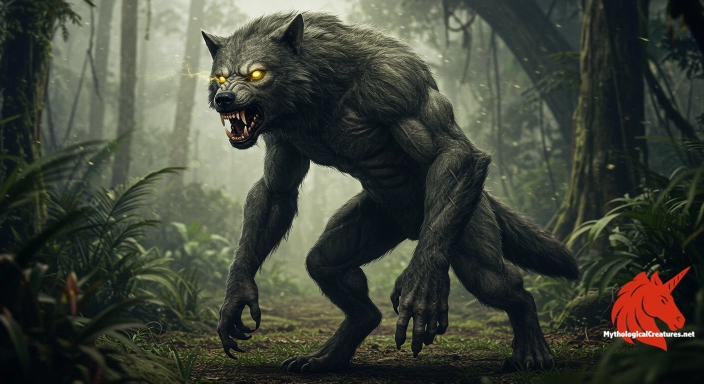
Dare to Meet the Lobisomem....
Curated by the Mythological Creatures Team
Series editor: Mythological Creatures Directory
Primary desk: Hellenic & Ancient Mediterranean Desk
(rev. November 2025)