
Petitcrieu: Petitcrieu is a legendary magical dog from Arthurian romance.
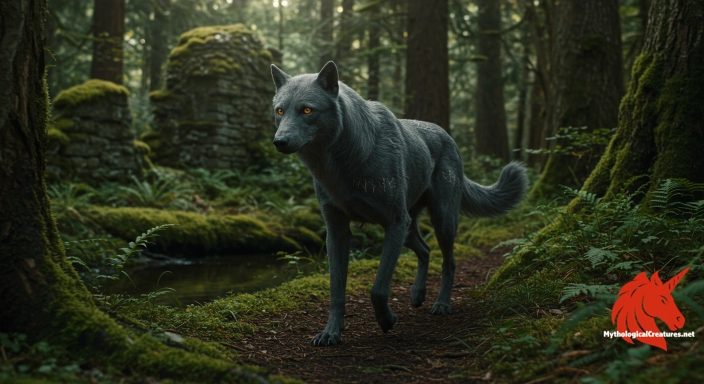
Petitcrieu
Petitcrieu - Petitcrieu contributes to the rich tapestry of Arthurian symbolism, embodying the mystical bond between man and nature.
the legend in five swipes.
the legend in five swipes.
Petitcrieu Origins: The Earliest Accounts
The Petitcrieu is a remarkable magical canine that emerges from the rich tapestry of Arthurian legend, celebrated notably in the romance of Tristan and Iseult. Its many spellings—Petitcreiu, Petitcru, and Pticru—hint at a storied past that intertwines language, lore, and chivalric idealism. Born out of medieval narratives, this enchanted dog carries an aura of mystery and loyalty that captured the imaginations of its original audience. It was first attested in texts where magic and destiny melded seamlessly with the ideals of knighthood and courtly love. Little is known about the precise origins, yet its presence suggests an intentional interweaving of the mundane and the supernatural. The Petitcrieu is portrayed as a silent guardian whose role extends beyond mere accompaniment, resonating with themes of fate, protection, and the otherworldly. Deeply embedded in a cultural context that embraced miraculous interventions on the battlefield of life, it symbolised both devotion and the subtle magic of transformation. The creature’s continuing allure reminds us of an age when the boundary between reality and myth was fluid and ever-changing.
Its historical emergence within Arthurian romance paints a picture of a world where even the most humble of beings could be imbued with profound significance, echoing the timeless interplay between love, fate, and chivalric duty.
Petitcrieu: How the Tale Was Told and Retold
The primary narrative that cradles the legend of Petitcrieu is the chivalric romance of Tristan and Iseult, a text steeped in the mystique of medieval storytelling. In these manuscripts, the magical dog is woven into the fabric of the story as both a silent witness and a discreet guardian. Different versions of the romance offer subtle variations in its portrayal, sometimes highlighting its almost prophetic abilities and at other times underlining its steadfast loyalty. A number of surviving texts and manuscript fragments allude to the Petitcrieu, though the details of its role vary with the storyteller’s artistic licence. Despite these variations, the underlying essence of the creature remains consistent—an embodiment of the magical forces that guide and protect the noble. Certain variants of the narrative present it as a talismanic figure, one whose very presence can alter the course of events in battles of love and honour. Regional adaptations and marginal notes in illuminated texts provide additional layers of meaning, enriching its mythical status. The diversity in its depiction across sources underscores a broader medieval tradition of flexible myth-making, where each retelling could expand on the dog’s mysterious qualities.
Some lesser-known texts even incorporate elements of folklore outside the central Arthurian cycle, imbuing Petitcrieu with attributes that resonate with both courtly and popular imaginations. This multiplicity of story variants not only preserves the mystery of its origin but also showcases the dynamic interplay between narrative and myth.
Petitcrieu: Size, Shape and Strange Features
Artistic depictions of the Petitcrieu often reveal a medium-sized, sleek canine with an almost ethereal presence that seems to shimmer under the light of enchanted moons. Its coat is frequently described as having a silver sheen, reflective of the magical energies that infuse its being. Keen, luminous eyes are a hallmark of its appearance, exuding an intelligence and mysticism that draw the viewer into its secret world. Subtle, intricate markings sometimes adorn its fur, evoking the impression of arcane symbols and ancient runes that hint at otherworldly blessings. The creature’s form blends grace and strength, with a lithe yet powerful build that speaks to both agility and endurance. In some portrayals, there is an almost spectral quality to its outline, as if its physical presence fluctuates between solidity and a ghostly effulgence. The dynamic interplay of light and shadow upon its form has encouraged a rich variety of artistic interpretations across centuries. Many accounts even suggest that its appearance can subtly shift, mirroring the phases of the moon or the emotional currents of its surroundings.
These diverse descriptions contribute to a multifaceted vision of Petitcrieu, where physical form and magical essence are inextricably linked, presenting the creature as both a tangible ally and a living symbol of mystical charm.
Which communities kept the Petitcrieu tradition alive?
Across medieval Europe, the legend of Petitcrieu has adapted to local cultural and literary traditions, resulting in a spectrum of regional interpretations. In the French tradition, where the romance of Tristan and Iseult flourished, the creature is often portrayed as an emblem of noble loyalty and magical guardianship, a companion to those destined for greatness. In regions influenced by Celtic folklore, similar mythical hounds are seen as gatekeepers between the mortal realm and a mystical otherworld, and Petitcrieu is occasionally rendered with these ethereal characteristics. Varied accounts from the Iberian Peninsula and Italian reinterpretations embed the dog within local traditions of enchanted fauna, thus highlighting regional nuances in its narrative. Local artists and scribes have sometimes altered its physical attributes or bestowed upon it additional mystical symbols that resonate with indigenous mythologies. In some adaptations, Petitcrieu takes on the role of a protector of sacred sites, its presence an auspicious sign for villages and warriors alike. These localized renditions have led to a delicate balance where the core essence of the creature is retained while allowing for regional embellishments that reflect the values of different communities. In this way, its narrative serves as a cultural bridge, uniting disparate mythic traditions under one enchanted guise.
The adaptive quality of its portrayal illustrates how regional influences enrich a shared myth, making Petitcrieu a versatile symbol whose nature can be reshaped to fit varied cultural backdrops.
Petitcrieu: Parallels in Other Cultures
The Petitcrieu shares intriguing similarities with an array of mythological hounds featured across European folklore. Its spectral and guardian qualities bring to mind the legendary Cŵn Annwn of Welsh myth, whose otherworldly presence and protective duty parallel those attributed to Petitcrieu. Both beings serve as liminal figures emblematic of the thin line between the natural and supernatural worlds. The creature’s mystique also draws comparisons with the fabled black dogs that haunt British countryside legends, often seen as omens or guides in times of dire need. In each comparative narrative, these characters transcend their animal nature to become metaphors for loyalty, fate, and the enigmatic forces of destiny. The thematic resonance between these magical canines underscores a pan-European tradition in which supernatural dogs function as both protectors and harbingers of significant change. Such cross-cultural parallels highlight the shared human fascination with powerful, loyal animals that operate at the threshold of myth and reality. The recurring motif of the enchanted dog across various traditions ultimately reinforces the universal appeal of a creature that bridges the realms of the seen and unseen.
By aligning Petitcrieu with its cultural counterparts, one observes how differing mythologies converge upon similar archetypes, celebrating the eternal mystery of loyalty, protection, and magical insight.
Petitcrieu in Modern Culture
Over time, the depiction of Petitcrieu has evolved from a subtle background figure in medieval romance to a potent symbol of magical guidance and chivalric virtue in modern popular culture. Early texts celebrated it as a harbinger of divine intervention and steadfast loyalty, qualities that resonated with the courtly ideals of its time. As the centuries passed, later reinterpretations during the Renaissance and Romantic periods expanded its role, rendering it a more deliberately enigmatic and symbolic entity. Modern authors and artists have reimagined Petitcrieu with a blend of traditional enchantment and contemporary mysticism, often casting it as a bridge between past myth and modern fantasy. This creature now appears in diverse narratives—from graphic novels to cinematic adaptations—where its legendary traits serve as a metaphor for inner strength and transformation. The evolution of its image reflects broader shifts in how society interprets myth, allowing Petitcrieu to remain a living emblem of magical guardianship. Contemporary portrayals tend to underscore its dual role as both a loyal companion and an independent force of nature. Even as modern storytelling embraces new interpretive angles, the core qualities of mystery, loyalty, and supernatural allure persist at its heart.
Today, Petitcrieu continues to inspire not only a sense of wonder at the ancient mystical world but also a modern exploration of the enduring power of myth, ensuring that its enchanted legacy carries on in myriad creative forms.
Interesting Fact
Despite its status as a minor character in the vast tapestry of Arthurian legend, Petitcrieu’s enduring legacy highlights the medieval fascination with magical animals and their symbolic roles in courtly narratives.
Mythological Treasures
Greek Myths: A field guide to the monsters of ancient Greece
Every monster here earned its place in legend, and each gets a full page of artwork and the story behind it.
Norse Sagas: A field guide to the beasts of the Viking world
Drawn from the saga accounts themselves, with the powers, weaknesses and doom of each being set out.
Egyptian Legends: A field guide to the gods and monsters of ancient Egypt
Guardians of the living and devourers of the dead, with the role each played in judgement.
the legend in five swipes.
Partner with us
Sponsor this space
Reach thousands of mythology enthusiasts with a curated placement on our creature pages.
Learn about sponsorshipQuick Creature Info
Features:
Our Mythic Legendary Rating:

Also Sometimes Known As:
Habitat:
Supernatural Powers:
Physical Attributes:
Abilities:
Lore:
Related Creatures, Tales or Lore
- CCŵn Annwn
- BBlack Shuck
- CCu Sith
References
Discover Another Mythical Legend You May Not Have Heard Of?
Uncover the mysteries of ancient folklore and expand your knowledge of legendary beings from cultures around the world.
Dare to Meet the Idlirvirissong....

The Mythological Creatures Book Series
Yokai, Greek, Norse, Egyptian & Chinese. Five illustrated field guides to the creatures the old stories either warned or told you about.
Curated by the Mythological Creatures Team
Series editor: Mythological Creatures Directory
Primary desk: Northern & European Folklore Desk
(rev. November 2025)