
Pishacha: Pishachas are flesh-eating demons from Indian mythology, known for their malevolent and grotesque nature.
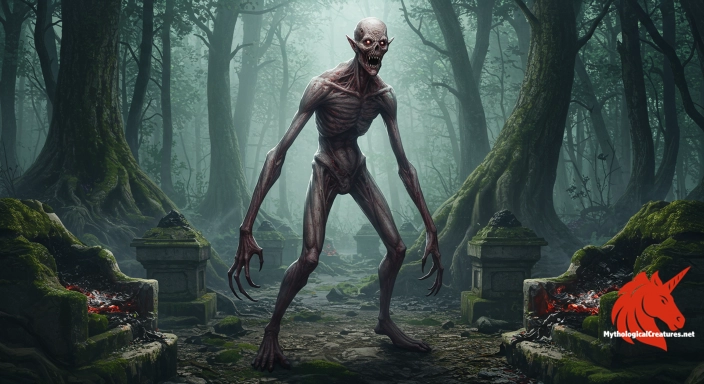
Pishacha
Pishacha - They represent the dark, malevolent forces in the cosmic battle between good and evil
the legend in five swipes.
the legend in five swipes.
Where does the story of the Pishacha begin?
The Pishacha emerge from the mists of ancient Indian myth, their origins intertwined with early Sanskrit narratives that speak of malevolent forces lurking at the fringes of civilisation. They are depicted as terrifying, flesh-eating demons whose presence served to warn of the dangers hidden in the dark recesses of both nature and the human psyche. Their earliest attestations appear in sacred texts where they embody the chaotic forces of evil and unbridled negativity. Over time, these beings became cultural symbols, reflecting society’s struggle to balance the forces of purity and corruption. They are often associated with dim, forgotten places like cremation grounds and deserted ruins, domains that reflect their ominous character. Tales of the Pishacha also reveal a broader mythological framework where moral transgressions and cursed destinies lead to such monstrous transformations. Early myth-makers interwove their existence with lessons on spiritual discipline and the consequences of straying from righteous paths. Their continuing legacy in both Hindu and Buddhist traditions renders them as enduring allegories of darkness that contrast the light of spiritual order.
How many versions of the Pishacha story are there?
Ancient Sanskrit texts and the sacred Puranas offer glimpses into the varied portrayals of the Pishacha, providing early literary anchors for their ghastly reputation. References to them also appear in epics such as the Mahabharata and Ramayana, where they are recounted in narratives meant to instil caution and moral rectitude. Some ancient scriptures present them as the cursed remnants of celestial beings, transformed by their own transgressions into harbingers of decay and chaos. Diverse Buddhist narratives further expand their character, positioning them as night-bound entities that prey upon the vulnerable in moments of spiritual lapse. Folk traditions, passed down through oral lore, recount their horrifying appearances with an emphasis on the terror they inspire. Manuscripts and regional grimoires have added to this mosaic, each contributing unique details and interpretations of these fearsome beings. Alongside ritual texts, dramatic recitations and temple lore have helped perpetuate multiple story variants, each adapting the creature’s myth to local cultural norms. The narrative richness found in these sources underlines a multifaceted evolution of the Pishacha myth, spanning over centuries and regions.
Pishacha: What Manner of Being?
The physical visage of the Pishacha is rendered in vivid and disturbing detail in ancient illustrations and literary descriptions. They are often depicted with emaciated, pallid forms that seem to have been sculpted by decay and perpetual darkness. Their limbs are elongated and contorted, hinting at an unnatural flexibility that enables them to strike with sudden ferocity. Disproportionate features, such as gnarled fingers and jagged teeth, amplify their monstrous appearance and evoke a sense of dread in those who encounter their tale. Their eyes, sometimes described as glowing with a feral light, are thought to penetrate the soul, echoing the creature’s inner malevolence. Tales speak of ragged, unkempt hair and a visage marred by scars, further emphasising the chaotic forces that formed them. In certain traditions, variations in size are noted, ranging from slight, almost spectral forms to hulking, imposing figures. The overall imagery of the Pishacha is one of a ghastly creature born from the interplay of spiritual corruption and physical ugliness, designed to unsettle the viewer with every contorted detail.
The Geography of the Pishacha Legend
Across the diverse landscapes of the Indian subcontinent, the portrayal of the Pishacha takes on local hues that reflect regional beliefs and environmental backdrops. In northern traditions, they are often recast as forlorn spirits that haunt cremation grounds and desolate ruins, emphasising themes of death and rebirth. In contrast, southern folklore sometimes imbues them with a wild, almost elemental connection to nature, where they serve as dark guardians of untamed forests and hidden waterways. Rural narratives incorporate a trickster element, offering a more ambiguous moral portrait that blurs the lines between malevolence and the chaotic energies of life. In certain Himalayan regions, these demons are woven into local festivals and shadow plays, symbolising the ever-present conflict between order and entropy. Variants from eastern territories may depict them with additional supernatural adornments, linking their presence to local legends of curses and forbidden magic. This regional fluidity underscores how the essence of the Pishacha adapts to both the physical and spiritual landscapes of different communities. The multiple depictions across regions not only highlight local folklore but also demonstrate the enduring power of myth to reflect the unique cultural psyche of each area.
What figures resemble the Pishacha?
There exist intriguing parallels between the Pishacha and other malevolent entities that populate the mythologies of diverse cultures. Their relentless hunger and association with darkness invite comparisons to the ghouls and vampires of Middle Eastern and European folklore. In both cases, these creatures serve as potent metaphors for the decay of the body and spirit, as well as for the transgression of moral taboos. Unlike some of their Western counterparts, however, the Pishacha carry a rich cultural subtext, embodying both spiritual retribution and the imbalance between worldly desires and cosmic order. Similar to the Japanese oni, they are depicted as fearsome and unpredictable, yet infused with layers of allegorical meaning that speak to the internal struggles of communities. Their role as carriers of karmic consequence resonates with other indigenous demonologies where evil is both an external force and an inner failing. Comparative studies often highlight how such creatures reflect universal human anxieties about mortality and the unknown. The enduring fascination with these demonic figures across cultural borders reveals a shared narrative thread that has helped define the human relationship with the concept of evil.
How has the image of the Pishacha evolved?
Over the centuries, the image of the Pishacha has evolved from a terrifying mythic terror to a nuanced symbol embedded within modern culture and artistic expression. In early traditions, they were depicted purely as monstrous predators that embodied primordial chaos, a stark reminder of the dangers that lurk in forgotten places. As literary and artistic traditions matured, these demons began to take on additional meanings; their grotesque forms became allegories for various forms of inner and societal corruption. Contemporary reinterpretations in film, literature, and visual media often particularise the Pishacha as metaphors for the darker facets of the human condition, mirroring modern psychological themes. Their ancient stories are frequently reimagined in cultural festivals and theatre productions that strive to blend tradition with modern critique. Modern narratives sometimes present these beings as symbols of existential angst and as embodiments of the clash between ancient rites and modern rationality. Evolving attitudes toward mythology have seen the Pishacha transform from fearsome harbingers of evil into complex characters that inspire both horror and intellectual curiosity. Today, they continue to provoke intrigue and deep reflection, maintaining their imprint as timeless icons of the battle between light and darkness.
Interesting Fact
An intriguing aspect of pishachas is their dual representation as both literal flesh-eaters and metaphorical embodiments of society's hidden fears about death and decay.
Mythological Treasures
Norse Sagas: A field guide to the beasts of the Viking world
Drawn from the saga accounts themselves, with the powers, weaknesses and doom of each being set out.
Egyptian Legends: A field guide to the gods and monsters of ancient Egypt
Guardians of the living and devourers of the dead, with the role each played in judgement.
Chinese Beasts: A field guide to the dragons and demon kings of Chinese myth
From river dragons to demon kings, with the legends that shaped five thousand years of storytelling.
the legend in five swipes.
Sponsor this space
Tasteful, fixed-fee placements for myth projects
No bidding wars or flashing banners. We offer simple placements for a small set of creators and brands aligned with our readers.
Request further detailsQuick Creature Info
Features:
Associations:
Our Mythic Legendary Rating:

Also Sometimes Known As:
Habitat:
Supernatural Powers:
Physical Attributes:
Abilities:
Behavior:
Lore:
References
Discover Another Mythical Legend You May Not Have Heard Of?
Uncover the mysteries of ancient folklore and expand your knowledge of legendary beings from cultures around the world.
Dare to Meet the Indus worm....

The Mythological Creatures Book Series
Yokai, Greek, Norse, Egyptian & Chinese. Five illustrated field guides to the creatures the old stories either warned or told you about.

Curated by the Mythological Creatures Team
Series editor: Mythological Creatures Directory
Primary desk: Asian & Pacific Myth Cycles Desk
(rev. November 2025)