
Pishtaco: The Pishtaco is a folkloric boogeyman from the Andean region, feared for its grim practice of extracting body fat from its victims.
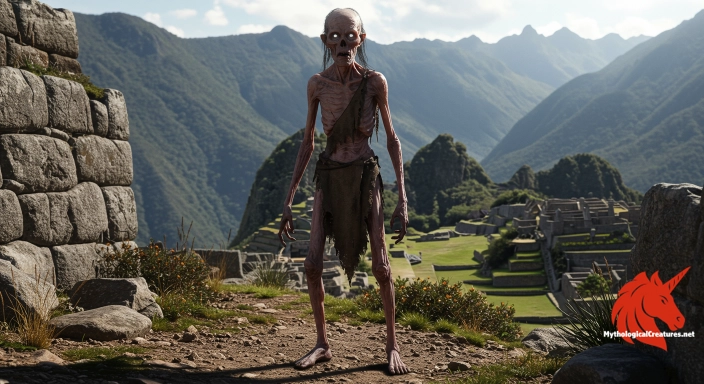
Pishtaco
Pishtaco - Represents historical exploitation and collective trauma in Andean communities.
Origins & First Encounters
The Pishtaco is a mysterious figure that haunts the collective imagination of the Andes, embodying the deep-seated fears cultivated in the wake of colonial encounters. Born from the mingling of indigenous beliefs and the brutal realities of colonial exploitation, this creature has come to symbolise the exploitation of indigenous bodies and resources. Its origins are interwoven with historical narratives that reference the Spanish practice of utilising indigenous corpse fat for medicinal purposes. The creature features prominently in the folklore of Peru and Bolivia, where it is often seen as a sinister agent of extraction and decay. Over time, its portrayal evolved from a mere embodiment of physical horror to a potent metaphor for social and economic subjugation. The Pishtaco’s legend is deeply rooted in a cultural context that emphasises both the vulnerability of indigenous communities and their resistance to external exploitation. It has occupied the role of a boogeyman, a warning figure used to instil caution among local populations. The myth resonates with ancient fears, while also adapting to contemporary narratives of marginalisation and abuse. Its persistence in popular tales underscores the powerful interplay between history and myth in shaping societal anxieties.
Source Texts & Tale Variants
The story of the Pishtaco is transmitted through a rich tapestry of oral traditions, local lore, and later documented accounts that capture its multifaceted nature. Ancient narratives and colonial-era records, while fragmentary, have been woven together by generations to form the basis of the creature’s mythos. Variants of the story exist in diverse regions, with some accounts referring to the figure by names such as ñakaq, kharisiri, lik’ichiri or kharikhari. Over the centuries, travellers and local chroniclers have noted eerie similarities in the accounts, even as the details vary significantly from one community to another. This multiplicity of sources has allowed the Pishtaco to evolve in the public imagination, acquiring layers of meaning with each retelling. Informal warnings shared during twilight gatherings are as influential as written records in perpetuating the myth. While early colonial reports might have hinted at factual practices, later folklore magnified these acts into acts of monstrous predation. Modern retellings—through literature, film, and urban legends—continue to blend historical accounts with imaginative elaboration, making it a living, ever-changing myth.
Form & Powers
The Pishtaco is typically depicted as a gaunt, almost spectral figure whose emaciated form and pallid skin evoke a sense of otherworldly dread. Stories often describe the creature as possessing sharp, penetrating eyes that seem to reflect an inner nihilism. Some accounts present it dressed in tattered clothing reminiscent of a bygone colonial era, whilst others suggest it may sometimes adopt aspects of modern dress to better blend with unsuspecting crowds. Its hands are said to be unusually long and dexterous, almost claw-like, which lend it an air of predatory efficiency when it extracts the precious fat from its victims. The creature’s overall appearance is designed to unsettle, with exaggerated features that border on the grotesque and uncanny. In some depictions, its facial features are marked by a bizarre mix of human and beastly characteristics that indicate its role as an interloper in both natural and social orders. Variations in size and build have been noted across different versions, with some portraying it as almost diminutive yet agile, while others emphasise its looming, oppressive stature. The physical description of the Pishtaco is not fixed, instead adapting with the teller’s intent to underscore the horror of its actions. Every retelling adds subtle nuances that both frustrate and fascinate, ensuring that the creature remains as enigmatic visually as it is symbolically.
Regional Faces
Regional variations of the Pishtaco myth highlight the creature’s ability to adapt to different local contexts and cultural narratives. In highland communities of Peru and Bolivia, the creature is sometimes referred to by alternative names in the Aymara language, such as ñakaq, kharisiri, or lik’ichiri, each carrying its own local inflections of fear and caution. In some Andean villages, the Pishtaco is believed to prowl the outskirts of settlements, preying upon the most vulnerable, while in others it is portrayed as a spectral visitor who enters homes under cover of darkness. These local adaptations often reflect broader concerns about exploitation and the erosion of indigenous customs, turning the creature into a symbol of both physical and cultural violation. Community-specific details, such as the precise methods of fat extraction or the creature’s preferred hunting grounds, provide unique shades to the overall myth. Some regions even imbue the Pishtaco with traits that suggest it might be a vengeful spirit, punishing those who betray traditional values. Local festivals and cautionary tales often serve as a means to reinforce boundaries between the community and the encroaching modern or foreign influences that the creature symbolises. Thus, while the underlying terror remains consistent, the regional stories of the Pishtaco are deeply coloured by local history, environment, and cultural memory.
Cultural Parallels
A comparative glance at the Pishtaco reveals intriguing parallels with similar figures found in other mythological traditions across the globe. Much like the vampire legends of Eastern Europe, the Pishtaco is emblematic of a creature that subsists on the life force or bodily substances of its victims. This common theme of corporeal parasitism reflects widespread cultural anxieties about exploitation and the loss of vitality. In Latin American folklore, creatures that drain life or vital essences are not uncommon, often serving as a broader metaphor for social and economic extraction. The Pishtaco’s modus operandi, which involves harvesting human fat, evokes the motif of corrupt figures preying upon the body politic—a narrative thread mirrored in urban legends about modern-day syndicates. Across diverse cultures, mythic entities that blur the line between human and monster often carry an implicit critique of societal imbalances and external profiteering. Such parallels amplify the interpretive layers surrounding the Pishtaco, demonstrating how folklore can act as a mirror to historical and contemporary fears. The creature’s resonance in both pre-modern and modern contexts invites comparison to other cultural embodiments of exploitation, highlighting a truly international pattern of myth-making. Overall, these cross-cultural echoes serve to deepen the symbolic complexity of the Pishtaco myth, making it a compelling subject for comparative mythological study.
Legacy & Modern Evolution
The legacy of the Pishtaco has evolved significantly since its early emergence in the wake of Spanish colonialism. Initially rooted in directly perceived colonial abuses, the figure has transcended its historical origins to become a symbol of broader themes such as social injustice and the exploitation of the vulnerable. As modern society grapples with the legacies of its past, the Pishtaco has been reinterpreted by writers, artists, and filmmakers as an allegory for economic and cultural marginalisation. Contemporary depictions often focus more on the metaphorical extraction of vitality—be it through cultural erasure or systemic abuse—than on literal physical harm. The evolving narrative has seen the creature being reimagined in contexts that comment on the commodification of the body and the relentless pursuit of profit. Technological advances and media proliferation have allowed the myth to be adapted into various formats, from graphic novels to digital art installations. This continual reinvention reflects the Pishtaco’s enduring power to symbolise the destructive impacts of exploitation, resonating with audiences far removed from its original context. Even as societal fears shift, the figure retains a potent aura of mystery and menace, ensuring its place in modern folklore. In blending historical memory with contemporary critique, the Pishtaco remains an ever-relevant mirror of socio-political anxieties.
Interesting Fact
The legend of the Pishtaco is not only a tale of horror but also a metaphor for the exploitation of indigenous peoples, linking bodily fat extraction to the colonial drain of resources and vitality.
Support the directory
Promote your myth project and fund more research
Sponsor placements help keep this directory growing and free to use while giving your work a focused, relevant audience.
Learn how sponsorship worksQuick Creature Info
Origin:
Features:
Our Mythic Legendary Rating:

Also Sometimes Known As:
Habitat:
Supernatural Powers:
Physical Attributes:
Abilities:
Behavior:
Lore:
Related Creatures, Tales or Lore
- CChupacabra
- EEl Coco
References
Discover Another Mythical Legend You May Not Have Heard Of?
Uncover the mysteries of ancient folklore and expand your knowledge of legendary beings from cultures around the world.
Dare to Meet the Xeglun....

Curated by the Mythological Creatures Team
Series editor: Mythological Creatures Directory
Primary desk: Americas & Indigenous Traditions Desk
(rev. November 2025)