
Proteus: Proteus is an ancient prophetic sea god from Greek mythology, often referred to as the Old Man of the Sea.
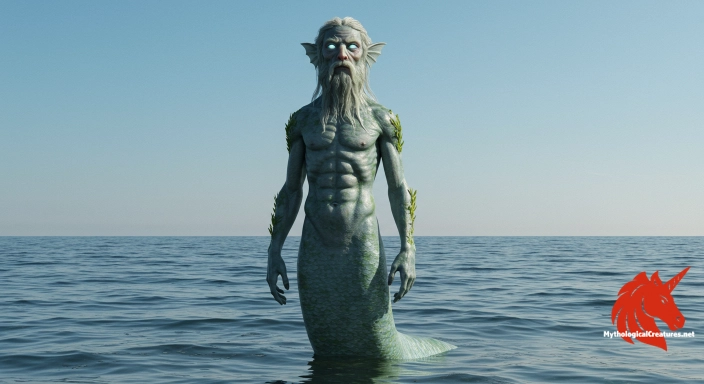
Proteus
Proteus - Proteus is emblematic of the ever-changing and mysterious nature of the sea and the elusive quality of future knowledge.
the legend in five swipes.
the legend in five swipes.
Who first told stories about Proteus?
Proteus is a fascinating figure in Greek mythology, renowned as a primordial sea deity with an unparalleled prophetic gift. He is celebrated for his ability to unveil the future, though he remains elusive by constantly altering his form. His origins stretch back to the earliest days of myth, where he emerges as a personification of the mutable and unpredictable nature of water. In ancient Greek literature, he is often referred to as the 'Old Man of the Sea', a title that underscores his venerable status among oceanic deities. His character symbolises the duality of water as both life-giving and unknowable, reflecting the timeless ebb and flow of the sea. Early attestations from classical texts illustrate a deity who not only commands respect for his wisdom but also instils a sense of awe with his enigmatic presence. Proteus’ narrative intertwines the realms of prophecy and the natural world, forming a bridge between divine insight and the eternal mystery of the ocean. His compelling myth served as a cultural touchstone, resonating with ancient communities who revered the capricious and ever-changing spirit of the sea. The legacy of Proteus endures in the language and symbolism of adaptability, inspiring modern depictions that emphasise versatility and transformation. In every retelling, his image reflects the profound interplay between stability and metamorphosis inherent in nature.
What do the old texts say about Proteus?
Ancient literary sources provide a rich tapestry of references that shape our understanding of Proteus. Classical epic poets, notably Homer, made mention of this elusive deity by bestowing him the epithet 'Old Man of the Sea'. These early texts furnish glimpses into a mythic figure whose shape-shifting abilities served as both a protective measure and a challenge to those who sought his prophetic revelations. His narrative was further elaborated upon by later poets and mythographers, who enriched the story with imaginative accounts of his evasive tactics. Beyond the written word, oral traditions preserved along the shores of the Mediterranean added layers of nuance to his myth, imbuing it with local colour and regional detail. Over time, the Proteus legend assimilated elements from neighbouring cultures, thereby broadening its interpretative scope. In certain medieval and Renaissance texts, for example, his mutable nature was allegorically linked to themes of intellectual and spiritual transformation. Various story variants emphasise his role as a gatekeeper of hidden wisdom, reserved for those possessing the ingenuity to capture him. These narrative threads interweave to create a multifaceted portrait that has enchanted audiences for millennia. Thus, the primary sources and evolving story variants ensure that his tale remains as dynamic as the ever-changing sea he represents.
How powerful did people believe Proteus to be?
Visual depictions of Proteus capture the paradox of a deity who embodies both age-old wisdom and transformative dynamism. Many artistic renditions present him as an elderly figure with a flowing beard, his features weathered and imbued with the experience of countless years spent by the sea. His eyes, often portrayed as deep and knowing, hint at the vast reservoir of hidden knowledge and prophetic insight he possesses. In some illustrations, Proteus is adorned in garments that echo the hues of the ocean—blues, greys, and hints of seafoam—which further accentuate his maritime connection. The mutable god is sometimes depicted with a physique that oscillates between the robust build of a seasoned mariner and the ethereal quality of a water spirit. His visage is frequently complemented by motifs of marine life such as seaweed or shells, symbolising his dominion over the natural waters. Variations in his physical portrayal can be witnessed in different artistic traditions, with some emphasising a more regal and imposing stature while others opt for a subtler, spectral presence. The diversity in these depictions reflects the inherent fluidity of his form, mirroring the ever-shifting nature of the sea itself. Each representation, whether grand or modest, encapsulates a dual essence: the steadfast reliability of ancient myth and the ephemeral quality of liquid change. Ultimately, Proteus’ physical imagery serves as a visual metaphor for transformation and adaptability.
Proteus: Local Variations in the Story
Although Proteus is rooted in Greek mythology, adaptations of his character can be traced to varying regional traditions throughout the Mediterranean and beyond. His narrative has been absorbed and reinterpreted in coastal communities where the sea’s temperamental force is a daily reality. In island cultures influenced by Greek and Hellenistic traditions, local storytellers envisaged him as a capricious spirit who could either bestow fortune or invoke peril upon mariners. Eastern Mediterranean regions, in particular, have woven additional attributes into his tale, presenting him as a figure whose powers extend into both the physical and supernatural realms. In Roman adaptations, Proteus was often merged with indigenous water deities, thereby creating hybrid figures that resonated with the local populace. These regional variations highlight a common theme of transformation, with each culture emphasising different aspects of his mutable identity. Byzantine literature, for example, recast him within allegorical narratives that underscored spiritual renewal and the cycle of change. Even in modern folklore, fanciful portrayals maintain his reputation as a guardian of the elusive secrets hidden beneath the waves. By integrating regional symbols—ranging from local sea monsters to guardian sprites—the myth of Proteus has been enriched with a diversity of cultural insights. Such adaptations ensure that his story continues to reflect the ever-adapting interpretation of nature’s mysteries across different communities.
Which figures are similar to Proteus?
Proteus stands as an exemplar of the universal theme of change, sharing striking similarities with other mythological figures across the globe. Like the shape-shifting water deities of Celtic lore and the mutable spirits found in Norse mythology, he personifies the fluid and unpredictable nature of water. Various cultures have celebrated entities that challenge the static, offering instead a vision of the world in perpetual transformation. In many traditions, the ability to traverse physical forms is intertwined with the divine capacity to perceive the future or hidden truths, a motif that resonates with Proteus' myth. This cross-cultural echo appears in Asian legends as well, where deities associated with rivers and the sea often possess an elusive, ever-changing nature. While each culture imprints its unique symbolism onto these deities, common threads of wisdom, ambiguity, and metamorphosis are unmistakable. Artistic and literary portrayals in disparate societies have similarly explored the paradox of permanence versus change, further linking these figures. Interwoven narratives of guardianship, challenge, and transformation only serve to enhance these mythological correlations. As a result, the story of Proteus not only reflects a specific Greek perspective but also integrates seamlessly into a global tapestry of myths that celebrate the inexorable power of transformation. This comparative analysis underlines the widespread fascination with and enduring legacy of deities who defy fixed form.
What happened to the legend of Proteus?
The legacy of Proteus has evolved significantly over the centuries, continually adapting to the cultural and artistic shifts of each era. In classical antiquity, he was revered as a formidable oracle of the deep, a deity whose very presence evoked both reverence and the fear of the unknown. Through the ages, his myth was repurposed in allegorical contexts, symbolising the elusive nature of truth and the ceaseless flux of life. The Renaissance saw his image reimagined in the arts, where his mutable form came to signify versatility and intellectual exploration. In modern literature and art, Proteus remains a potent emblem of change, frequently employed to represent the fluidity of identity and the transformative potential of existence. Contemporary interpretations often cast him as a metaphor for adaptability in a world marked by constant evolution. His name has even entered common parlance, with the adjective 'protean' encapsulating the spirit of versatility and innovation. In film, music, and visual media, Proteus has been portrayed as both an enigmatic force and a gentle guide, symbolising the inherent dynamism of nature and culture. His myth encourages a reflection on the importance of evolution—both personal and societal—as well as the enduring allure of mystery. As modern audiences continue to draw inspiration from his story, Proteus endures as a timeless reminder that change is the only constant in our ever-shifting world.
Interesting Fact
The modern English term 'protean', meaning adaptable or capable of taking many forms, is directly derived from Proteus' mythological legacy.
Mythological Treasures
Greek Myths: A field guide to the monsters of ancient Greece
Every monster here earned its place in legend, and each gets a full page of artwork and the story behind it.
Chinese Beasts: A field guide to the dragons and demon kings of Chinese myth
From river dragons to demon kings, with the legends that shaped five thousand years of storytelling.
Japanese Yokai: A field guide to the spirits and demons of Japanese folklore
Fifteen spirits, with the signs to watch for and what the old tales say to do if you meet one.
the legend in five swipes.
Curated sponsor space
One subtle banner. Thousands of myth lovers.
We offer a small number of curated sponsor spots for relevant books, courses, games, and art. No clutter, just well-matched partners.
Partner with usQuick Creature Info
Origin:
Features:
Associations:
Our Mythic Legendary Rating:

Also Sometimes Known As:
Habitat:
Supernatural Powers:
Physical Attributes:
Abilities:
Behavior:
Lore:
Related Creatures, Tales or Lore
- NNereus
- MManannán mac Lir
- LLoki
References
Discover Another Mythical Legend You May Not Have Heard Of?
Uncover the mysteries of ancient folklore and expand your knowledge of legendary beings from cultures around the world.
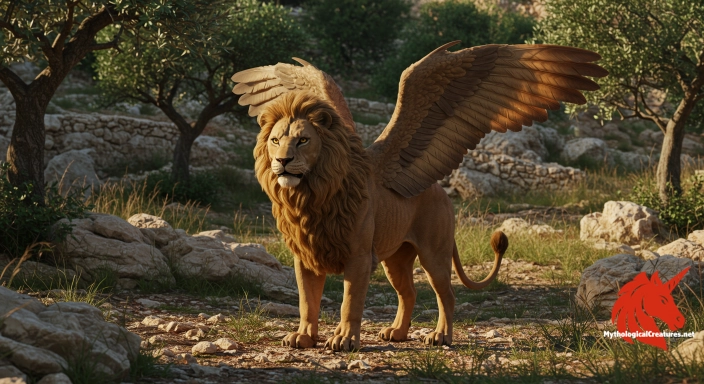
Dare to Meet the Winged lion....
The Mythological Creatures Book Series
Yokai, Greek, Norse, Egyptian & Chinese. Five illustrated field guides to the creatures the old stories either warned or told you about.

Curated by the Mythological Creatures Team
Series editor: Mythological Creatures Directory
Primary desk: Hellenic & Ancient Mediterranean Desk
(rev. November 2025)