
Sankai: The Sankai is a birth monster from Japanese mythology.
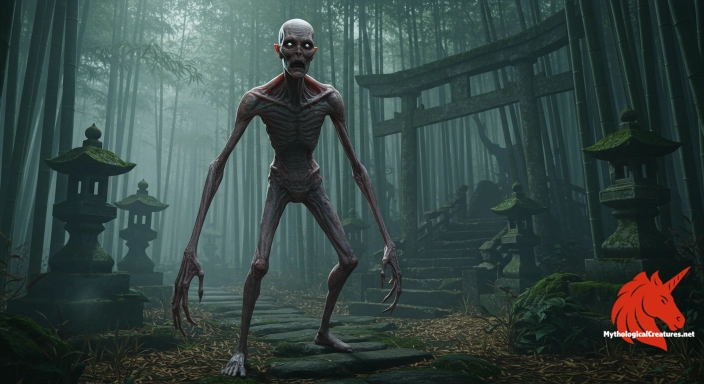
Sankai
Sankai - The sankai functions as a cautionary figure, emphasising the importance of maternal care and reflecting societal taboos surrounding childbirth.
Origins & First Encounters
Sankai is a distinctive and enigmatic figure within Japanese mythology, often referred to as the 'birth monster' and belonging to the broader category of yōkai. The creature is said to emerge from a woman when proper care and maternal rituals are neglected, linking its existence to warnings about the sanctity of pregnancy. Its origins are steeped in folklore that melds the supernatural with the everyday, reflecting societal concerns about health, purity, and the natural order of birth. Over time, the sankai has symbolised the dangerous repercussions of ignoring both physical and spiritual responsibilities during pregnancy. Embedded within a cultural landscape that values ritual correctness and familial duty, this creature stands as a grim reminder of what may be unleashed when these practices are disregarded. Although the sankai is not as widely celebrated as other yōkai, its narrative underscores critical anxieties surrounding childbirth and maternal care in historical Japan. It is thought that early depictions of this entity may have emerged as a form of social caution, reinforcing communal norms through myth. The legend intertwines with traditional beliefs and the pervasive reverence for life and its proper beginnings. Myths such as these were often told in hushed tones, serving both as entertainment and as moral instruction. Ultimately, the sankai remains an enduring symbol of the peril inherent in neglecting the careful and respectful process of birth.
Source Texts & Tale Variants
The primary accounts of the sankai are sparsely recorded and tend to appear as fragments within the broader compendiums of yōkai lore. Early references can be traced to period texts and oral traditions, where anomalous births were occasionally mentioned among supernatural phenomena. Over the centuries, scattered essays and woodblock prints have provided only glimpses into the myth, leaving room for multiple interpretations and additions by local storytellers. Some narratives treat the creature as an inevitable consequence of failing to observe ritual purity during pregnancy, while other versions cast it as a mysterious, almost fated aberration. The transmission of the sankai story through generations was largely oral, resulting in considerable variation between regions and time periods. Written records from the Edo period, though few, suggest that such tales were intended as behavioural guides, warning of dire repercussions for neglecting familial and spiritual duties. In addition, regional manuscripts have occasionally integrated the sankai legend into broader compilations of oddities and moral parables. The fragmented nature of these sources has imbued the creature with an air of mystery and has allowed its myth to evolve. Each retelling contributes a new layer to the creature’s lore, reflecting the shifting values of society. In this way, the primary sources and story variants of the sankai offer a fascinating glimpse into a myth that is at once cautionary, complex, and rich in cultural significance.
Form & Powers
The physical manifestation of the sankai is shrouded in ambiguity, with literary and artistic sources offering only broad descriptions of its form. Many portrayals suggest an unsettling blend of human and monstrous traits, emphasising its aberrant birth through disjointed anatomical features. Common descriptions include pallid skin and exaggerated features, such as oversized eyes or twisted limbs, that serve to immediately unsettle the viewer. Some accounts hint at an asymmetrical physique, as if nature itself had been jolted during its creation. Variations in size and proportion also appear in different depictions, indicating that no single standard representation has been established. The creature is sometimes depicted with sparse, unkempt hair and haunting, vacant eyes that seem to capture both sorrow and terror. Traditional woodblock illustrations often imbue the sankai with a faint, ethereal glow, suggesting an otherworldly presence. These physical details amplify its status as an anomaly—both a biological aberration and a supernatural warning. Art and folklore converge in these depictions, each version reflecting the artist’s or storyteller’s attempt to capture the essence of the unnatural birth. Overall, the visual legacy of the sankai is one of disturbed beauty and eerie peculiarities that challenge the natural order.
Regional Faces
Regional interpretations of the sankai reveal a diverse tapestry of local beliefs and traditions across Japan. In certain parts of the country, particularly in rural communities, the creature is regarded as a malevolent omen, a direct consequence of neglecting the rituals associated with pregnancy. In remote mountain villages, anecdotes about the sankai often associate its appearance with barren fields or misfortune in the local harvest. Urban centres during the Edo period, however, sometimes rendered the creature in a more refined yet still unsettling manner, blending elements of humour with dread. Coastal areas infused the narrative with maritime overtones, telling tales of the creature being drawn toward the sea by restless spirits. These local adaptations highlight how environmental and social contexts can reshape the interpretation of a myth. Some regions view the sankai with a degree of pity, as an unfortunate by-product of a broken natural order, while others emphasise its role as a strict warning against improper conduct. Traditions surrounding birth and maternal care vary markedly from one district to another, and the sankai becomes a mirror reflecting these differences. Whether seen as a curse or a tragic sign, its regional portrayals underscore the deep-rooted cultural anxiety over life’s most sacred moments. Thus, each local variant of the sankai myth contributes to a richer, more multifaceted understanding of this eerie birth monster.
Cultural Parallels
Across various cultures there exist legends of monstrous births that share intriguing similarities with the sankai. Greek mythology, for example, recounts the emergence of aberrant beings like the Minotaur, whose origins were steeped in unusual and fateful circumstances. In some Indian traditions, anomalous births are met with a mix of awe and apprehension, reflecting a cultural tension around the sanctity of life. Such narratives serve as cautionary reminders of the potential consequences arising from transgressions or neglect in the natural order. Unlike many of its counterparts that centre on moral retribution, the sankai places a particular emphasis on the responsibilities intrinsic to maternal care. East Asian folklore also offers parallel stories, where supernatural entities emerge as a result of disrupted ritual practices and familial imbalances. These cross-cultural myths, though diverse in detail, consistently interpret unnatural births as omens of discord and a breach of social or cosmic harmony. The shared symbolism across these traditions highlights a universal anxiety about the vulnerabilities inherent in the process of birth. Moreover, these comparative narratives illustrate how different societies articulate similar fears through myth. Ultimately, the sankai stands as a poignant example of a global motif where the abnormality of birth is laden with deep symbolic meaning.
Legacy & Modern Evolution
The historical evolution of the sankai myth reflects a gradual shift in its interpretation and cultural significance over time. Initially emerging as a stark warning against neglecting proper maternal care, the creature was once perceived solely as a malevolent force in pre-modern Japan. As cultural attitudes evolved, the legend of the sankai began to acquire additional layers of complexity, incorporating elements of both horror and tragic inevitability. In later periods, particularly during the modern era, the sankai has occasionally been reimagined in literature and visual arts, serving as a metaphor for broader societal concerns beyond childbirth alone. Its depiction in contemporary media—ranging from horror films to graphic novels—reveals a subtle blend of sympathy and fear towards its cursed existence. Modern reinterpretations often highlight the tension between traditional practices and modern scientific understanding, inviting audiences to re-examine ancient warnings in a new light. Scholars and cultural commentators now sometimes view the sankai as an allegory for the unforeseen consequences of social neglect and environmental disruption. This evolution underscores the adaptability of myth as it shifts to mirror contemporary anxieties. Today, the sankai continues to inspire creative expressions and academic debate, affirming its place in the canon of myth and legend. In its modern legacy, the creature remains a complex symbol—a haunting reminder of the delicate balance between human responsibility and the unpredictable forces of nature.
Interesting Fact
The Sankai is one of the few entities in Japanese folklore that directly links human behaviour and supernatural consequence, making it a unique manifestation of cultural anxieties surrounding pregnancy.
Mythology commerce, done carefully
Align your store with our global myth audience
If you sell myth-inspired jewellery, prints, decks, or collectibles, we can feature your brand without overwhelming the reading experience.
Partner with usQuick Creature Info
Features:
Our Mythic Legendary Rating:

Also Sometimes Known As:
Lore:
References
Discover Another Mythical Legend You May Not Have Heard Of?
Uncover the mysteries of ancient folklore and expand your knowledge of legendary beings from cultures around the world.
Dare to Meet the Wagyl....
Curated by the Mythological Creatures Team
Series editor: Mythological Creatures Directory
Primary desk: Asian & Pacific Myth Cycles Desk
(rev. November 2025)