
Sarama: Sarama is a divine canine in Hindu mythology, known as the female dog of the gods and a helper of Indra.

Sarama
Sarama - Sarama is revered as the progenitor of all dogs and plays a crucial role in restoring divine order by assisting Indra.
Origins & First Encounters
Sarama is a fascinating figure in Hindu mythology whose origins can be traced back to the ancient verses of the Rig Veda. She is celebrated as the divine canine companion of Indra, the king of gods, and serves as a bridge between the celestial and the earthly realms. Her earliest mention in these sacred texts highlights her role in aiding the deities during times of cosmic turmoil, notably in the recovery of sacred cows from malevolent forces. Over time, her story evolved to symbolise loyalty, protection, and the nurturing spirit that binds the divine with the natural world. Her character is underscored by a sense of duty and maternal care, as she is revered as the progenitor of all dogs. The cultural context of her myth reflects the intricate interplay between divinity and nature, where animals are seen as vital links in a larger cosmic order. As her legend matured, Sarama came to embody both the mystical guidance of the gods and the enduring spirit of the animal kingdom. The enduring narrative of her deeds has influenced various layers of Vedic literature and continues to resonate with themes of faith and guardianship.
Source Texts & Tale Variants
The earliest and most prominent source that introduces Sarama is the Rig Veda, where her legend is intricately tied to Indra’s heroic exploits. In these ancient hymns, she plays a crucial role in the quest to retrieve the stolen cattle, thereby establishing her as a trusted aide to the gods. Subsequent references in epics such as the Mahabharata, though brief, serve to reinforce her identity within the divine narrative. Various Puranas also allude to her story, adding layers of interpretation and folklore that have enriched her myth over the centuries. Diverse textual accounts have offered variants of her tale, with some emphasising her role as a guide to otherworldly realms and others highlighting her status as the matron of all canines. These differences in narrative approach underscore the flexibility and expansiveness of her mythological character. Although the Rig Vedic texts initially left her physical form open to suggestion, later recensions began to portray her in a decidedly canine shape. Each rendition in these primary sources contributes to a complex and evolving portrayal that underscores her significance in Hindu tradition. The multiplicity of sources ensures that her story remains a living and adaptive element in the corpus of mythological literature.
Form & Powers
Sarama’s physical depiction is rich in symbolic detail, evolving significantly from the early fluid representations found in the Rig Veda to the more concrete canine form seen in later texts. Initially, her form was open to interpretation, embodying the abstract qualities of spirit and guidance rather than a fixed anatomical structure. In later mythological depictions, she is consistently shown as a dog with a noble bearing, often portrayed with an aura that hints at her divine origin. Artists have imagined her with a gleaming coat and penetrating eyes that suggest both wisdom and otherworldly vigilance. Descriptions sometimes allude to unusual attributes such as an enhanced perception, reflected metaphorically in the notion of additional eyes in her lineage. The physical features attributed to Sarama merge the elegance of a revered animal with the imposing presence of a divine guardian. Her build is frequently depicted as both robust and agile, embodying strength tempered with grace. Subtle embellishments in artistic portrayals, from distinctive markings to a majestic stance, underscore the inherent symbolism of her role as the mother of all dogs. Through these vivid visual details, Sarama’s form becomes a metaphor for the sacred bond between the divine and the natural world.
Regional Faces
Sarama’s myth has travelled across diverse regions of the Indian subcontinent, leading to a fascinating array of local interpretations and adaptations. In certain regional traditions, her role is emphasised as that of a protective guardian whose presence wards off malevolent forces and brings good fortune. Other local narratives focus more intently on her maternal attributes, celebrating her as the ancestral mother of all canine beings. Temple carvings and folk art across various areas often depict her with distinctive regional stylistic elements, infusing traditional iconography with a unique local flavour. In some communities, she is revered not only as a mythological figure but also as a spiritual emblem whose image is invoked during protective ceremonies. The variations in her portrayal extend to details such as fur patterns, posture, and even the symbolic accoutrements that accompany her image in ritual artefacts. These regional adaptations reflect a broader cultural practice of integrating ancient mythological legends into local religious and social traditions. As a result, her legend has been dynamically woven into the cultural fabric of multiple communities, each offering its own nuanced interpretation of her divine legacy.
Cultural Parallels
The myth of Sarama invites a rich comparative analysis with similar divine and spiritual canines across different cultures and traditions. In many parts of the world, canine figures are imbued with traits of loyalty, guardianship, and spiritual connectivity, aspects that resonate strongly with Sarama’s role in Hindu mythology. For instance, in Greco-Roman lore, hounds are often portrayed as guides in the journey between life and the underworld, a role that parallels Sarama’s function as a mediator between the divine and mortal realms. Comparisons can also be drawn with sacred dogs of other Indo-European traditions, where they are revered as protectors and symbols of fidelity. Unlike some of these cultural counterparts, though, Sarama’s character uniquely intertwines themes of maternal care with her function as a divine messenger. This blend of qualities sets her apart from purely spectral or guardian hounds found in other mythologies. The universal motif of a divine or ancestral animal figure underlines cross-cultural similarities in how human societies view the connection between the ethereal and the tangible. In comparing her narrative with those of other mythological canines, Sarama emerges as a particularly multifaceted figure whose story contributes to an extensive tapestry of global mythic traditions. Such parallels emphasise the shared human inclination to honour the bond between humanity and the animal world, particularly through figures that embody both protection and wisdom.
Legacy & Modern Evolution
Over the centuries, the depiction of Sarama has undergone a significant evolution, reflecting changes in cultural priorities and artistic expression. Early Vedic hymns introduced her as a versatile spirit whose form was left open to symbolic interpretation, a characteristic that later contributed to her identification as a distinct canine entity. As mythological narratives were retold in the Mahabharata and various Puranas, her role as the divine helper and mother of dogs became more firmly established. Modern artistic renditions, ranging from traditional paintings to contemporary digital art, have solidified her image as a noble guardian imbued with sacred light. Her legacy has transcended textual boundaries, influencing temple iconography, folklore traditions, and even modern reinterpretations in literature and cinema. Sarama’s enduring presence is a testament to the timeless appeal of her myth, embodying themes of loyalty, protection, and the mystical synergy between the divine and the natural. In today’s cultural landscape, she continues to inspire depictions that celebrate the sacred role of animals in the cosmic order. Her narrative, ever dynamic and multifaceted, mirrors the evolving relationship between ancient myth and modern cultural expression. The continued reverence for Sarama highlights her significance as a perennial symbol of spiritual guardianship and familial care among all canine forms.
Interesting Fact
An interesting aspect of Sarama is that, while she is primarily regarded as the mother of all dogs, some texts also ascribe to her the role of progenitor for all wild animals, underscoring the deep cultural significance of canines in ancient Hindu cosmology.
For serious mythcraft
Your project belongs among the legends
If your work deepens how people understand, play with, or teach mythology, a sponsor placement here keeps it in front of the right readers all year.
Submit a sponsorship enquiryQuick Creature Info
Features:
Associations:
Our Mythic Legendary Rating:

Also Sometimes Known As:
Habitat:
Supernatural Powers:
Physical Attributes:
Abilities:
Behavior:
Lore:
References
Discover Another Mythical Legend You May Not Have Heard Of?
Uncover the mysteries of ancient folklore and expand your knowledge of legendary beings from cultures around the world.
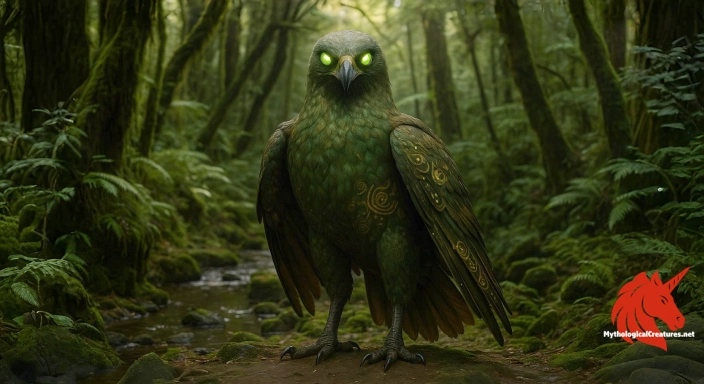
Dare to Meet the Hākuturi....
Curated by the Mythological Creatures Team
Series editor: Mythological Creatures Directory
Primary desk: Asian & Pacific Myth Cycles Desk
(rev. November 2025)