
Shinma Aungphyu: Shinma Aungphyu, also known as Phyaleit Nat, is a prominent Burmese nat renowned for her distinctive iconography.
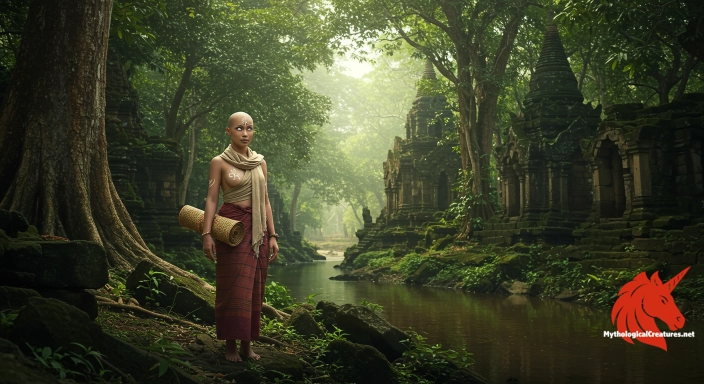
Shinma Aungphyu
Shinma Aungphyu - An important cultural deity symbolising domesticity and spiritual protection through her unique iconography.
Origins & First Encounters
Shinma Aungphyu emerges as a celebrated figure within Burmese mythology, revered as one of the prominent nat spirits. Her origins are steeped in an intricate blend of animistic traditions interwoven with the sacred practices of early Burmese culture. She was first acknowledged through local oral traditions and ritual ceremonies that have been honoured for centuries. Over time, her narrative has come to embody both the enigmatic mystique of the divine and the comforting familiarity of everyday life. As her stories spread across communities, she became known by multiple names, each reflecting a different facet of her character. The sobriquet Phyaleit Nat, meaning 'rolled mat', speaks to a tangible link between common domestic elements and spiritual symbolism. Her depiction – adorned with traditional thanakha, a decorative scarf, and the distinct htamein – highlights her deep cultural roots as well as her role as a mediator between the physical and sacred worlds. The enduring celebrations in festivals and nat ceremonies further cement her importance as a guardian spirit whose influence spans generations. Her myth has grown in parallel with societal evolution, echoing both historical traditions and modern adaptations. Today, Shinma Aungphyu stands as a living testament to the rich cultural and spiritual heritage of Myanmar.
Source Texts & Tale Variants
The primary records of Shinma Aungphyu are woven through a tapestry of local chronicles, oral narratives, and ritual performances that have sustained her legend over the years. Numerous village recitations, traditional songs, and ceremonial dramas have preserved the multifaceted stories of this revered nat. Despite the scarcity of formal written texts, the oral tradition imbues her myth with a dynamic and evolving character that resonates deeply within local communities. Storytellers and ritual artists have each contributed varying details to her tale, incorporating regional influences and personal interpretations. These diverse accounts not only enrich her narrative but also illustrate how communal memory shapes spiritual identities. Annual festivals and dedicated nat ceremonies further serve as living documents that continuously reframe and reaffirm her legacy. The seamless integration of performance art into her myth highlights the adaptability and vitality of Burmese spiritual traditions. Even in the absence of a single canonical source, the multitude of variants reflects the robust nature of her cultural significance. This rich blend of folklore and ritual performance ensures that her story remains as vibrant today as it was in the past. Overall, the varied textual and performative sources underscore a deep communal reverence that defies a single, fixed narrative.
Form & Powers
Shinma Aungphyu is consistently depicted with a serene yet commanding presence that sets her apart among the pantheon of Burmese nat spirits. Her face is gently adorned with thanakha, an earthen cosmetic that lends her a warm, luminous quality while echoing indigenous beauty practices. The scarf she wears is rendered with intricate designs, showcasing the rich tradition of Burmese textile art. Complementing this, the htamein in her attire is often depicted in vibrant hues and patterns, symbolising both cultural pride and artistic craftsmanship. The rolled-up mat that she carries is not merely an accessory; it is a profound emblem of everyday life transformed into a sacred object. Artists imbue her figure with a mix of elegance and approachable grace, reflecting a careful balance between divinity and humanity. Subtle details in her depiction, such as modest jewellery and delicately arranged garments, further enhance her enigmatic allure. Some portrayals present her as statuesque and dignified, while others capture her in a softer, more nurturing light. This physical portrayal, rich in symbolic detail, invites devotees to appreciate both her spiritual power and her connection to daily life. In essence, every visual element associated with her serves as a deliberate nod to her longstanding role as a guardian and muse within Burmese culture.
Regional Faces
The portrayal of Shinma Aungphyu exhibits notable regional variations that reflect the diverse cultural fabric of Myanmar. In some urban centres, her image is reimagined with modern artistic accents, incorporating bolder colours and contemporary design motifs. Conversely, rural depictions tend to preserve the time-honoured traditions of her iconography, celebrating the rustic aesthetics of ancient Burmese art. In certain regions, local festivals add unique narrative twists, emphasising facets of her persona that resonate with community-specific beliefs. Variations in her attire and the use of locally sourced embellishments further distinguish these regional interpretations. Folk performances in different provinces may integrate distinct musical styles or dance routines that pay homage to her myth in ways that are immediately recognisable to local audiences. These adaptations not only underscore her flexibility as a cultural symbol but also mirror diverse local histories and environmental contexts. The intermingling of regional artistic expressions with her narrative reflects a broader dialogue between tradition and locality. Whether through modified costume elements or nuanced storytelling, each regional variant reaffirms her continuing relevance. Such vibrant local adaptations ensure that her spirit remains both universally revered and intimately connected to community identity.
Cultural Parallels
In comparative terms, Shinma Aungphyu holds a unique position that resonates with similar protective figures across Southeast Asia. Her integration of everyday objects, such as the symbolic rolled mat, mirrors the way domestic utilitarian artefacts are interwoven into the spiritual narratives of other cultures. Such an approach finds echoes among Thai phi and Laotian spirit figures, where commonly used items assume profound metaphoric significance. Her gentle yet potent presence invites comparisons with indigenous goddesses and guardians who embody both warmth and authority. The interplay between her compassionate qualities and her commanding aura is a recurring theme in many mythological systems in the region. Visual elements like the application of thanakha and the styling of traditional attire also place her in dialogue with broader artistic traditions that celebrate cultural heritage. These cross-cultural similarities highlight a universal tendency to elevate ordinary aspects of daily life into revered symbols of protection and communal continuity. While her story is rooted in the Burmese tradition, her thematic elements offer a window into a shared regional consciousness where femininity and guardianship are celebrated. Such parallels provide fertile ground for deeper exploration into the interconnectivity of Asian mythologies. Ultimately, the comparative study of figures like Shinma Aungphyu enriches our understanding of how diverse cultures conceptualise the interface between the mundane and the divine.
Legacy & Modern Evolution
Over time, Shinma Aungphyu has flourished from a locally revered spirit into an enduring symbol of cultural pride and identity in Myanmar. Historical depictions of her have gradually transformed from understated ritual images into more vivid and multi-layered representations in modern artistic media. Her figure now graces contemporary festivals, stage performances, and visual arts, each reinterpreting her myth for a new generation. Through films, murals, and digital artworks, her narrative is continually revitalised and reinvigorated, bridging a gap between ancient practice and modern expression. In many modern adaptations, she is celebrated explicitly for her role as a beacon of feminine strength and resilience in the face of societal change. This evolution reflects a broader trend where traditional mythology is reimagined to align with the values of modernity while still honouring its ancestral roots. Cultural activists and scholars alike celebrate her as a vital link between past traditions and current social consciousness. Her presence in public art and ritual ceremonies continues to reinforce communal bonds, fostering a renewed appreciation for heritage and spirituality. Manifesting both timelessness and adaptability, her modern legacy challenges and inspires contemporary views on identity, culture, and the sacred. In this evolving narrative, Shinma Aungphyu remains a powerful emblem of the enduring spirit that sustains the cultural memory of Myanmar.
Interesting Fact
Her distinctive portrayal with a rolled mat underscores how ordinary objects can embody significant spiritual symbolism in Burmese culture, setting her apart in the nat pantheon.
Partner with us
Sponsor this space
Reach thousands of mythology enthusiasts with a curated placement on our creature pages.
Learn about sponsorshipQuick Creature Info
Origin:
Features:
Associations:
Our Mythic Legendary Rating:

Also Sometimes Known As:
Habitat:
Supernatural Powers:
Physical Attributes:
Abilities:
Behavior:
Lore:
Related Creatures, Tales or Lore
- MMin Mahagiri
- TThagyamin
- MMaung Tint De Nat
References
Discover Another Mythical Legend You May Not Have Heard Of?
Uncover the mysteries of ancient folklore and expand your knowledge of legendary beings from cultures around the world.
Dare to Meet the Dáinn....
-13889574-51d1-42cf-ab54-b657019af144_small.webp "Depiction of Dáinn")
Curated by the Mythological Creatures Team
Series editor: Mythological Creatures Directory
Primary desk: Asian & Pacific Myth Cycles Desk
(rev. November 2025)