
Shwe Sitthin: Shwe Sitthin, also known as the Golden Warrior or Lord of the White Horse, is one of the 37 revered nat spirits of Burmese folklore.
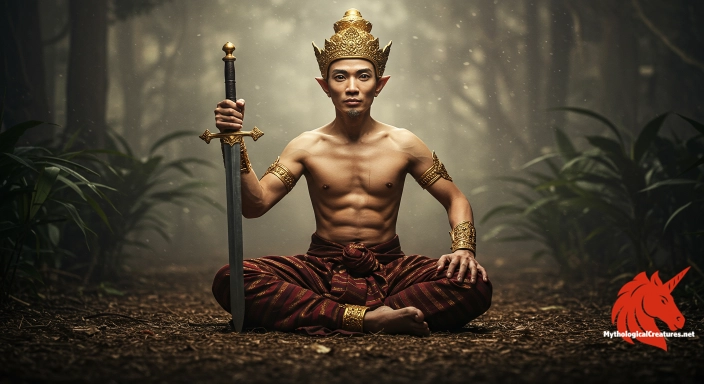
Shwe Sitthin
Shwe Sitthin - Represents the duality of royal nobility and human fallibility, and serves as a symbolic figure in Burmese spiritual tradition
Origins & First Encounters
Shwe Sitthin occupies a singular position among the 37 revered nat spirits in Burmese tradition, embodying both regal nobility and the complexities of human frailty. Born into royal lineage as the son of King Saw Mon Nit, he emerged from the twilight era of the Pagan dynasty, a period steeped in both splendour and turmoil. His narrative, which intertwines the splendours of royalty with the pitfalls of personal shortcomings, continues to captivate devotees and scholars alike. Known also as Myin Phyu Shin, or the 'Lord of the White Horse', his dual appellation highlights his commanding presence as well as his connection to equine symbolism in local lore. His story is not just a myth but a reflection of the intricate interplay between duty, indulgence, and the consequences that befall even the most illustrious of figures. The legend of Shwe Sitthin first found life in oral traditions and royal narratives that celebrated both his heroic attributes and his tragic failings. Celebrated for his valor yet cautionary in his moral decline, he exemplifies the universal themes of aspiration and human error. The spirit’s enduring legacy is interwoven with the broader cultural and spiritual practices of Myanmar, where he is invoked in rituals and communal observances. His myth continues to inspire a dynamic blend of reverence and introspection, making him a timeless emblem in Burmese folklore. Ultimately, Shwe Sitthin remains a compelling symbol whose story bridges the realms of mortal imperfection and transcendent renown.
Source Texts & Tale Variants
A rich tapestry of texts and oral accounts forms the backbone of Shwe Sitthin’s myth, with early inscriptions and state chronicles shedding light on his dramatic life events. Traditional performance arts, including shadow plays and puppet theatre, have long been vehicles through which his tale is passed from one generation to the next. Over time, diverse manuscripts and temple narratives have provided layered retellings, each accentuating different facets of his character and the moral lessons he embodies. Some verses detail his royal origins and encapsulate the tragedy of a life derailed by neglect and imprudence in times of crisis. Variations in his story reveal a constant interplay between valour and vice, allowing for interpretations that range from heroic saviour to a warning against moral laxity. Folk narratives occasionally embellish his royal attire and emblematic sword, reinforcing the enduring image of a deified warrior. Oral tradition has been particularly influential, with local bards and ritualists adapting his story to reflect contemporary societal values and conflicts. The multiplicity of sources provides a nuanced understanding of his character, blending historical facts with spiritual allegory. As a result, the myth of Shwe Sitthin remains a living narrative, shaped by both written records and the immeasurable influence of oral tradition. Such a dynamic corpus ensures that his legend continues to evolve within the cultural consciousness of Myanmar.
Form & Powers
Artistic portrayals of Shwe Sitthin powerfully capture the essence of a poised and dignified warrior-spirit, reflecting his royal lineage and tragic destiny. His image typically presents him seated in a meditative yet authoritative posture, which symbolises both restraint and latent martial prowess. A striking feature is his chadah-style golden crown, elaborately decorated with traditional motifs that emphasise his otherworldly status. The careful depiction of his face, often serene and contemplative, reveals a balance between youthful vigour and the sorrow of past misadventures. Clutched firmly in his hand is a sword held upright by its hilt, a constant reminder of his dual role as both a protector and a flawed warrior. His regalia is further enhanced by subtle details in his attire, including intricate embroidery and patterns reflective of the royal court. The interplay of light and shadow in many artworks bolsters the sense of divine radiance that surrounds him. In various forms of traditional art, his figure is rendered in vibrant colours, which serve to enhance the mystique and alluring presence of this nat spirit. His physical depiction thus operates on multiple levels, encapsulating themes of nobility, martial skill, and the inexorable passage of fate. Each element of his iconography is meticulously crafted, ensuring that his image endures as a testament to both beauty and tragic heroism.
Regional Faces
Local renditions of Shwe Sitthin’s story reveal how deeply regional traditions have shaped his portrayal across different parts of Myanmar. In rural communities, his legend is interwoven with local festivals and village rituals, where his presence is believed to safeguard the wellbeing of the community. Artistic interpretations in various provinces often introduce unique regional stylistic elements, such as distinct ornamental patterns and colour palettes that reflect the local cultural heritage. In some northern areas, depictions of Shwe Sitthin incorporate Buddhist motifs, symbolising a fusion of indigenous nat traditions with broader spiritual practices. The mystery surrounding his identity is sometimes augmented by emphasising his association with the white horse, an emblem that resonates particularly with certain local equestrian traditions. Every region seems to lend its own local flavour to his myth, adapting his story to address local issues of honour, duty, and retribution. Community festivals might even feature dramatizations of his past, allowing villagers to connect with his narrative on a personal level. Local craftsmen and artisans produce talismans and sculptures that capture regional aesthetic sensibilities while remaining faithful to the core themes of his myth. Thus, the regional diversity in his images and stories underscores a living, breathing tradition that continues to evolve over time. Each local adaptation adds a new layer to the multifaceted legacy of Shwe Sitthin, ensuring his appeal endures in both urban and rural settings.
Cultural Parallels
The narrative of Shwe Sitthin resonates with a number of mythological archetypes found in cultures far beyond Burma, reflecting universal themes of heroic valour and tragic downfall. His depiction as a deified warrior finds echoes in similar figures across Southeast Asia, where spirits and deities often arise from flawed human heroes. Comparable tales in Thai and Lao lore similarly celebrate warriors who, despite human failings, rise to achieve a sanctified status among the divine. Western folklore also presents avatars of imperfect heroes whose transgressions lead to a lasting legacy, thereby drawing subtle parallels with the complex journey of Shwe Sitthin. Many of these figures share the motif of a slain or sacrilegious royal who, posthumously, is honoured for his martial prowess. Such cultural parallels underline a shared human fascination with the interplay between nobility and personal error, transforming mortal misdeeds into teachings that transcend the ages. Iconography, including the prominent sword and resplendent crown, is a recurring theme that bridges disparate cultural narratives. His myth not only engages with the specifics of Burmese history but also invites broader discussions about the nature of power, downfall, and redemption. Cross-cultural comparisons reveal that the archetype of a flawed hero who is eventually immortalised transcends geographical boundaries. In this way, Shwe Sitthin's story enriches the global tapestry of myth by highlighting universal truths about human nature and the enigmatic allure of divine intervention.
Legacy & Modern Evolution
Over the centuries, the myth of Shwe Sitthin has been continuously reimagined, reflecting shifts in Burmese society and religious practice. Originally enshrined in the annals of royal tragedy and martial splendour, his story has evolved into a symbol of resilience and transformative potential. Modern artistic endeavours have reinterpreted his iconography, bringing together traditional imagery with contemporary creative expressions. In festivals, theatre, and visual arts, his golden crown and upright sword remain potent symbols that evoke both honour and caution. His legacy is celebrated in myriad forms, from sculptures in bustling urban centres to subtle representations in rural ritual practices. Artists have embraced his narrative, highlighting the dualities of bravery and human error to resonate with modern audiences. Contemporary portrayals often weave his ancient story with current themes of responsibility, strife, and redemption. These modern reinterpretations underscore the enduring cultural relevance of Shwe Sitthin, as they capture the timeless tension between glory and downfall. His evolving legacy serves as a bridge between age-old traditions and the modern quest for spiritual and moral renewal. In this way, Shwe Sitthin endures as a vibrant emblem of Myanmar's rich folkloric heritage and the perennial human struggle to reconcile strength with imperfection.
Interesting Fact
Despite his failure to uphold his royal duties in life, Shwe Sitthin's transformation into a nat exemplifies the complex nature of redemption and the multifaceted character of Burmese spiritual traditions.
Reach myth fans
Connect your myth-driven brand with this audience
Our readers are writers, educators, gamers, and collectors who care about mythology. Enquire about a limited sponsor placement on creature pages.
Enquire about sponsorshipQuick Creature Info
Origin:
Features:
Associations:
Our Mythic Legendary Rating:

Also Sometimes Known As:
Habitat:
Supernatural Powers:
Physical Attributes:
Abilities:
Behavior:
Lore:
Related Creatures, Tales or Lore
- TThagyamin
- MMin Mahagiri
- MMaung Tint De
References
Discover Another Mythical Legend You May Not Have Heard Of?
Uncover the mysteries of ancient folklore and expand your knowledge of legendary beings from cultures around the world.
Dare to Meet the Mami Wata....
Curated by the Mythological Creatures Team
Series editor: Mythological Creatures Directory
Primary desk: Asian & Pacific Myth Cycles Desk
(rev. November 2025)