
Sihirtia: Sihirtia are a mythical people from Nenets folklore who inhabited the Siberian tundra before the arrival of the Nenets.
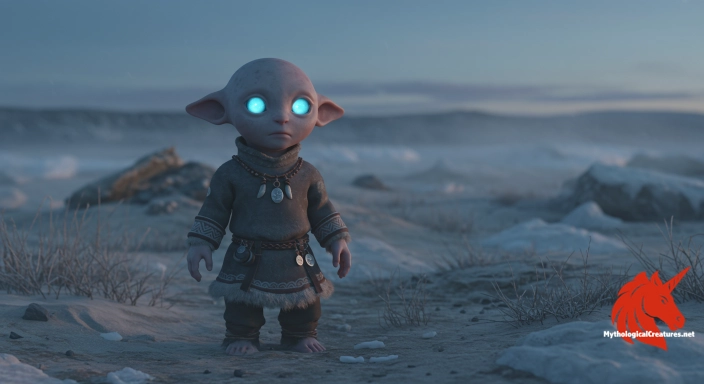
Sihirtia
Sihirtia - They serve as a remnant of an ancient culture predating the Nenets, with their dual nature of bestowing luck or misfortune underlining a deeply enigmatic legacy in regional mythology.
the legend in five swipes.
the legend in five swipes.
Where does the story of the Sihirtia begin?
The legend of the Sihirtia unfolds against the stark, windswept backdrop of the tundra, where they are imagined to have dwelt long before the Nenets made these icy lands their home. Their origins are shrouded in a mixture of historical memory and imaginative myth, with whispers that they may have been real people of Samoyedic or Paleo-Siberian descent. The Sihirtia appear in the folklore of the Nenets as mysterious, otherworldly beings whose presence evoked both wonder and caution. Their narrative is intertwined with the natural rhythms of the arctic, reflecting the harsh challenges of tundra existence and the delicate balance between survival and the supernatural. The myth encapsulates a time when the boundaries between human communities and the enigmatic forces of nature were remarkably fluid. Subtle hints in the legend suggest that they were capable of both brilliant craftsmanship and formidable combat, a combination that set them apart in early folk memory. Over the centuries, their story has evolved to mirror the transition from ancient traditions to a more settled cultural identity among the indigenous. The Sihirtia continue to captivate the imagination, serving as a living symbol of a forgotten, yet deeply resonant, part of the region’s past. The blend of historical possibility with the ethereal qualities of myth makes them an enduring emblem of the mysterious frontier of northern life. Their legacy is a testament to the power of folklore to preserve fragments of history even in the most challenging environments.
Which texts first mention the Sihirtia?
The primary records of the Sihirtia are rooted in the oral traditions of the Nenets, where the tales of these small, enigmatic people have been passed down through the ages. Alongside the recurring motifs of their physical appearance and otherworldly habits, many variations of their story exist within different Nenets communities. Some storytellers recount that the Sihirtia emerged with the night or from swirling mists, adding an extra layer of mystery to their lore. A number of accounts describe their interactions with humans, detailing encounters that brought good fortune or misfortune depending on the circumstances. Multiple versions of the myth suggest that their unique gestures and speech were distinctive enough to be remembered vividly by those who witnessed them. In several narratives, the Sihirtia are lauded as skilled artisans and warriors, a duality that enhances the complexity of their cultural portrayal. There are also stories that hint at intermarriages between the Sihirtia and the Nenets, further merging the lines between myth and ancestral reality. The oral accounts have been enriched over time with local variations that emphasise either their benevolent or ominous qualities. Each variant contributes to a layered tradition, with the recurring themes highlighting their connection to both the natural and supernatural realms. This wealth of narrative evidence firmly embeds the Sihirtia in the broader tapestry of indigenous myth, making them a fascinating subject for further cultural exploration.
Sihirtia: What Manner of Being?
The physical depiction of the Sihirtia is marked by a striking blend of delicacy and otherworldly charm. Descriptions consistently portray them as small in stature, accentuating their nimble, almost fairy-like presence in the vast tundra. Their attire was noted to be exquisitely crafted, featuring beautiful clothes adorned with metal pendants that caught the light in a magical fashion. A particularly memorable detail is the mention of their light blue, almost white, eyes which imbue their gaze with an ethereal quality. They were also said to speak with a slight stutter, a characteristic which further set them apart from their human contemporaries. Their choice of dwelling in tall sandy hills suggests an intimate relationship with the natural landscape, as if nature itself provided for their mysterious lifestyle. The combination of their small size, refined clothing, and distinctive mannerisms paints a picture of a people both intimately connected with and yet apart from the human world. The subtle physical traits, from their luminous eyes to their unique vocal patterns, underline the paradox of their existence: familiar in form yet profoundly enigmatic. Each descriptive element contributes to an image that is as poetic as it is precise. Such detailed portrayals ensure that the memory of the Sihirtia continues to fascinate both scholars and enthusiasts of myth.
The Geography of the Sihirtia Legend
The myth of the Sihirtia is coloured by regional nuances that reflect the diverse cultural landscapes of the tundra. In northern narratives, the Sihirtia are sometimes depicted as ethereal beings who emerge from mists or the darkness of the arctic night, highlighting the mystical qualities of the region. Variations in the story reveal that while some Nenets communities see them as benevolent, others caution against their unpredictable nature. In neighbouring traditions, particularly those of other Samoyedic groups, the Sihirtia are occasionally portrayed with attributes that emphasise their skill in both craftsmanship and combat. Local adaptations of the legend incorporate specific environmental features, such as the prominence of sandy hills and the vast expanse of wilderness, making the lore highly sensitive to its surroundings. In some areas, these mythical people are even credited with the knowledge of underground travel and the management of large, now-extinct fauna. The regional diversity of these tales has allowed the myth to evolve differently depending on the local interactions with the harsh environment. Despite the variance, a common thread remains in the depiction of the Sihirtia as custodians of past traditions and as omens capable of bestowing good fortune or misfortune. This regional reinterpretation has ensured that the legend remains dynamic and deeply interwoven with the identity of each local community. Overall, the numerous adaptations underscore the resilience of the myth and its ability to resonate across different yet interconnected cultural horizons.
What parallels exist to the Sihirtia in other traditions?
The Sihirtia share intriguing similarities with other mythological beings found across disparate cultures, drawing fascinating parallels to various folklore traditions. Their diminutive size and distinctive physical features evoke comparisons with European fairies and dwarfs, who similarly blur the lines between mortal life and the supernatural. As with the changelings of Scandinavian lore, the Sihirtia seem to inhabit a liminal space where the ordinary and the magical intertwine. Their ambivalent role in human affairs, delivering both blessings and curses, aligns them with a tradition of small folk whose intentions remain mysterious. Both their craftsmanship and martial prowess resonate with legends of mythical beings who were revered for their ingenuity and resilience. Scholars and enthusiasts alike find that their narrative echoes themes found in circumpolar and Siberian mythologies, where the forces of nature and tradition combine in complex ways. The shared motif of interbreeding with human populations also appears in disparate cultural myths, reinforcing the idea of a mystical overlap between legendary beings and real-world communities. This blend of physical distinctiveness and moral ambivalence makes the Sihirtia a compelling subject for comparative folklore studies. Their layered character, much like other mythic peoples, serves as a bridge connecting ancient memory with modern reinterpretations. Through these parallels, the Sihirtia continue to enrich our understanding of how diverse cultures articulate the mystery of existence.
Sihirtia: Then and Now
The historical narrative of the Sihirtia has transformed over the centuries, reflecting shifts in cultural identity, archaeological insights, and modern reinterpretations of ancient folklore. As researchers have uncovered evidence hinting at a real people who may have inspired the myth, the Sihirtia have come to be seen as both a historical artefact and a living symbol in indigenous narratives. Their integration into Nenets folklore has ensured that the myth does not remain static but instead evolves with each retelling and cultural reinterpretation. Modern artists, writers, and cultural historians have embraced the Sihirtia as powerful emblems of a mysterious past that continues to influence contemporary identity. Their representation has been reimagined in various mediums—from literature and visual art to academic discourse—and in doing so, they have become channels through which ancient values and resilience are communicated. The romanticisation of the Sihirtia highlights the human desire to reconnect with the enigmatic origins of community and to find beauty in the interplay between myth and history. Today, they serve not only as relics of a bygone era but also as inspiration for discussions on the merger of factual and fantastical narratives in indigenous culture. Their enduring legacy underscores the importance of preserving folklore as a dynamic record of communal memory. The evolution of the Sihirtia myth thus continues to illuminate the intricate ways in which history, identity, and myth shape one another. In this ongoing cultural dialogue, their story remains a profound reminder of the deep, interwoven roots that sustain modern indigenous traditions.
Interesting Fact
Some scholars believe that the Sihirtia legend may be a mythologized memory of a real Paleo-Siberian people, hinting at a complex prehistoric cultural landscape in the tundra.
Mythological Treasures
Greek Myths: A field guide to the monsters of ancient Greece
Every monster here earned its place in legend, and each gets a full page of artwork and the story behind it.
Norse Sagas: A field guide to the beasts of the Viking world
Drawn from the saga accounts themselves, with the powers, weaknesses and doom of each being set out.
Egyptian Legends: A field guide to the gods and monsters of ancient Egypt
Guardians of the living and devourers of the dead, with the role each played in judgement.
the legend in five swipes.
Advertising opportunity
Showcase your mythology project
We offer limited sponsor placements for books, courses, games, and creators aligned with our audience.
View partnership optionsQuick Creature Info
Origin:
Associations:
Our Mythic Legendary Rating:

Also Sometimes Known As:
Habitat:
Supernatural Powers:
Physical Attributes:
Abilities:
Behavior:
Lore:
Related Creatures, Tales or Lore
- LLeprechauns
- TTomte
- HHuldufólk
References
Discover Another Mythical Legend You May Not Have Heard Of?
Uncover the mysteries of ancient folklore and expand your knowledge of legendary beings from cultures around the world.
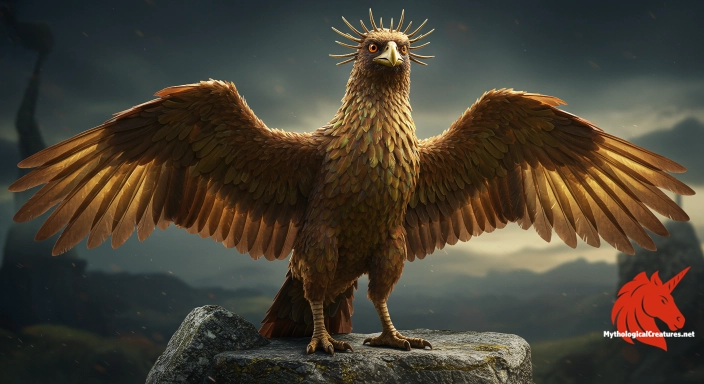
Dare to Meet the Gullinkambi....
The Mythological Creatures Book Series
Yokai, Greek, Norse, Egyptian & Chinese. Five illustrated field guides to the creatures the old stories either warned or told you about.
Curated by the Mythological Creatures Team
Series editor: Mythological Creatures Directory
Primary desk: Asian & Pacific Myth Cycles Desk
(rev. November 2025)