
Simhamukha: Simhamukha, also known as the Lion Face Dakini, is a fierce wisdom dakini in Tibetan Buddhism depicted with the head of a snow lion.
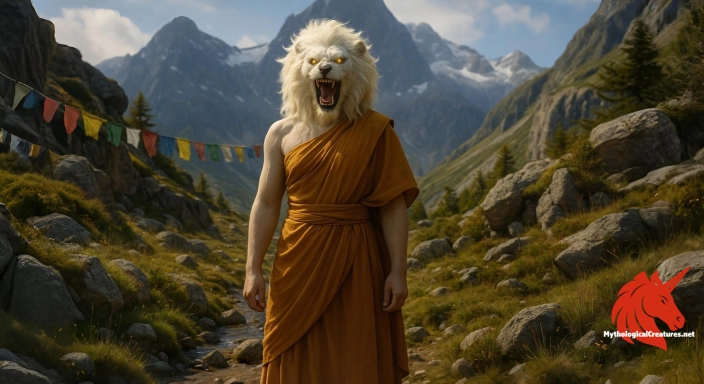
Simhamukha
Simhamukha - Represents the accomplished female practitioner; her roar disperses discursive thoughts and averts magical attacks.
Origins & First Encounters
Simhamukha, known as the Lion Face Dakini, is a compelling figure within Tibetan Buddhism who embodies a blend of fierce protection and transcendent wisdom. Her origins are deeply rooted in the tantric traditions of the Dzogchen lineage, where she emerged as a symbol of unbridled spiritual power. She first appears in sacred texts and ritual practices that emphasise the transformative nature of the practitioners who encounter her image. In early iconography, she is depicted as a powerful emanation of revered female archetypes, linking her to figures such as Guhyajnana Dakini, Mandarava, and Sangwa Yeshe. Her portrayal as a lion-headed figure captures both the untamed fury and the jubilant laughter that signify the liberating power of insight. The cultural context of Simhamukha reflects the Himalayan tradition of interweaving ferocity with compassion, making her an ideal meditation deity for those seeking to dissolve discursive thought. Her symbolic nudity reinforces the notion of freedom from worldly attachments and mental clutter. Through her roaring presence, she is believed to disperse illusory thoughts and negative energies. Her image has been celebrated in ritual art and thangkas, influencing generations of spiritual practitioners. Ultimately, Simhamukha stands as a testament to the dynamic interplay of fierceness and wisdom in the quest for inner liberation.
Source Texts & Tale Variants
The primary sources detailing Simhamukha’s mythos include a rich corpus of Tibetan Buddhist texts and ritual manuals tied to the Dzogchen tradition. Ancient manuscripts and thangkas vividly capture her image, reflecting a tradition that honours both her protective and transformative qualities. Various narrative strands in these texts portray her as an emanation of key dakini figures, emphasising her role as the accomplished female practitioner. The nuanced accounts that liken her to Guhyajnana Dakini, Mandarava, and Sangwa Yeshe illustrate the layered complexity of her origins. In addition to classical texts, her image appears in ritual inscriptions found in sacred Himalayan sites, reiterating her importance in spiritual defence. Oral traditions and liturgical recitations further embellish her legendary status through dynamic storytelling. The diversity of sources has allowed for multiple interpretations and symbolic nuances concerning her fierce yet nurturing nature. Contemporary scholars have examined these sources to draw parallels with similar deities in other cultural traditions. Iconographic guides and ritual commentaries provide detailed instructions on visualising her protective aspects during meditation. Together, these sources create a multifaceted narrative that continues to inspire both scholarly inquiry and devotional practice.
Form & Powers
Simhamukha is strikingly portrayed with the head of a magnificent snow lion, a feature that immediately captures the eye with its regal yet fierce expression. Her lion head is rendered with intricate detail, showcasing a mane that appears to shimmer with an almost otherworldly luminescence reminiscent of the pristine Himalayan snows. Her eyes are often depicted as burning with an intense, focused energy that is both intimidating and inspiring. The open roar of her mouth serves as a powerful metaphor for the dispelling of ignorance and the breaking of mental barriers. Despite the ferocity of her expression, her overall figure is depicted with a graceful, unadorned form that symbolises freedom from worldly distractions. The nakedness of her body accentuates the purity and directness of her meditative state, bypassing any need for embellishment. In some representations, subtle symbols such as intricate markings or ritualistic mudras complement her lion features, adding depth to her iconography. The physical attributes assigned to her are designed to evoke both awe and a sense of inner strength among devotees. Her visual presence, whether in sculptures, thangkas, or ritual banners, is crafted to communicate an energy that transcends the physical realm. This detailed portrait of Simhamukha firmly establishes her as a guardian whose appearance is as transformative as it is formidable.
Regional Faces
Regional interpretations of Simhamukha reveal variations that reflect local spiritual traditions and artistic sensibilities across the Himalayan landscape. In Tibet, she is often depicted with bold, striking features that align with the Dzogchen style, emphasising her role as a fierce dakini. In neighbouring Himalayan regions such as Nepal and Bhutan, her iconography sometimes incorporates softer elements, blending indigenous symbolism with her inherent ferocity. Local artists may adapt her image by incorporating regional motifs and vibrant colours that distinguish their interpretations from classical depictions. In Indian contexts, her resemblance to the goddess Pratyangira is accentuated, thereby linking her with a broader tradition of lion-headed deities. Some communities incorporate her image into protective amulets and ritual objects, reinterpreting her role to suit local cultural practices. Variations in her posture, the intensity of her roar, and the style of her mane can serve to indicate the regional emphasis on either meditation or martial attributes. These divergent portrayals highlight how devotees across different regions have embraced her multifaceted symbolism to address their specific spiritual and protective needs. The adaptability of her visual legend ensures that while her core attributes remain intact, her interpretation can fluidly align with diverse cultural narratives. This regional diversity has enriched her mythos, allowing Simhamukha to serve as a unifying yet versatile figure across varied spiritual landscapes.
Cultural Parallels
Simhamukha’s fierce and transcendent attributes invite rich comparative analysis with other mythological deities across diverse cultural landscapes. Her lion-faced manifestation finds a close parallel in the Indian goddess Pratyangira, whose own formidable appearance conveys a similar blend of protective ferocity and spiritual depth. The Egyptian goddess Sekmet, renowned for her lion-headed iconography and fierce disposition, serves as another striking counterpart, reinforcing the universal symbolism of the lion as a guardian and purifier. In many traditions, the lion epitomises both regal authority and the capability to ward off malevolent forces, a duality that is powerfully embodied in Simhamukha. The dynamic between destruction and renewal inherent in her imagery is also reminiscent of other fierce goddesses such as Kali, whose unyielding energy is celebrated in Hindu mythology. Comparative cultural studies reveal that although the specific rituals and narratives may differ, the central motif of a lion-headed protector is a recurrent symbol of overcoming chaos in numerous spiritual systems. The alignment of her attributes with those of venerable deities across traditions underlines the shared human endeavour to harness formidable energy for transformative ends. These cross-cultural parallels enrich our understanding of her role, situating her not only within the Tibetan dharma but also within a global mythological context. An exploration of these similarities invites deeper insights into how various cultures conceptualise the use of fearsome power in the pursuit of enlightenment. Ultimately, such comparative analysis highlights the remarkable resonance of Simhamukha’s iconography across a spectrum of spiritual narratives.
Legacy & Modern Evolution
The historical evolution of Simhamukha reflects her enduring importance from ancient tantric practices to contemporary spiritual devotion. Over centuries, her image has transformed from a secretive meditation deity into a widely recognised symbol of feminine strength and inner liberation. Early Buddhist texts and ritual art portray her as a potent force against negative energies, a theme that has remained consistent throughout her evolution. In modern times, her fierce visage is not only revered within traditional Zen and Vajrayana practices but also embraced by contemporary artists and spiritual seekers worldwide. Her depiction has expanded beyond the confines of religious iconography to influence popular culture, appearing in modern art, literature, and even multimedia representations. Ritual practitioners continue to invoke her presence to dispel modern forms of mental and spiritual clutter, ensuring the timeless relevance of her teachings. The metamorphosis of her depiction from ancient scrolls to modern digital media underscores the adaptability of her image to various cultural epochs. Her legacy also symbolizes the resurgence of interest in ancient spiritual practices that advocate the integration of fierce energy with meditative calm. The narrative of Simhamukha now resonates with a global audience, serving as an emblem of resilience and transformative power in the face of contemporary challenges. As her myth continues to evolve, she remains a potent reminder of the dynamic interplay between tradition and modernity in the quest for enlightenment.
Interesting Fact
An interesting observation about Simhamukha is that her fierce, lion-like roar is interpreted not as an act of aggression but as a liberating force that shatters the bonds of mundane thought, symbolising the transformative power of enlightened wisdom.
Curated sponsor space
One subtle banner. Thousands of myth lovers.
We offer a small number of curated sponsor spots for relevant books, courses, games, and art. No clutter, just well-matched partners.
Partner with usQuick Creature Info
Origin:
Features:
Associations:
Our Mythic Legendary Rating:

Also Sometimes Known As:
Habitat:
Supernatural Powers:
Physical Attributes:
Abilities:
Behavior:
Lore:
Related Creatures, Tales or Lore
- PPratyangira
- SSekmet
References
Discover Another Mythical Legend You May Not Have Heard Of?
Uncover the mysteries of ancient folklore and expand your knowledge of legendary beings from cultures around the world.
Dare to Meet the Myrtoessa....
Curated by the Mythological Creatures Team
Series editor: Mythological Creatures Directory
Primary desk: Asian & Pacific Myth Cycles Desk
(rev. November 2025)