
Snow snake: The Snow Snake is a fearsome serpentine critter from American folklore known for its unique adaptation to harsh winter climates.
-58411cd7-7908-4ded-8313-55759f75e506_small.webp "Snow snake - Represents the remarkable adaptation to extreme winter conditions and the mysterious aspects of nature in American folklore.")
Snow snake
Snow snake - Represents the remarkable adaptation to extreme winter conditions and the mysterious aspects of nature in American folklore.
Origins & First Encounters
The snow snake is a uniquely enigmatic creature that emerges from the depths of American folklore, capturing the imagination of those who dwell in harsh winter landscapes. Its origins are entwined with the rugged wilderness of frigid regions and the inventive spirit of frontier communities. Legends tell of a serpent that defied natural expectations by thriving in conditions where other reptiles would perish. Early narratives suggest that its first sightings coincided with long, biting winters when survival demanded extraordinary adaptations. Tales passed down around campfires emphasise both the mystery and the practical challenges of enduring an icy environment. Many accounts imbue the creature with an almost mystical resilience, reflecting the awe and trepidation inspired by nature’s extremes. Its story is a patchwork of survival, symbolism, and caution, serving as a poignant reminder of nature’s unpredictable power. Over time, the snow snake has become more than just an oddity; it embodies the merging of observed natural phenomena with the creative energies of myth. The creature’s enduring appeal lies in its capacity to challenge conventional wisdom about life in cold climes. Thus, the snow snake holds a distinct place in American cultural narratives, symbolising both nature’s defiance and the enduring allure of myth.
Source Texts & Tale Variants
Traditional oral narratives form the backbone of the snow snake’s lore, with generations of frontiersmen and indigenous storytellers recounting encounters during the coldest months. Early mentions appear in trapper journals and local newspapers, where brief but curious descriptions lent the creature an air of mystery. Various story variants have surfaced over the years, some depicting the snake as a solitary wanderer disappearing into swirling winter storms. Several written collections of American fearsome critters include chapters devoted to this unusual reptile, drawing on accounts from remote logging camps and outlying settlements. Differences between accounts are notable: some emphasise its spectral ability to blend into snowbanks while others focus on its unusual survival traits. Local folklore sometimes presents the snow snake as an omen of particularly harsh winters, merging observational reality with supernatural warning. The diversity of sources, from personal anecdotes to published compilations, ensures that no single narrative can claim complete authority over its mythic nature. These sources, though fragmentary, collectively highlight the adaptability of folklore in transforming mundane observations into legendary figures. Each variant adds a new layer to the creature’s ever-evolving mythos, ensuring its continual reinvention. In this way, the snow snake remains a dynamic and multifaceted symbol within American folklore.
Form & Powers
Artistic depictions of the snow snake frequently describe it as an elongated creature with a body that shimmers like ice under moonlight. Its scales are often illustrated as a glittering blend of icy blues and silvery whites, evoking the appearance of freshly fallen snow. Observers have noted that its eyes seem to emit a cold, penetrating light, reminiscent of the stark brightness of winter landscapes. The creature’s size appears to vary between accounts, with some suggesting a length that rivals that of a moderately sized river and others proposing a more diminutive form. Its skin is depicted as smooth and reflective, adorned with patterns that mirror the intricate designs of frost and snowflakes. Detailed portrayals sometimes include subtle ridges along its back, giving it an almost armoured look despite its sinuous build. The snake’s movement is described as graceful and undulating, allowing it to glide silently over snowy expanses. In many versions, each scale catches the faint winter light, creating a ghostly, ethereal impression. These physical attributes not only underline its unique adaptation to the cold but also reinforce its status as a creature that straddles the line between the natural and the supernatural. The vivid imagery associated with the snow snake continues to intrigue both casual observers and serious enthusiasts of folklore.
Regional Faces
The myth of the snow snake acquires varied nuances depending on the region in which it is told. In the North Eastern woodlands, it is often portrayed as a formidable guardian of the snowy forests, its presence both revered and feared. Midwestern tales tend to cast the creature in a more elusive role, with stories describing it as a spectral wanderer that appears amidst sudden blizzards. Certain indigenous oral traditions in parts of North America imbue the snow snake with the qualities of a winter spirit, reflecting a deep respect for both its beauty and its danger. These regional adaptations sometimes merge the creature’s physical traits with local environmental symbols, enhancing its mystique. In less common southern versions, the snow snake is depicted in an almost whimsical light—a rare visitor from colder climes that underscores the unpredictability of nature. Such local variations highlight the adaptability of the myth, allowing each community to project its own experiences and hopes onto the creature. The contrasts between these traditions serve to enrich the overall narrative, offering multiple perspectives on what the snow snake represents. By evolving with regional climates and cultural attitudes, the myth of the snow snake becomes a mosaic of local colour and collective memory.
Cultural Parallels
The snow snake finds intriguing parallels with other mythological serpents linked to winter and the natural world. Its ability to thrive in frozen habitats invites comparisons with the frost wyrms of Northern European legends, where serpentine beasts are similarly portrayed as bearers of winter’s magic. In several cultures, winter creatures embody the duality of cold as both a life-threatening force and a source of renewal, and the snow snake fits comfortably within this symbolic framework. Much like other legendary serpents, it is simultaneously a creature of caution and a source of wonder, its very existence challenging conventional expectations about nature’s limits. Various myths across the globe draw on the motif of a creature that defies natural laws, whether by adapting to extreme cold or by representing the unpredictable dynamism of seasonal change. The diverse representations—ranging from ominous harbingers to enigmatic guardians—highlight a shared human fascination with the forces that govern life and survival during winter. Comparative analysis reveals that these creatures serve as metaphors for transformation and endurance across disparate cultures. The common theme of a reptile or serpentine figure thriving against the odds bridges the mythologies of North America, Northern Europe, and even parts of Asia. Such cross-cultural connections underscore the universality of human experiences with the winter landscape and the mystery that it inspires. In exploring these parallels, one finds that the snow snake is part of a larger, richly interwoven tapestry of winter symbolism.
Legacy & Modern Evolution
The lore of the snow snake has undergone considerable evolution from its origins in isolated frontier communities to its modern reinterpretation in popular culture. Early narratives were born out of the raw experiences of life in a harsh winter environment, where every unexplained phenomenon could take on mythic proportions. As these stories were passed down through generations, the creature emerged as a symbol of nature’s resilience and the unpredictable beauty of a frozen world. In the twentieth century, literary and artistic reinterpretations began to embellish its narrative with fantastical elements, aligning it with the broader genre of mythic monsters and cryptic wildlife. Such reimaginings have only deepened its symbolic resonance, transforming it into an emblem of survival and adaptation amidst extreme conditions. Modern media—including graphic novels, independent films, and digital art—has embraced the snow snake, further cementing its status as a cultural icon. Contemporary storytellers often highlight its allegorical significance in an era marked by environmental change and the struggle against nature’s extremes. The evolution of the myth reflects a broader trend in folklore, where traditional stories are reframed for new audiences while retaining echoes of their original mystery. Today, the snow snake continues to flicker at the edge of cryptozoology and fantasy, bridging the gap between historical lore and modern reinterpretation. In this way, the creature endures as a living myth that both honours its forebears and inspires future generations to explore the unknown.
Interesting Fact
A remarkable characteristic of the Snow Snake is its exclusive winter activity, a trait that challenges the typical biological constraints of reptiles and underscores its legendary status in folklore.
Mythology-aligned partners
Showcase your myth-friendly brand here
Run a store, studio, or platform that lives in the world of myth and folklore? A curated sponsor panel on these pages may fit.
Explore partnership optionsQuick Creature Info
Origin:
Features:
Associations:
Our Mythic Legendary Rating:

Habitat:
Supernatural Powers:
Physical Attributes:
Abilities:
Behavior:
Lore:
Related Creatures, Tales or Lore
- HHorned Serpent
- QQuetzalcoatl
- NNaga
References
Discover Another Mythical Legend You May Not Have Heard Of?
Uncover the mysteries of ancient folklore and expand your knowledge of legendary beings from cultures around the world.
Dare to Meet the Tikbalang....
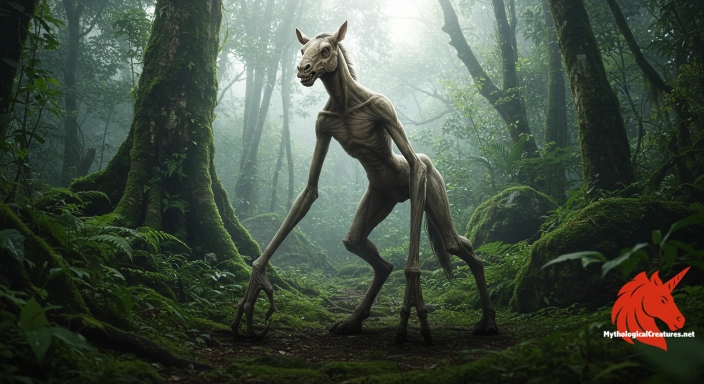
Curated by the Mythological Creatures Team
Series editor: Mythological Creatures Directory
Primary desk: Americas & Indigenous Traditions Desk
(rev. November 2025)