
Svipul: Svipul is a Norse valkyrie renowned for her changeable nature and association with battle and fate.
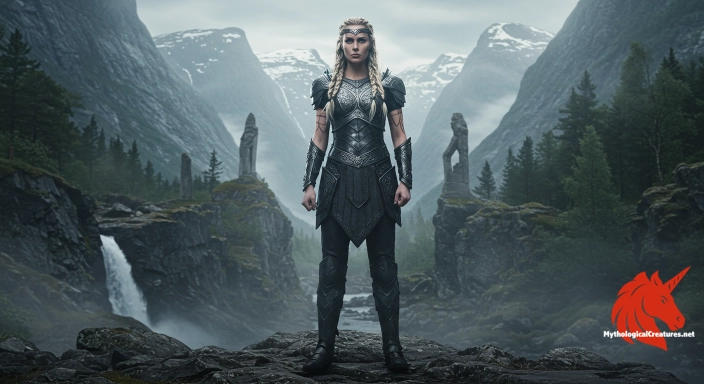
Svipul
Svipul - Svipul represents the mutable nature of fate and the intrinsic connection between battle and destiny in Norse lore.
Origins & First Encounters
Svipul emerges from the rich tapestry of Norse myth as a distinctive valkyrie whose very name, meaning 'changeable', encapsulates the volatile nature of destiny. Her presence in ancient poetic collections hints at her significant role in the ancient Norse worldview, where fate and fortune could shift in the blink of an eye on the battlefield. She is one of the ethereal figures who not only choose the slain but also embody the inherent uncertainty that pervades the chaos of combat. Early attestations in works such as Darraðarljóð and the Nafnaþulur lists of Skáldskaparmál point to her integration into the sacred narratives of warrior culture. The nuanced interplay between her persona and the capricious dynamics of battle offers a glimpse into the cultural importance of change and unpredictability. Myth and song intertwine her identity with the forces that dictate life and death, making her an emblem of transformation. Her introduction into the corpus of Norse myth reflects a deep-seated belief in the mutable nature of existence during times of war. The shifting aspects of her character mirror the unpredictable turn of events on the battlefield and in life itself. Every recitation of her name evoked both awe and a subtle warning, underscoring the fleeting moments of victory and defeat. In essence, Svipul remains a compelling symbol of the transient nature of fate in a world where change is the only constant.
Source Texts & Tale Variants
The literary record preserves the echo of Svipul in several seminal texts of Norse literature. Her name appears among the valkyrie lists in the poem Darraðarljóð, affirming her place among the divine agents of battle. She is also recorded in the extended Nafnaþulur valkyrie lists found within Skáldskaparmál, which served as a key compendium of mythological names and attributes. In one notable instance, her name even functions as a synonym for 'battle', further highlighting her intrinsic connection to the tumult of warfare. These textual resources, though fragmentary, offer a snapshot of a broader mythological tradition where fate and martial valor intersect. The surviving passages invite readers to explore the symbolic layers behind her seemingly sparse descriptions. While the references do not provide an exhaustive account of her deeds, they have spurred a rich vein of interpretative scholarship regarding her function in the cosmic order. Later medieval compilations and oral traditions have subtly enriched her narrative beyond these early attestations. Each mention in the ancient texts contributes to the layered understanding of the valkyries as arbiters of mortal destiny. Thus, Svipul’s presence in these sources underscores the seamless blend of poetic imagination and cultural belief in the transformative power of battle.
Form & Powers
The physical representation of Svipul, though not elaborately detailed in the surviving texts, can be envisioned through the lens of typical valkyrie iconography. One may imagine her as a figure of striking beauty coupled with an aura of formidable power, balancing grace with an undercurrent of dread. Her armour might have been depicted as shimmering with an ethereal light, perhaps in hues that change as unpredictably as her namesake. It is possible to envision her wielding symbolic weaponry, such as a spear or a sword, which marks the decisive moment between life and death. Artistic depictions often suggest that her eyes held a penetrating intensity, capable of discerning the fickle turns of fate on the battlefield. She could be portrayed with flowing garments or wings that accentuate her supernatural mobility and direct link to the divine. The contrast of her tender features with the hardened visage of a warrior lends her an enigmatic duality. Such imagery reinforces her role as both a harbinger of death and a divine embodiment of the ever-changing fortunes of war. Though no concrete physical descriptions survive, imaginative reconstructions consistently evoke the presence of a sublime, transient beauty. Her overall appearance symbolises the complex interplay between ephemeral human frailty and the eternal forces of destiny.
Regional Faces
The lore surrounding Svipul, while firmly rooted in Old Norse tradition, reveals traces of regional interpretation across the Scandinavian cultural landscape. Variations in her portrayal can be discerned when comparing the continental Scandinavian depictions with those that emerged in the Icelandic poetic tradition. In some versions, the emphasis on her mutable character resonates with the unpredictable climate and challenging seafaring life of the northern regions. Here, the notion of 'changeable' can be seen as a metaphor for both nature’s volatility and the fortunes of warriors. On the Scandinavian mainland, subtle shifts in depiction may align her more closely with the overarching themes of fate and destiny seen in local heroic epics. In regions where oral tradition held sway, hints of her persona were interwoven with other supernatural entities, thereby enriching her narrative. These regional adaptations often served to bridge the spiritual and the tangible, highlighting the dynamic interplay between nature and myth. As communities recounted tales of battles and valor, the character of Svipul was occasionally reinterpreted to reflect local attitudes towards change and impermanence. The evolution of her myth across different areas underscores the intimate relationship between environmental realities and myth-making. Such regional variations not only amplify her enigmatic presence but also weave her story into the broader fabric of local cultural identity.
Cultural Parallels
The mutable essence of Svipul draws intriguing parallels with similar mythical figures from diverse cultural traditions. Her role as an arbiter of fate and an embodiment of the unpredictable nature of battle invites comparison with the Celtic figure of the Morrígan, known for her association with warfare and transformation. Much like the shifting demeanour of the Norse valkyrie, the Morrígan traverses the delicate boundary between life and death, perpetually influencing the course of events on the battlefield. In the broader Indo-European context, Svipul echoes the thematic presence of fate deities whose capricious decisions determine mortal destinies. The fluidity of her character resonates with the ever-changing roles of other female figures in myth, such as aspects of the Greek Moirai, who weave and cut the threads of life. This cross-cultural similarity reinforces the notion that the unpredictability inherent in combat and destiny is a recurring motif in human storytelling. Even as modern reinterpretations embellish these ancient motifs, the archetypal image of a changeable, battle-linked deity remains constant. The intermingling of divine and martial attributes in Svipul’s lore highlights a shared cultural understanding of war as both a literal and symbolic arena of transformation. Her narrative, although unique in its Norse origins, contributes to a universal mythological framework that transcends geographical boundaries. This comparative view enriches the understanding of how societies have historically personified the volatile forces that shape human fate.
Legacy & Modern Evolution
The legacy of Svipul has evolved dramatically over the centuries, reflecting both a deep-rooted mythological tradition and the continual reinterpretation of ancient symbols. Early medieval and poetic texts immortalised her through sparse yet significant references that would later spark the imagination of storytellers and scholars alike. As academic and popular interests in Norse mythology grew during the Romantic and Viking revival periods, Svipul was rediscovered as an emblem of the unpredictable nature of fate. Modern reinterpretations have expanded her narrative, portraying her as a complex figure whose influence goes beyond merely selecting the fallen. Contemporary artists and writers often invoke her mutable essence to symbolise the ever-changing currents of modern life and conflict. In literature and visual art, she is reimagined with new layers of depth, bridging ancient myth with modern existential motifs. The resurgence of interest in Norse cultural heritage has ensured that even lesser-known figures like Svipul are appreciated for their symbolic resonance. Her character now serves as a reminder of the timeless human fascination with the interplay between destiny, beauty, and the chaos of battle. Through films, graphic novels, and even role-playing games, her image is continually reshaped to resonate with current audiences. Ultimately, Svipul remains a dynamic emblem of how ancient myths can adapt to mirror the concerns and imaginations of successive generations.
Interesting Fact
An intriguing facet of Svipul is that her name doubles as a term for 'battle', highlighting the deep-seated connection between war and destiny in Norse mythology.
For serious mythcraft
Your project belongs among the legends
If your work deepens how people understand, play with, or teach mythology, a sponsor placement here keeps it in front of the right readers all year.
Submit a sponsorship enquiryQuick Creature Info
Origin:
Features:
Associations:
Our Mythic Legendary Rating:

Habitat:
Supernatural Powers:
Physical Attributes:
Abilities:
Behavior:
Lore:
Related Creatures, Tales or Lore
- BBrynhildr
- SSigrdrífa
- MMorrígan
References
Discover Another Mythical Legend You May Not Have Heard Of?
Uncover the mysteries of ancient folklore and expand your knowledge of legendary beings from cultures around the world.
Dare to Meet the Mandurugo....
Curated by the Mythological Creatures Team
Series editor: Mythological Creatures Directory
Primary desk: Northern & European Folklore Desk
(rev. November 2025)