
Thelxinoë: Thelxinoë is a multifaceted figure from Greek mythology known as a siren, muse, attendant of Semele, and Praxidicae, each embodiment reflecting her mind-charming allure.
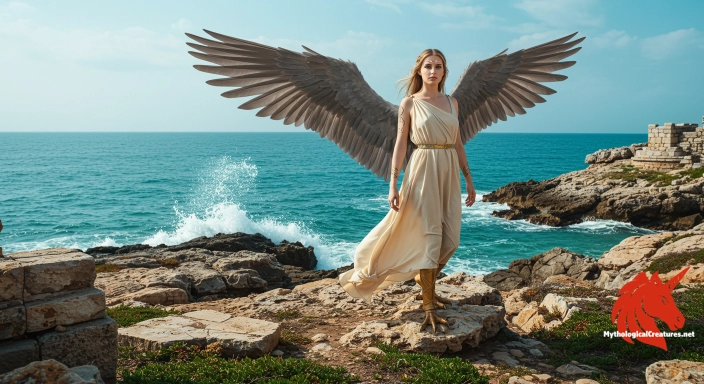
Thelxinoë
Thelxinoë - Her varied incarnations highlight the rich tapestry of Greek myth, illustrating themes of enchantment, divine inspiration, and the interplay between danger and creativity.
Origins & First Encounters
Thelxinoë is a name that resonates with the ancient Greek fascination for both divine charm and intellectual inspiration. Born out of a vibrant mythological tradition, her name literally means 'mind charming' and encapsulates a myriad of roles within Greek lore. In some accounts, she appears as one of the sirens, whose irresistible songs were said to lure mariners into perilous waters. In other traditions, she is revered as a muse, one of four who kindled the flame of artistic and intellectual pursuits in ancient society. Her character embodies the duality of sensual allure and cerebral refinement, making her a unique figure in the pantheon of Greek myth. The multiplicity of her identities illustrates how myth could evolve, merging elements of aesthetics, talent, and even legal authority. Her story is interwoven with early poetic narratives and has been passed down through a blend of oral and literary traditions. Thelxinoë’s influence extended beyond mythology to leave its imprint on religious rituals and cultural symbolism. With a legacy that spans different aspects of divine intervention, she represents the seamless integration of art, beauty, and wisdom in ancient Greece. Even today, her narrative continues to fascinate scholars and artists alike, reflecting the timeless nature of myth.
Source Texts & Tale Variants
Ancient sources attribute multiple incarnations to Thelxinoë, which provides a fascinating insight into the evolution of myth over time. Classical texts and fragments of early Greek literature recount her various roles, ranging from a seductive siren to an inspiring muse. Some literary sources expand on her identity by referring to her by alternate names such as Thelxiope or Thelxiepia, demonstrating the fluidity of oral tradition. Other accounts embed her persona within the retinue of Semele, thereby deepening her connection to influential mythic narratives. There are also texts that include her among the Praxidicae, daughters of King Ogyges, which emphasises a legal and custodial aspect to her mythology. Diverse story variants found in ancient plays, vase paintings, and inscriptions suggest that regional storytellers adapted her narrative to suit local customs. Each version of her myth highlights different aspects of her character, be it the enchanting power of a siren’s song or the intellectual gravitas of a muse. As such, the primary sources create a rich tapestry of conflicting yet complementary details. These numerous variants reveal the intricate process of myth-making in a culture that prized both beauty and erudition. Collectively, the sources establish Thelxinoë as a multifaceted figure whose story was tailored to meet the varying needs of ancient communities.
Form & Powers
Descriptions of Thelxinoë in ancient art and literature place a strong emphasis on her ethereal beauty and the harmonious blend of physical grace with divine presence. In her guise as a siren, she is often portrayed with long, flowing hair and a luminous gaze that hints at the mysterious depths of the sea. Her features are finely crafted, combining delicate contours with an almost otherworldly softness that captivates the viewer’s attention. As a muse, her appearance is typically refined with a calm and dignified expression, embodying the spirit of creative inspiration. Ancient depictions frequently illustrate her adorned in garments that seem to float around her, suggesting a lightness that defies mortal constraints. Artists have sometimes enhanced her imagery by associating her with subtle symbols of music and literature, such as musical instruments or scrolls, to underscore her role in charming the mind. There is an artistic interplay between her aquatic and terrestrial aspects, which reflects the duality inherent in her myth. Thelxinoë’s visual representation was not fixed but adapted to the context of the scene, ranging from scenes of tempestuous allure to serene, scholarly muse. While the precise details of her anatomy may vary, the consistent element is an aura of ineffable beauty and mystique. These physical portrayals have contributed to her enduring status as an icon of both sensuality and intellectual elegance in ancient mythology.
Regional Faces
Regional variations in the myth of Thelxinoë highlight the adaptability of her character across different Greek locales. In coastal regions, where the legacy of the siren was particularly potent, her image was often intertwined with the mysteries of the sea, emphasising her role as a seductive, enchanting force. Conversely, in the urban cultural centres of ancient Greece, her identity as a muse took precedence, linking her to the refined arts and the realms of poetry and philosophy. In Boeotia, local traditions reimagined her as one of the Praxidicae, imbuing her character with judicial and ritualistic qualities that set her apart from her more lyrical counterparts. Regional festivals and local rituals frequently featured adaptations of her myth, reflecting the nuances of local religious and cultural practices. Artistic depictions varied accordingly, with coastal artisans portraying her in watery, ethereal motifs, while inland sculptors and painters emphasised her intellectual and legal roles. Such adaptations underscore the dynamic process by which myth travelled and transformed in response to local customs and values. Thelxinoë’s enduring appeal across these diverse regions is a testament to the flexibility of myth and its ability to incorporate various cultural symbols. The wealth of regional narratives not only enriched her character but also served as a mirror to the varied expanse of Greek religious life. As a result, her myth stands as a cross-regional emblem of both nature’s allure and the pursuit of wisdom.
Cultural Parallels
The character of Thelxinoë finds striking parallels with figures in other mythological traditions who similarly bridge the realms of beauty and wisdom. Like the enigmatic sirens of various Mediterranean cultures, she embodies the mythical power of drawing mortals away from the mundane through seductive allure. Additionally, her muse aspect resonates with deities such as Calliope in Greek mythology and even finds echoes in other pantheons, where divine inspirations of the arts are venerated. These comparative figures serve as archetypes of the creative impulse and the notion that beauty can illuminate the mind. The dual nature of her myth, combining elements of both sensuality and erudition, creates a universal symbol that transcends cultural boundaries. Similar to how goddesses in Eastern and Roman traditions merge aesthetic charm with intellectual prowess, Thelxinoë offers a multifaceted perspective on the divine. Her myth illustrates how ancient cultures used a single figure to express complex ideas about human experience, creativity, and the pursuit of truth. This interplay between contrasting attributes is not unique to Thelxinoë but is rather a recurring motif in the global mythic imagination. In comparative analysis, her narrative sparks dialogue between mythologies, highlighting shared themes of enchantment and inspiration. Thus, her character not only enriches Greek mythology but also contributes to a broader understanding of divine archetypes across various cultures.
Legacy & Modern Evolution
The historical evolution of Thelxinoë’s myth mirrors the broader shifts in artistic, cultural, and intellectual currents from antiquity to the modern period. In early Greek tradition, her multifarious identity allowed her to be seen alternately as a captivating siren, a nurturing muse, or even a guardian of justice. Throughout the centuries, her image was continually reshaped by successive generations of poets, artists, and scholars who found in her a rich source of inspiration. During the Renaissance, classic texts and artworks revived her legend, casting her in new lights that celebrated both her seductive beauty and her intellectual eminence. Modern reinterpretations have continued this trend, with theatre, literature, and digital art exploring her dual nature as a symbol of both artistic allure and cerebral power. The legacy of Thelxinoë is also enshrined in astronomical tradition, with celestial bodies bearing her name to underscore the enduring link between myth and science. Contemporary scholars and creatives often invoke her image to represent the enduring fusion of heart and mind. In cultural discourse, she has come to epitomise the timeless dialogue between passion and reason, an archetype that resonates in diverse fields from literary studies to visual art. New media representations further illustrate her adaptability, as each era recontextualises her narrative in ways that reflect current sensibilities and intellectual trends. Today, Thelxinoë remains an enduring emblem of mythological ingenuity, bridging the expansive gulf between ancient lore and modern creative expression.
Interesting Fact
A moon of Jupiter has been named Thelxinoe, underscoring her lasting impact on both ancient myth and modern astronomical nomenclature.
For publishers and studios
Your next readers are already here
Many of our visitors are looking for books, campaigns, and resources that deepen their journey into myth. Position your title or setting here.
Discuss a placementQuick Creature Info
Origin:
Associations:
Our Mythic Legendary Rating:

Also Sometimes Known As:
Habitat:
Supernatural Powers:
Physical Attributes:
Abilities:
Behavior:
Lore:
Related Creatures, Tales or Lore
- LLigeia (Siren)
- CCalliope (Muse)
- PPeisinoë (Siren)
References
Discover Another Mythical Legend You May Not Have Heard Of?
Uncover the mysteries of ancient folklore and expand your knowledge of legendary beings from cultures around the world.
Dare to Meet the Yekyua....
Curated by the Mythological Creatures Team
Series editor: Mythological Creatures Directory
Primary desk: Hellenic & Ancient Mediterranean Desk
(rev. November 2025)