
Tsurube-otoshi: Tsurube-otoshi is a fearsome yōkai from Japanese folklore known for its sudden, deadly descent from the trees.
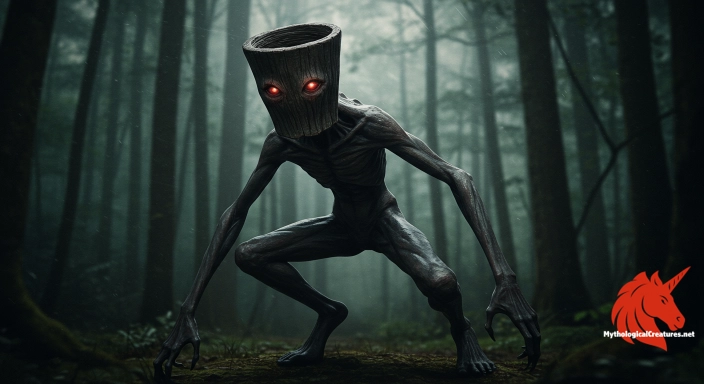
Tsurube-otoshi
Tsurube-otoshi - Serves as a cautionary figure warning against the dangers lurking in forested areas
Origins & First Encounters
Tsurube-otoshi stands as one of Japan’s most enigmatic yōkai, emerging from the rich tapestry of regional folklore in areas like Kyoto, Shiga, Gifu, Aichi, and Wakayama. Its early attestation in local legends suggests that the creature has long been interwoven with the rural and wooded landscapes of Japan. The very name, combining elements that evoke a bucket and the act of dropping, hints at its distinctive method of sudden, aerial attack. Many early narratives cast it as a capricious force of nature that merges everyday objects with supernatural menace. The mystery of its origins has led to diverse interpretations, from a vengeful spirit to an embodiment of nature’s unpredictable temperament. Local communities have passed down oral traditions that depict the creature as both an omen of misfortune and a reminder of the thin boundary between the living and the spectral. Its role in folklore often reflects a broader cultural reverence for the unseen forces that operate in the natural world. The tension between fear and fascination that Tsurube-otoshi inspires underscores its enduring presence in Japanese myth. Stories of its sudden descent from trees are imbued with a blend of terror and awe, encapsulating deep-seated cultural anxieties. As such, the creature occupies a unique space in the collective imagination, bridging the realms of cautionary tale and mystical enigma.
Source Texts & Tale Variants
The lore of Tsurube-otoshi is primarily preserved in a variety of local folktales and regional compilations that date back to the Edo period and earlier. Many manuscripts and regional story collections, though not always formally indexed in classic texts, echo similar accounts of a creature that ambushes from above. Diverse sources confirm that the yōkai has been a fixture in local oral traditions, passed down through successive generations. In certain texts compiled in the late Edo period, the narrative of a falling bucket-like entity appears alongside other mysterious yōkai, each lending credibility to the interplay between myth and nature. Variants of its story sometimes depict a swift, almost playful yet deadly descent upon unsuspecting passersby. Local chroniclers have occasionally recorded the creature’s presence in the margins of travel diaries or illustrated scrolls, capturing its spectral impression. The episodic nature of the accounts has led to multiple interpretations of its intent and origin, with some versions suggesting a tragic tale behind the terror. Although the documentation can be fragmented, the consistency of its characteristics across various regions strengthens its mythological standing. As folklore evolved over centuries, variations of its story were absorbed into larger compilations of supernatural phenomena. These diverse narrative strands enrich our understanding of how Tsurube-otoshi has been woven into the fabric of Japan’s cultural and literary history.
Form & Powers
Descriptions of Tsurube-otoshi paint a picture of an apparition both elusive and fearsome, with its appearance varying subtly across different accounts. Some narratives portray it as having a vaguely humanoid form, yet its features are often distorted in a manner that defies conventional anatomy. The creature is sometimes likened to a disembodied bucket or container, as if an ordinary object has taken on a life of its own. Distinctive elements such as hollow, staring eyes and a shadowed visage contribute to its otherworldly presence. In many renditions, its skin or outer surface appears weathered and ancient, reminiscent of the bark on gnarled trees. Its overall size is variable, with some legends suggesting that it can be small enough to mislead an observer, while others describe it as towering, amplifying the sense of imminent dread. The movement is often reported as fluid and unpredictable, as if gravity itself is an ally in its surprise attacks. Observers have noted that its form can blend with the surrounding darkness of the forest, making it doubly treacherous. In some accounts, it is almost formless, with shifting edges that seem to merge with the mist. These detailed and sometimes contradictory physical descriptions only add to the mystique and terror that surround Tsurube-otoshi.
Regional Faces
Regional interpretations of Tsurube-otoshi reveal a fascinating mosaic of local colour and cultural nuance. In Kyoto, the creature is often considered an ill omen, its sudden descents from lofty trees symbolising the unpredictable forces of fate. In Shiga, local legends sometimes imbue it with a more personal, vengeful aspect, where it is seen as retribution against those who disrespect nature. Gifu’s versions portray the yōkai as a capricious trickster, whose appearances are as much about mischief as they are about menace. Meanwhile, in Aichi, the character of Tsurube-otoshi is intertwined with seasonal changes, suggesting that its movements are linked to the shifting rhythms of the natural world. Wakayama’s folklore often emphasises its terrifying role, with exaggerated accounts of attacks that have left deep impressions on the local psyche. Despite these variations, each regional narrative retains a core element of the creature’s identity: the sudden, unexpected drop from the canopy. These local adaptations indicate a communal need to ascribe supernatural explanations to the hazards posed by the natural environment. The regional stories also reflect distinct cultural attitudes, blending caution with a reluctant awe of nature’s hidden forces. Such a rich palette of regional versions speaks to the adaptive power of myth in resonating with different community experiences.
Cultural Parallels
When comparing Tsurube-otoshi with similar entries in global folklore, striking parallels emerge that highlight a universal apprehension of unseen dangers. It shares thematic similarities with other yōkai like kodama or tsukumogami, each of which represents the unpredictable forces of nature. These creatures, while distinct in appearance and origin, similarly embody the idea that ordinary elements of everyday life can harbour supernatural qualities. A counterpart in European legends may be seen in tales of spectral entities that descend from trees or appear suddenly in the forests, provoking both fear and fascination. The motif of something benign transforming into a harbinger of doom resonates across vastly different cultures. This phenomenon underscores a shared psychological response to the unpredictable rhythms of the natural world. Both Eastern and Western mythologies employ such figures to crystallise human vulnerability and the mysteries that lie just beyond rational understanding. Comparative analysis reveals that while the details differ, the core narrative—of a deceptive calm interrupted by sudden and inexplicable threat—is strikingly similar. These cross-cultural connections illuminate the universal human experience of confronting the unknown. Tsurube-otoshi, therefore, is not merely a local myth but a part of a broader, global narrative about nature, danger, and the supernatural.
Legacy & Modern Evolution
The evolution of Tsurube-otoshi over the centuries reveals a dynamic interplay between tradition and modern reinterpretation. Once feared as an imminent threat lurking in shadowed groves, the creature has gradually assumed a more symbolic role in contemporary popular culture. Modern retellings in manga, anime, and literature often present the yōkai with layers of complexity, blending humour with horror. This shift in portrayal reflects a broader trend in which terrifying myths are reimagined to suit an audience that is both nostalgic and critically aware. The changing depictions mirror societal transitions from strict traditionalism to a more pluralistic engagement with folklore, where spiritual caution coexists with creative reinterpretation. Festivals, cultural exhibitions, and online platforms now celebrate Tsurube-otoshi as an emblem of Japan’s rich mythological heritage. The creature’s legacy has thus transcended its origin as a mere cautionary tale, evolving into a symbol that invites discussion on the delicate balance between modernity and ancient belief systems. Through playful yet respectful parodies and serious scholarly reinterpretations alike, its narrative continues to inspire and provoke. Contemporary artistic renditions often highlight the enduring tension between nature’s beauty and its latent peril. In this way, the modern legacy of Tsurube-otoshi serves as a bridge between historical superstition and current cultural expression.
Interesting Fact
An intriguing aspect of Tsurube-otoshi is how it transforms the mundane image of a bucket into a potent symbol of mortal peril, reflecting the unique fusion of everyday objects with supernatural fear in Japanese folklore.
For serious myth projects
Feature your work alongside the legends
From academic works to story-rich games, we highlight projects that respect world mythologies. Talk to us about a measured, long-term placement.
Start a conversationQuick Creature Info
Features:
Our Mythic Legendary Rating:

Also Sometimes Known As:
Habitat:
Supernatural Powers:
Physical Attributes:
Abilities:
Behavior:
Lore:
Related Creatures, Tales or Lore
- GGashadokuro
- NNurikabe
- KKamaitachi
References
Discover Another Mythical Legend You May Not Have Heard Of?
Uncover the mysteries of ancient folklore and expand your knowledge of legendary beings from cultures around the world.
Dare to Meet the Pitsen....
Curated by the Mythological Creatures Team
Series editor: Mythological Creatures Directory
Primary desk: Asian & Pacific Myth Cycles Desk
(rev. November 2025)