
Tuttle Bottoms Monster: The Tuttle Bottoms Monster is a legendary cryptid from the swamps of Illinois.
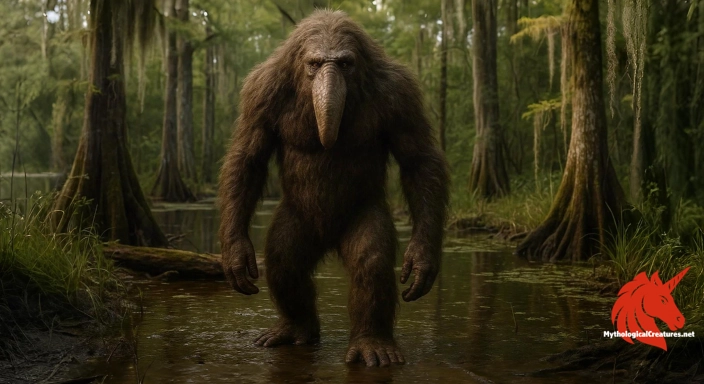
Tuttle Bottoms Monster
Tuttle Bottoms Monster - A significant figure in local folklore, representing the mysterious and unexplained phenomena in rural American swamps.
Origins & First Encounters
The Tuttle Bottoms Monster stands as a captivating figure within the cryptid lore of central Illinois, enmeshed in the mysterious ambience of the local swamps. Emerging from generations of oral tradition, its earliest mentions trace back to the mid-20th century when local residents began recounting eerie encounters along the Saline River watershed. The creature is typically depicted as an ape-like entity with a long, anteater-like snout, a detail that has intrigued both sceptics and believers alike. Its origins remain shrouded in local lore, where the natural grandeur of the swamp is interwoven with the inexplicable. The legend has grown to symbolise the wild, untamed facets of nature that lie just beyond civilisation’s reach. Early settlers and later local communities alike contributed to its mythos by blending natural observations with imaginative storytelling. Over time, this enigmatic figure has become a cherished narrative that reflects both local history and a deep reverence for the mysteries of the natural world. Many still view the creature as a relic from a bygone era, a spectral reminder of nature’s secret corners that defy explanation. Its continuing allure encapsulates the delicate balance between folklore and the ever-changing landscape of human belief.
Source Texts & Tale Variants
Most of what is known about the Tuttle Bottoms Monster comes from a rich tapestry of oral accounts and sporadic local newspaper reports. Early interviews with local inhabitants in the mid-1900s preserved a variety of eyewitness testimonies that have since formed the backbone of its legend. Diverse narratives describe encounters during dusky evenings in the swamp, each account offering subtle differences in the creature’s behaviour and appearance. One variant tells of a late-night fishing trip that was abruptly interrupted by a silent, imposing presence lurking near the water’s edge. Other versions cast the monster as a mysterious guardian of the wetlands, emerging only to ward off intruders. Amateur sketches and anecdotal records have further bolstered the legend, with several local collections preserving these tales for posterity. Even without extensive written documentation, the creature’s persistent presence in community storytelling has created a robust if variegated record. This array of sources highlights not only the diversity of local memory but also the willingness of witnesses to embrace the unknown. As such, the mosaic of testimonies continues to evolve, inspiring both curiosity and cautious reverence in those who explore its depths.
Form & Powers
The creature is most famously described as an ape-like being with a thick, shaggy coat of hair that appears to merge with the murky vegetation of its swampy home. Its elongated snout, reminiscent of an anteater’s, immediately sets it apart from other cryptid depictions and adds an element of the exotic. Deep-set eyes, often reported to flicker with a ghostly luminescence under the swamp’s half-light, lend it an otherworldly and piercing gaze. Witnesses frequently mention that its body, though robust, seems oddly contorted and perfectly adapted to navigating through dense marshland. Some accounts detail unusually long arms and disproportionately flexible limbs, suggesting a creature both agile and formidable in its environment. Variations in descriptions have led some observers to claim it ranges in size from nearly human proportions to a more massive, towering figure. The texture of its fur has been compared to matted fibres interlaced with natural debris, providing effective camouflage among the reeds and murky waters. Intricate aspects, such as subtly prehensile fingers and delicate but deliberate movements, add complexity to its physical portrayal. A musky odour, faint but distinct, is occasionally recalled, reinforcing the notion of a creature perfectly at home in its humid habitat. These detailed physical impressions collectively contribute to the creature’s enduring mystique and serve as a visual anchor for its legend.
Regional Faces
Although the Tuttle Bottoms Monster is primarily linked to the Saline River watershed near Harrisburg, its tale has taken on unique flavours in nearby communities. In some neighbouring localities, the creature is imbued with an air of benevolence, almost as if it were an ancient protector of the wetlands. Locals in adjacent areas have even repurposed the monster’s name into endearing nicknames and regional monikers, each reflecting subtle shifts in its legendary character. Differences emerge in the way its appearance is recounted; some residents emphasise a more primate-like physique while others hint at a reptilian, almost spectral quality. The behavioural traits, too, vary—with certain accounts presenting it as a vigilant nocturnal observer and others depicting it as a solitary, elusive wanderer. These regional variations are further enhanced by the distinct cultural influences of each community, where historical events and local geography shape the narrative. Rural festivals and storytelling gatherings have embraced these variations, each retelling adding a new layer to its mythos. As local legends are passed down, the creature becomes a mirror reflecting the diverse identities of the surrounding areas. These myriad interpretations illustrate how geography and community can transform a single myth into a collection of closely related, yet distinct, local tales.
Cultural Parallels
The Tuttle Bottoms Monster stands alongside a pantheon of legendary creatures such as Bigfoot and the Skunk Ape, each inhabiting the shadowy fringes of wilderness and local folklore. Its distinctly hairy, ape-like appearance aligns it with other hominid cryptids, yet the pronounced, anteater-like snout differentiates it from more traditional depictions. This unique anatomical feature has invited comparisons with mythic entities in distant cultures, suggesting a convergence of disparate legendary archetypes. The creature serves as a regional counterpart to these broader myths, embodying the universal fascination with beings that dwell in the wild. Much like its North American cousins, the monster is often seen as a symbol of the enduring mystery of untamed nature. Cultural analyses have noted that both the Tuttle Bottoms Monster and similar cryptids play roles as cautionary figures, warning of the dangers of encroaching too far into nature’s domain. Its narrative, interwoven with oral tradition and local lore, mirrors the common human desire to find meaning in nature’s hidden realms. The overlapping themes of mystery, nature, and survival lend it an almost archetypal quality that resonates across cultures. In comparative discussions, the creature emerges not merely as a monstrous figure but as a living allegory that bridges the tangible world and the realm of myth. Thus, its legacy is enriched by global parallels, each celebrating the enduring intrigue of the unknown.
Legacy & Modern Evolution
Over the decades, the myth of the Tuttle Bottoms Monster has evolved from whispered local tales to a celebrated emblem of regional identity. Early newspaper accounts and firsthand interviews helped to shape a portrait of a creature that continues to captivate the local imagination. In the modern era, digital media has invigorated its legend, with social platforms and online forums serving as new venues for retelling and reinterpreting its story. Contemporary sightings, though still rare and fragmented, often spark lively debates between sceptics and believers alike. The creature has also found a place in local tourism, with communities organising themed festivals and events that draw visitors eager to explore its mysterious legacy. Artists, writers, and indie filmmakers have reimagined the monster in various lights—from a fearsome beast guarding ancient wetlands to a misunderstood spirit of nature. This modern reimagining underscores a broader cultural trend where historical folklore is revitalised to suit contemporary interests and sensibilities. As modern technology intersects with age-old myth, the Tuttle Bottoms Monster continues to evolve, reflecting changing societal attitudes towards nature and the unexplained. Its image has become a dynamic symbol of both local heritage and the universal allure of mystery, ensuring that its legend endures through ever-changing cultural landscapes. Ultimately, the creature remains a compelling reminder of the power of folklore to bridge the gap between the past and the present.
Interesting Fact
An interesting aspect of the Tuttle Bottoms Monster is its unique combination of ape-like features with an anteater-like snout, distinguishing it from other swamp cryptids.
Partner with Mythological Creatures
Bring your myth-based world into ours
From game settings to narrative worlds, we work with partners who treat myths with care. Share your project for a potential sponsor slot.
Partner with usQuick Creature Info
Origin:
Features:
Associations:
Our Mythic Legendary Rating:

Habitat:
Physical Attributes:
Behavior:
Lore:
Related Creatures, Tales or Lore
References
Discover Another Mythical Legend You May Not Have Heard Of?
Uncover the mysteries of ancient folklore and expand your knowledge of legendary beings from cultures around the world.
Dare to Meet the Xiaoqing....
-176893ea-ebc7-40d1-8619-0625829e5d86_small.webp "Depiction of Xiaoqing")
Curated by the Mythological Creatures Team
Series editor: Mythological Creatures Directory
Primary desk: Americas & Indigenous Traditions Desk
(rev. November 2025)