
Valac: Valac, also known as Ualac, Valak, and other variants, is a demonic entity from goetic grimoires depicted as an angelically winged boy riding a two-headed dragon.
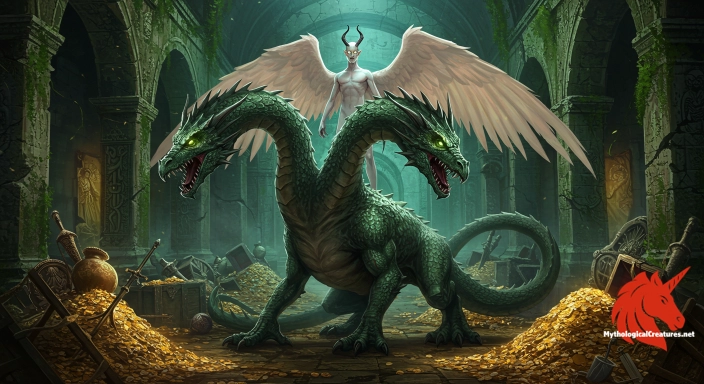
Valac
Valac - Valac is a notable demon known for his unique depiction and his reputed ability to locate hidden treasures, reflecting the complex symbolism of occult traditions.
Origins & First Encounters
Valac is a demon whose enigmatic presence has captivated occult scholars and practitioners since his early mentions in medieval manuscripts. His origins can be traced back to a period when the boundaries between angelic and demonic entities were carefully examined in grimoires and demonological texts. First attested in the influential pages of The Lesser Key of Solomon, his story was later enriched by various European occult traditions. He is depicted as a paradoxical being whose youthful, angel-like appearance undermines the inherent danger within his character. His association with the discovery of treasures reflects an age-old preoccupation with secret fortunes and the dual nature of material wealth. The demon’s narrative exists at the crossroads of innocence and malevolence where recovered treasures symbolise both reward and peril. In a cultural context steeped in mysticism, Valac embodies the tension between divine beauty and infernal power, inviting both admiration and caution. His myth serves as a testament to the intricate and often contradictory world of demonology that fascinated ancient occultists. Over time, his legacy has evolved into a symbol of hidden knowledge and the precarious allure of forbidden riches.
Source Texts & Tale Variants
Ancient grimoires form the cornerstone of Valac’s documented history, with his character appearing in several seminal texts of the occult. The Lesser Key of Solomon introduces him under alternate names such as Ualac and Valak, setting the stage for his complex persona. Johann Weyer's Pseudomonarchia Daemonum further elaborates on his identity by referring to him as Volac, thereby enriching the tapestry of his myth. Additional treatises like the Liber Officiorum Spirituum and the Munich Manual of Demonic Magic contribute further variants, including references as Coolor, Doolas, and Volach. Thomas Rudd’s writings add another layer by naming him Valu, reflecting subtle regional nuances. Each of these sources offers distinct interpretations that blend ritual practice with symbolic narrative. The multiplicity of names across different texts highlights both the fluidity and persistence of his myth across centuries. These manuscripts, produced in various parts of Europe, reveal the evolving nature of occult traditions and the parser’s intent to capture both the benevolent and malevolent facets of such entities. The layered narrative within these sources continues to inspire both sceptical inquiry and occult fascination.
Form & Powers
Valac is vividly portrayed as an angelically winged youth, an image that juxtaposes youthful innocence with the portent of dark forces. His appearance is both disarming and mysterious, lending him an aura that treads the delicate line between beauty and dread. A striking element of his depiction is his unusual mode of transport—a two-headed dragon whose very form suggests a mastery over dual forces. The dragon’s twin heads, detailed with scales that shimmer in an unearthly light, further symbolise the dichotomy of creation and destruction. Valac’s own features, often rendered with an eerie serenity, suggest a deceptive calm that belies the potent energies he commands. Observers are drawn to the enigmatic contrast between the benign expression on his face and the formidable presence of his draconic steed. Some descriptions hint at minor variations in his form, possibly indicating shifts in his power or purpose across different texts. His detailed iconography, from feathered wings to the serpentine attributes of his mount, serves as a visual allegory for the complexities inherent in occult symbolism. This rich imagery has inspired countless depictions in art and literature, each interpreting the layered allegory of his physical form in unique ways.
Regional Faces
Valac’s myth transcends the confines of a single cultural narrative, adapting fluidly as it traversed different European regions. In southern Europe, local folklore entwines his story with legends of hidden treasures and the mysteries of abandoned vaults, enriching his persona with a measure of alluring mystique. Northern traditions, in contrast, often underscore the ominous undertones of his appearance, highlighting the chilling duality of his form. The variations in his name—ranging from Volac in some regions to Valak in others—attest to the diverse linguistic and cultural influences at play. French occult literature, for instance, sometimes emphasises the almost innocent aura of his youthful depiction, while German texts tend to highlight his more menacing attributes. Italian interpretations have, on occasion, focused on the dramatic imagery of the two-headed dragon, imbuing his myth with regional artistic flourishes. These regional adaptations reflect broader societal attitudes towards occultism and the enigmatic allure of forbidden knowledge. The shifting iconography across different cultures mirrors a common theme of duality, where innocence meets profound danger. Thus, Valac’s portrayal becomes a mirror to the evolving beliefs and fears of varied European communities.
Cultural Parallels
Valac’s distinctive traits invite a rich comparative analysis with other entities in both the goetic corpus and broader mythological traditions. His youthful, almost cherubic appearance sharply contrasts with the typically grotesque depictions of demonic beings, setting him apart as an anomaly in demonology. Much like familiar trickster figures that embody both charm and chaos, Valac straddles the line between alluring innocence and latent peril. His power over hidden treasures draws a parallel with other mythic personas that symbolise the seductive nature of wealth and its attendant risks. The two-headed dragon he rides can be seen as a metaphor for duality, evoking imagery seen in various cultures where creatures possess multiple heads to represent conflicting forces. This dual imagery is not unique, as dragons in Eastern traditions similarly encapsulate both benevolent and malevolent aspects. Compared to other demons such as Paimon, whose intricate rank and complex symbolism also invite layered interpretations, Valac remains uniquely enigmatic. The synthesis of childlike features with draconic might offers a compelling contrast to more uniformly malevolent figures in the occult. Such motifs underscore the enduring fascination with entities that defy simple categorisation, blending elements of innocence, wisdom, and hidden danger into a single, multifaceted archetype.
Legacy & Modern Evolution
Over the centuries, Valac has undergone a fascinating evolution, transitioning from a figure confined to arcane manuscripts to an icon embraced by modern popular culture. Initially revered within occult circles as a key to uncovering secret fortunes, his myth was anchored in the meticulous rituals of medieval and Renaissance demonology. As time progressed, his image transformed and expanded through successive literary and artistic interpretations, ensuring that his legacy would not be confined to the dusty pages of ancient texts. In recent decades, a reimagined version of his persona has emerged in contemporary horror films and digital art, often under the name Valak. These modern reinterpretations amplify his eerie qualities, aligning with a current cultural fascination for the occult and the mysterious. Occult practitioners continue to invoke his name, attesting to his enduring power as a symbol of hidden knowledge and the mutable nature of wealth and danger. His myth has thus become a bridge between historical demonology and new media, embodying the timeless allure of forbidden truths. The shifting perception of Valac mirrors broader societal changes in the understanding of supernatural power, demonstrating how ancient symbols can be revitalised to speak to modern anxieties. Ultimately, his legacy remains a compelling blend of tradition and modernity, inviting ongoing exploration and reinterpretation within the realms of both occult practice and popular imagination.
Interesting Fact
Valac's portrayal as an angelic boy riding a fearsome two-headed dragon highlights the paradoxical and multifaceted nature of demonic imagery in Western occult traditions.
Reach myth fans
Connect your myth-driven brand with this audience
Our readers are writers, educators, gamers, and collectors who care about mythology. Enquire about a limited sponsor placement on creature pages.
Enquire about sponsorshipQuick Creature Info
Features:
Our Mythic Legendary Rating:

Also Sometimes Known As:
Habitat:
Supernatural Powers:
Physical Attributes:
Abilities:
Behavior:
Lore:
References
Discover Another Mythical Legend You May Not Have Heard Of?
Uncover the mysteries of ancient folklore and expand your knowledge of legendary beings from cultures around the world.
Dare to Meet the Pixiu....
Curated by the Mythological Creatures Team
Series editor: Mythological Creatures Directory
Primary desk: Hellenic & Ancient Mediterranean Desk
(rev. November 2025)