
Waghoba: Waghoba is an ancient Indian deity revered in the form of a tiger or leopard by tribal communities.

Waghoba
Waghoba - Waghoba embodies the fierce and protective aspects of the natural world, revered by tribes for centuries.
the legend in five swipes.
the legend in five swipes.
The Origin Story of Waghoba
In India, Waghoba represents an ancient deity revered by various tribal communities, embodying the elemental forces of nature through his association with both the tiger and the leopard. His veneration is steeped in folklore and ritual, emerging from the deep-rooted traditions of indigenous peoples who lived in close contact with the wilderness. The deity’s dual appearance not only symbolises raw power but also reflects the subtle balance between ferocity and grace. Over centuries, countless devotees have celebrated his mysterious presence as a guardian of the forests and a protector against malevolent forces. Temples dedicated to Waghoba dot the rural landscapes, serving as cultural centres where myth and community interlace. Legends passed down through oral traditions accentuate his ability to take on different forms, thereby adapting to local beliefs and natural surroundings. His myth not only encapsulates the awe-inspiring qualities of India’s big cats but also honours the intrinsic connection between humans and the wild. The continuing legacy of Waghoba mirrors the timeless interplay between nature, spirituality, and the cultural identity of diverse tribal groups. His narrative has evolved amid shifting cultural motifs yet remains a vibrant testimony to the ancient reverence for the natural world. Over time, his myth has provided both spiritual solace and a framework for respecting the environment. The deity’s enduring appeal unites past and present, rooting communities in a tradition that prizes the wisdom of nature. His story, rich with symbolism, continues to inspire those who seek a deeper relationship with the wild.
Waghoba: Manuscripts, Texts and Variants
The narrative of Waghoba is preserved through a rich mosaic of oral traditions, temple inscriptions, and local folklore that have been transmitted from one generation to the next. Although formal ancient texts dedicated solely to him are scarce, his legend shines through in the carvings of local temples and in the intricate murals painted by village artisans. Stories recount miraculous appearances and divine interventions, with each account adding unique facets to his mythic character. Diverse regional storytellers have enriched his legend by adapting the deity’s form to suit local rituals and seasonal celebrations. Folkloric songs and dramatic reenactments frequently immortalise the dual nature of the deity, emphasising both his fearsome and protective aspects. The interplay between fleeting oral myths and enduring temple art has created a complex web of sources that continue to inform his evolving identity. Despite the lack of systematic documentation in classical literature, the dispersed nature of these sources only enhances the aura of mystery that surrounds him. Local chroniclers and community elders ensure that every variation in his story is meticulously remembered and celebrated. The seamless blend of artistic heritage and spoken lore sustains his myth, making it a living tradition. This multiplicity of narrative strands reflects the dynamism of folklore in a country as diverse as India. The enduring transmission of these stories keeps the deity’s spirit firmly present in the hearts of his devotees.
What was Waghoba believed to be capable of?
Visual depictions of Waghoba are as diverse as the natural world he embodies, with each portrayal vividly capturing the essence of his dual identity. In many representations, he is shown as a magnificent tiger with a robust, muscular frame cloaked in golden fur streaked with bold black stripes that exude an aura of untamed power. In alternative accounts, his form transforms into that of a sleek leopard, replete with delicate rosettes against a smooth, spotted coat that hints at both agility and grace. His eyes, often depicted as deep and penetrating, reflect a wisdom that transcends the ordinary realms of human understanding. Sculptures and murals frequently show him in dynamic poses, poised for a leap or standing regally amidst a natural landscape, thereby symbolising both speed and strength. The integration of subtle human elements in some portrayals—such as the adornment of tribal jewellery—further underscores his role as an intermediary between the divine and the earthly. Intricate artistry highlights the interplay of light and shadow across his figure, enhancing the details of his fierce yet venerable demeanour. In some regional artworks, his tail and ears are intricately carved with motifs that echo ancient symbols of protection and prosperity. The variations in size and posture, evident in different cultural artefacts, speak to the adaptability of his myth in meeting local aesthetic preferences. Overall, Waghoba’s physical depictions celebrate the majesty of India’s wild cats while maintaining an unmistakable link to the spiritual ethos of the communities that worship him.
The Geography of the Waghoba Legend
Across the subcontinent, the veneration of Waghoba takes on distinctive regional flavours that reflect local environmental and cultural nuances. In Maharashtra and neighbouring regions, he is predominantly celebrated as a tiger, his form embodying the raw, untamed power of local forests. In contrast, other areas of central and eastern India prefer the leopard form, selecting imagery that resonates with the region’s nuanced aesthetic of stealth and elegance. Such variations are evident in the differing architectural details of temples and the customisation of local rituals that pay homage to the deity. In many communities, the specific form adopted by Waghoba is intricately linked with the local fauna and the surrounding natural landscape. This regional adaptation is further illustrated by the varying traditional chants, costumes, and folk dances that celebrate his divine intervention during communal festivals. The differences in iconography not only highlight the heterogeneity of local beliefs but also illustrate how a single mythic figure can be moulded by diverse cultural experiences. Despite these variations, all regional depictions share a common reverence for the protective and nurturing aspects of the deity. The local renditions of his myth continue to evolve, each adding a unique layer to the complex story of Waghoba. His multifaceted representation underscores how deeply intertwined local identity and natural heritage are in shaping mythological icons.
What parallels exist to Waghoba in other traditions?
The compelling duality of Waghoba, manifesting as both a tiger and a leopard, finds echoes in various mythological traditions across the world. Similar to the revered feline figures of other cultures, his form symbolises an enduring union between raw natural power and refined grace. In Egyptian mythology, for instance, the goddess Bastet embodies the protective and nurturing qualities of the feline, blending domesticity with wild allure. Moreover, the Indian goddess Durga, often portrayed riding a lion, lends a fascinating parallel to the cultural reverence for formidable big cats in local lore. Across East and Southeast Asia, tiger spirits are venerated as emblems of both strength and spiritual protection, underscoring a shared symbolic language. These similarities reveal a universal aspect of human culture: the tendency to elevate the animal kingdom into the realm of the divine. Artistic expressions and ritual practices across different societies echo this common narrative, wherein the natural world is interlaced with the sacred. The cross-cultural affinity for such dynamic animal figures highlights how various traditions interpret power, agility, and the mystery of the wild. The narrative threads connecting these disparate mythologies underscore a collective human admiration for nature’s majesty. Ultimately, the enduring image of Waghoba adds a unique, yet universally relatable, chapter to the broader global tapestry of mythological guardianship.
How has the image of Waghoba evolved?
The myth of Waghoba has undergone a significant transformation over the centuries, reflecting shifts in both cultural priorities and societal values. Historically rooted as a vigorous guardian of the wilderness, his legacy has expanded to incorporate modern themes such as environmental conservation and community resilience. Contemporary portrayals in art and popular culture often cast him as a symbol of natural protection, urging viewers to safeguard India’s rich biodiversity. Modern reinterpretations are evident through vibrant folk festivals, local theatre productions, and digital art that fuse traditional imagery with current ecological concerns. The deity’s dual representation, whether as tiger or leopard, has become a focal point for debates on wildlife preservation and sustainable living. In many rural and urban communities alike, his image serves as a rallying point for collective action towards ecological balance. Museums and cultural heritage projects now showcase artefacts alongside modern reinterpretations, highlighting the evolution of his mythical stature through time. This dynamic evolution reflects a broader global trend where ancient deities are reimagined to address modern challenges. As a living symbol, Waghoba continues to inspire both literal and metaphorical guardianship of the natural world, uniting age-old traditions with the imperatives of contemporary environmental stewardship. The continued relevance of his myth demonstrates how enduring cultural symbols can be revitalised to resonate with the evolving zeitgeist. His narrative remains a testament to the timeless interplay between humanity, nature, and the sacred.
Interesting Fact
Waghoba uniquely bridges the natural ferocity of big cats with divine intervention, exemplifying a rare blend of animal instinct and spiritual authority in Indian mythology.
Mythological Treasures
Japanese Yokai: A field guide to the spirits and demons of Japanese folklore
Fifteen spirits, with the signs to watch for and what the old tales say to do if you meet one.
Greek Myths: A field guide to the monsters of ancient Greece
Every monster here earned its place in legend, and each gets a full page of artwork and the story behind it.
Norse Sagas: A field guide to the beasts of the Viking world
Drawn from the saga accounts themselves, with the powers, weaknesses and doom of each being set out.
the legend in five swipes.
Reach myth fans
Connect your myth-driven brand with this audience
Our readers are writers, educators, gamers, and collectors who care about mythology. Enquire about a limited sponsor placement on creature pages.
Enquire about sponsorshipQuick Creature Info
Features:
Associations:
Our Mythic Legendary Rating:

Habitat:
Supernatural Powers:
Physical Attributes:
Abilities:
Behavior:
Lore:
References
Discover Another Mythical Legend You May Not Have Heard Of?
Uncover the mysteries of ancient folklore and expand your knowledge of legendary beings from cultures around the world.
Dare to Meet the Kalanoro....
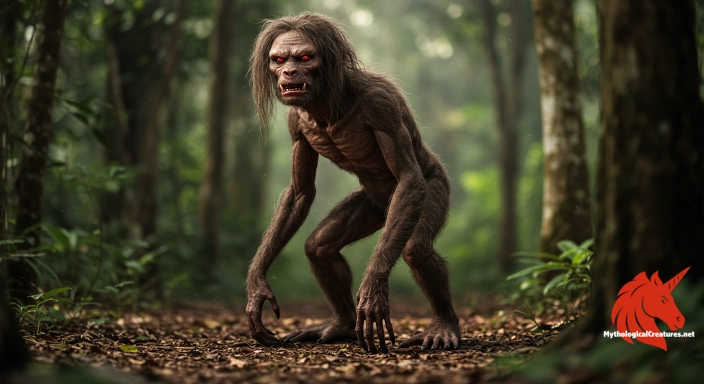
The Mythological Creatures Book Series
Yokai, Greek, Norse, Egyptian & Chinese. Five illustrated field guides to the creatures the old stories either warned or told you about.


Curated by the Mythological Creatures Team
Series editor: Mythological Creatures Directory
Primary desk: Asian & Pacific Myth Cycles Desk
(rev. November 2025)