
Wewe Gombel: Wewe Gombel is a notorious female vengeful ghost from Javanese mythology known for kidnapping children.
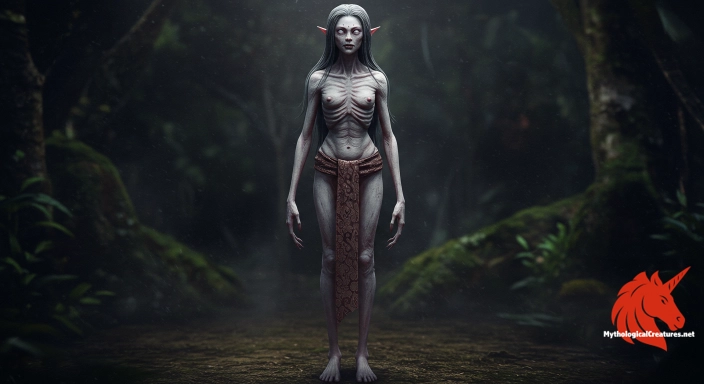
Wewe Gombel
Wewe Gombel - Serves as a cautionary tale warning children to stay indoors at night and highlighting themes of neglect and retribution.
Origins & First Encounters
Wewe Gombel emerges in the intricate tapestry of Javanese mythology as a spectral and enigmatic female presence whose origins are laden with both tragedy and mystery. Her legend is deeply rooted in local folklore, where whispered tales hint at a once devoted mother transformed by sorrow and betrayal. Many traditional narratives recount that her metamorphosis into a vengeful spirit was sparked by personal loss and the injustices meted out by an indifferent society. The myth, imbued with both caution and empathy, serves to remind the young of the perils of neglect and the importance of staying close to home. Over the years, despite its fluid nature, her image has been continuously revised to reflect changing societal attitudes toward family and loss. Her duality as both protector and punisher encapsulates the complex interweaving of love, revenge, and retribution in the human experience. The enduring power of her story speaks to the universal themes of maternal grief and societal alienation that transcend time and place. Today, the resonance of Wewe Gombel's myth is felt not only in rural storytelling but also in modern cultural expressions that continue to explore the boundaries between fear and compassion.
Source Texts & Tale Variants
The narrative of Wewe Gombel has been preserved across centuries through a rich oral tradition that spans villages and communities throughout Java. Early tellings, often conveyed through shadow puppet performances and local recitations, encapsulated the eerie duality of her nature as both a nurturing mother and a vengeful ghost. Multiple story variants exist, each imbued with subtle differences that highlight unique regional perspectives and moral lessons. Some versions focus on her role in safeguarding abandoned children, while others stress the punitive aspects of her interventions. Folkloric manuscripts and local anthologies have later captured these oral histories, solidifying her place as a cautionary yet multifaceted figure. As tales passed from one generation to the next, they absorbed the values and fears of the community, ensuring that her legend remained both relevant and mutable. In more recent times, modern reinterpretations—particularly in graphic novels and cinema—have expanded on the traditional motifs, adding layers of complexity and nuance. These diverse primary sources collectively underscore the adaptability and enduring impact of her myth within the cultural consciousness.
Form & Powers
Descriptions of Wewe Gombel’s appearance are both haunting and evocative, blending elements of tragic beauty with supernatural terror. She is traditionally portrayed as a spectral woman with long, dishevelled hair that cascades over her shoulders, lending an air of melancholy to her visage. A striking and recurrent feature is her elongated, hanging breasts, which serve as a stark reminder of maternal loss and the painful void created by abandonment. Her eyes, often depicted as deep wells of sorrow, mirror the grief and vengeance that lie beneath her calm exterior. A pallid, almost luminescent complexion further enhances her otherworldly allure, setting her apart from the living with an unnerving clarity. In modern adaptations, these classic features are sometimes augmented by the addition of vampire-like fangs, intensifying her predatory impression. Her form is described as mutable, capable of shifting between a seemingly benign, maternal entity and a menacing force of retribution. Ultimately, the physical portrayal of Wewe Gombel is a deliberate synthesis of beauty, horror, and tragic symbolism that renders her both irresistibly fascinating and deeply unsettling.
Regional Faces
Across different parts of Java and the broader Indonesian archipelago, the myth of Wewe Gombel is refracted through a spectrum of local traditions and interpretations. In many rural areas, she is embraced as a sorrowful guardian who steps in to care for children who have been abandoned, reflecting a deep-seated societal need for protection in times of vulnerability. In contrast, urban narratives tend to underscore her more vengeful and eerie aspects, fusing traditional elements with modern horror tropes. Some regions stress that her transformation into a ghostly figure was a result of personal betrayal, a nuance that adds layers to her character and moral complexity. Local storytellers often imbue her legend with additional supernatural motifs, thereby enriching the cultural tapestry of her myth. The depiction of her characteristics is also influenced by the prevailing social concerns—issues such as family breakdown and community neglect are echoed in her varying portrayals. Festival rituals and community gatherings in some areas occasionally celebrate her tragic figure, while in others, her narrative functions strictly as a dire warning. These regional variations demonstrate the dynamic interplay between universal themes and local customs, ensuring that her myth retains its potency in diverse contexts.
Cultural Parallels
The character of Wewe Gombel invites intriguing comparisons with other mythological figures from around the world, particularly those who embody the torment of maternal loss. Much like La Llorona in Latin American folklore, she personifies the dual roles of a grieving mother and a spectral avenger, weaving a narrative that straddles the realms of sympathy and dread. This archetype of a tragic maternal figure is not confined to one culture but recurs in various forms, resonating with themes of abandonment, retribution, and the eternal struggle between love and vengeance. In East Asian traditions, similar vengeful apparitions exhibit ambiguous motives that blend protective instincts with a capacity for terror, much like Wewe Gombel herself. The interplay of nurturing and punitive characteristics in these myths often reflects deep-seated cultural ambivalences regarding the familial bond. Her mutable nature and shifting appearance are consistent with global ghostly tropes where beauty and horror coexist. Such comparative insights underscore how diverse communities have fashioned their own versions of a universal narrative that honours the pain of loss while instilling caution. Through these cross-cultural parallels, Wewe Gombel’s legend is situated within a broader mythological framework that speaks to shared human experiences across different societies.
Legacy & Modern Evolution
The myth of Wewe Gombel has undergone a remarkable evolution from its early folkloric roots to its present-day adaptations in various media. Initially, her story functioned primarily as a cautionary tale designed to keep children safe from the dangers of wandering nocturnally, embedding a moral lesson within its eerie narrative. Over time, as societal values shifted, her character was reinterpreted to reflect the complexities of modern life, where themes of loss, alienation, and retribution continue to resonate. Contemporary portrayals in comics, films, and digital storytelling have infused her legend with new stylistic elements, such as enhanced visual terror and a more nuanced backstory. These modern adaptations often blend traditional iconography—such as her distinctive physical features—with elements of urban horror and supernatural intrigue. In doing so, they offer a fresh perspective on a character who is both maligned and mournful, reflecting the evolving landscape of cultural fears and family dynamics. Her reimagining serves not only as a testament to the adaptive power of folklore but also as a mirror to the changing social concerns of contemporary audiences. Ultimately, Wewe Gombel endures as a powerful cultural symbol, continually redefined to speak to the timeless themes of grief, retribution, and the complex interplay between human emotion and the supernatural.
Interesting Fact
An intriguing aspect of Wewe Gombel is that she melds elements of maternal symbolism with vengeful terror, serving both as a frightening cautionary tale and as a reflection of societal concerns over child neglect.
For myth educators and toolmakers
Built a resource for mythology learners?
If you offer courses, teaching tools, or research platforms focused on myth and folklore, consider a discrete placement on our reference pages.
Introduce your resourceQuick Creature Info
Origin:
Features:
Our Mythic Legendary Rating:

Supernatural Powers:
Physical Attributes:
Abilities:
Behavior:
Lore:
Related Creatures, Tales or Lore
- PPontianak
- KKuntilanak
- SSundel Bolong
References
Discover Another Mythical Legend You May Not Have Heard Of?
Uncover the mysteries of ancient folklore and expand your knowledge of legendary beings from cultures around the world.
Dare to Meet the Iacchus....
Curated by the Mythological Creatures Team
Series editor: Mythological Creatures Directory
Primary desk: Asian & Pacific Myth Cycles Desk
(rev. November 2025)