
Xicalancatl: Xicalancatl, also known as Xicalcoatl, is a giant serpent deity and one of the six progenitor sons of Mixcoatl and Tlaltecuhtli in Aztec mythology.
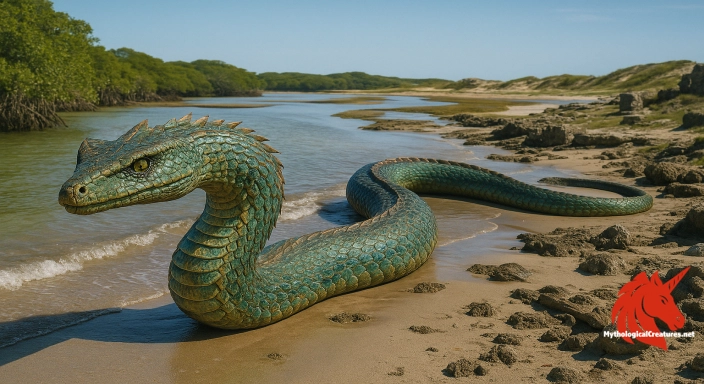
Xicalancatl
Xicalancatl - Significant as one of the six giant progenitors in Aztec creation myth, his legacy underpins the founding of various races and cities.
Origins & First Encounters
Xicalancatl, also known as Xicallancatl or Xicalcoatl, emerges from Aztec lore as a captivating figure imbued with both cosmic grandeur and intimate ties to the land.
The meaning behind his name, 'Teacup Serpent', conjures images of a delicate vessel capable of containing vast, transformative energies.
Born of the powerful war god Mixcoatl and the nurturing earth deity Tlaltecuhtli, he symbolises the union of celestial might and terrestrial fertility.
His first attestation is woven into the fabric of mythic narratives that recount the repopulation of the Earth following the Great Flood during the Fifth Sun.
As the fourth son among six giants, he claimed the coastal shores along the Gulf of Mexico, in a region known as Xicallanco—a name echoing both abundance and cultural significance.
This myth encapsulates themes of rebirth and cosmic order, reflecting Aztec values that revered nature and the cycles of creation.
The legend of Xicalancatl not only provided a divine genealogy for early communities but also served as a moral and cosmological framework for understanding the natural world.
Today, his enduring presence in myth serves as a reminder of the timeless link between the heavens, the earth, and the ever-renewing spirit of life.
Source Texts & Tale Variants
Ancient depictions of Xicalancatl are recorded in myriad sources, ranging from detailed pictorial codices to vibrant oral recitations passed through generations.
Manuscripts produced by early chroniclers and codices rendered in Nahuatl illustrate his role among the six giant progenitors, each narrative enriched by local colour and nuanced symbolism.
Oral traditions continue to preserve variant accounts of his arrival and settlement along the Gulf coast, blending myth with the lived experiences of indigenous communities.
The story of Xicalancatl is frequently interwoven with that of his divine siblings, with each tale contributing to a broader cosmogonic saga.
Subtle differences in his portrayal across various texts reflect regional artistic styles and the flexibility of myth in accommodating local perspectives.
These diverse sources underscore how sacred narratives were not static but evolved through continual reinterpretation and communal retelling.
Modern scholars have tapped into these ancient records to better understand the dynamic interplay between myth, memory, and regional identity in pre-Columbian Mesoamerica.
Ultimately, the enduring mosaic of texts and oral traditions surrounding Xicalancatl testifies to the rich and multifaceted nature of Aztec mythmaking.
Form & Powers
Xicalancatl is envisioned as a colossal, sinuous serpent whose form exudes both divine elegance and an overwhelming sense of power.
His long, undulating body is adorned with scales that shimmer in hues reminiscent of ancient ceramics, each scale etched with intricate designs that evoke cosmic cycles.
The teacup imagery implicit in his name suggests a paradoxical nature—both graceful and capable of containing the explosive force of creation.
His eyes are often described as luminous beacons, revealing a profound wisdom and a formidable, almost otherworldly presence.
Artistic portrayals sometimes highlight ornamental frills and crest-like features around his serpentine head, underscoring his divine origin and celestial mandate.
Textures and patterns along his body merge the fluidity of water with the strict lines of ceremonial ornamentation, symbolising both nature’s bounty and its raw power.
In many ancient murals and codices, his form is captured in dynamic motion—a visual ballet that fuses natural beauty with the majesty of myth.
Thus, his physical depiction serves not only as a representation of a mighty progenitor but also as a rich tapestry of symbols reflecting the interplay between art, nature, and divinity.
Regional Faces
The myth of Xicalancatl is interpreted in varied ways across different regions of ancient Mesoamerica, reflecting the rich tapestry of local cultural traditions.
In coastal narratives, particularly along the Gulf of Mexico, his image is often interlaced with aquatic motifs—a nod to the life-sustaining properties of the sea and the fertile lands he once ruled.
Local art and folklore in these regions frequently depict him as a benevolent guardian whose serpentine form is integrated with symbols of harvest and agricultural abundance.
In contrast, communities in Mixtec areas have reimagined him with unique attributes that emphasise both heroic valor and a deep connection to regional identity.
Adaptations in these areas incorporate distinctive iconographic elements, such as teacup imagery interwoven with local pottery styles, symbolising the nurturing potentials of both nature and craftsmanship.
Festivals and communal rituals have evolved wherein Xicalancatl is celebrated as a protector whose myth resonates with the cycles of seasonal renewal and natural prosperity.
This regional versatility demonstrates how his narrative was constantly reshaped to mirror the environmental, social, and artistic nuances of local communities.
Ultimately, these diverse regional adaptations deepen the myth’s complexity, forging enduring links between ancient cosmology and the lived realities of different peoples.
Cultural Parallels
Xicalancatl’s myth finds intriguing parallels with other renowned serpent deities across different cultures, demonstrating the universal allure of the serpentine symbol.
Like the illustrious Quetzalcoatl and the Mayan Kukulkan, his serpentine form acts as a conduit between terrestrial life and the divine, bridging the gap between mortal realms and cosmic forces.
The themes of creation, fertility, and transformation that underpin his narrative are echoed in global mythologies where serpents often embody both life-affirming and transformative powers.
Comparatively, while Quetzalcoatl is celebrated for his feathered, celestial elegance, Xicalancatl’s more grounded and mysterious appearance underscores his intimate connection with the earth and the sea.
This distinctive teacup motif sets him apart, offering a unique ritualistic nuance that mirrors the vessel symbolism found in other sacred traditions.
Similar to serpentine figures in East Asian and Native American myths, his form symbolizes the cyclical nature of time and the perpetual dance of creation and destruction.
Such cross-cultural resemblances reveal an enduring human fascination with the serpent as both a bringer of knowledge and a guardian of nature’s secrets.
Through comparative analysis, Xicalancatl emerges as a vibrant thread in the global tapestry of myth—one where he uniquely embodies the blend of terrestrial immediacy and cosmic mystery.
Legacy & Modern Evolution
Over the centuries, Xicalancatl’s image has evolved from a mythic giant enshrined in ancient codices to a symbol of enduring cultural heritage in modern artistic expressions.
Early representations in temple murals and handwritten manuscripts captured his majestic form as part of a broader cosmogonic narrative that celebrated the cycles of creation.
As the tides of history shifted with colonial influence, his myth was reinterpreted by indigenous communities as an emblem of resistance and the continuity of ancestral wisdom.
In contemporary times, his legacy is celebrated in festivals, public art, and community rituals that honour the rich pre-Columbian past of the region.
Modern artists have embraced Xicalancatl’s imagery, reimagining his serpentine form with bold colours and innovative media that speak to both tradition and contemporary identity.
This evolution reflects a broader trend in which ancient mythological figures are revitalised to address current social, environmental, and cultural challenges.
Scholars and cultural custodians alike view his narrative as a living dialogue between the past and the present—one that continues to inspire reflection on the interconnectedness of nature, community, and the cosmos.
The teacup serpent, with its rich symbolism of containment, renewal, and cosmic balance, now serves as a potent metaphor for the reservoir of cultural memory.
Through both academic inquiry and vibrant street art, Xicalancatl’s story remains a dynamic force that bridges ancient myth with modern aspirations.
In celebrating his legacy, communities reaffirm the timeless values of resilience, renewal, and the enduring power of myth to shape collective identity.
Interesting Fact
His name, translating to 'Teacup Serpent', intriguingly juxtaposes the delicate imagery of a teacup with his colossal, divine serpent form, reflecting the rich symbolic language of Nahuatl.
Partner with us
Sponsor this space
Reach thousands of mythology enthusiasts with a curated placement on our creature pages.
Learn about sponsorshipQuick Creature Info
Origin:
Features:
Associations:
Our Mythic Legendary Rating:

Also Sometimes Known As:
Habitat:
Supernatural Powers:
Physical Attributes:
Abilities:
Behavior:
Lore:
Related Creatures, Tales or Lore
- QQuetzalcoatl
- KKukulkan
- QQ'uq'umatz
References
Discover Another Mythical Legend You May Not Have Heard Of?
Uncover the mysteries of ancient folklore and expand your knowledge of legendary beings from cultures around the world.
Dare to Meet the Triton....
-f98f4850-2188-4443-925f-3c47c6f3e7f6_small.webp "Depiction of Triton")
Curated by the Mythological Creatures Team
Series editor: Mythological Creatures Directory
Primary desk: Americas & Indigenous Traditions Desk
(rev. November 2025)