
Zaebos: Zaebos is a demon from the Dictionnaire Infernal, known as the Grand Count of the infernal realms.
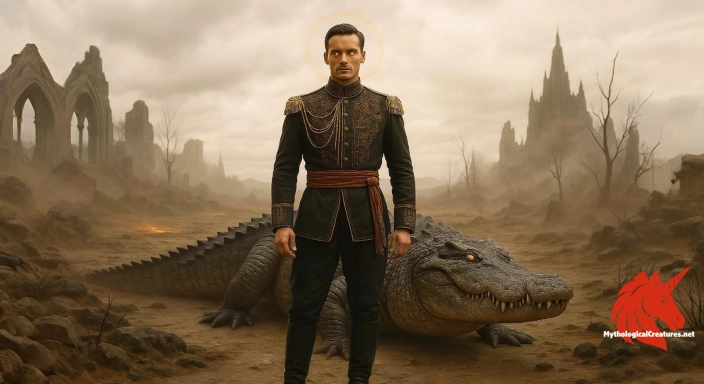
Zaebos
Zaebos - A notable infernal authority in European demonological traditions, exemplifying demonic nobility and power.
Origins & First Encounters
Zaebos emerges as a striking and enigmatic figure whose origins resonate deeply within the lore of occult demonology. His earliest attestation is found in the famed Dictionnaire Infernal, where he is introduced as the Grand Count of the infernal realms, a title that underscores his commanding presence. His myth is interlaced with European occult traditions, drawing upon medieval hierarchies and the mystique of forbidden power. The narrative surrounding him is rich in military symbolism, depicting him as a refined yet formidable soldier. His dual nature—balancing noble grace with an undercurrent of demonic malice—has captured the imagination of scholars and enthusiasts alike. Over time, Zaebos has come to represent the paradoxical union of beauty and horror, evoking both admiration and dread. His persona not only reflects the dark aesthetics of infernal orders but also hints at layers of hidden meaning within the realm of the supernatural. This amalgamation of martial discipline and sinister allure continues to intrigue modern interpreters. The enduring legend of Zaebos stands as a testament to the intricate interplay between human culture and the mythic dimensions of evil.
Source Texts & Tale Variants
Primary demonological texts, most notably the Dictionnaire Infernal, serve as the foundational source for the legend of Zaebos. The initial accounts, though sparse, are woven into a broader tapestry of demonic hierarchies that define the infernal world. Occult manuscripts and grimoires have periodically revisited his character, embellishing his military bearing and commanding stature. Early textual traditions place him alongside other prominent spirits, thereby establishing a context rich in symbolism and ritual. Over successive generations, folk narratives and occult commentaries have expanded upon his myth, often adapting his attributes to fit evolving cultural aesthetics. Multiple story variants have portrayed him either as a benign guide through hellish realms or as a merciless enforcer of cosmic order. Even where the primary texts are limited, the cumulative lore creates a vivid picture of his infernal grandeur and martial elegance. Some alternative manuscripts hint that Zaebos may have influenced later demonological catalogues and occult systems. His persistent appearance in later texts reinforces the idea that his myth transcends its original literary confines. Modern reinterpretations continue to re-examine and expand his role, ensuring that his story remains both dynamic and influential.
Form & Powers
The visual portrayal of Zaebos is both resplendent and unsettling, combining the aesthetics of a dashing soldier with unmistakably demonic elements. His face is depicted with chiseled features and an intense gaze that seems to harbour ancient secrets beneath a veneer of noble beauty. Clad in exquisitely detailed armour, every fold and filigree in his attire resonates with symbols of infernal power and martial precision. The precision of his gear reflects a fusion of military tradition and occult artistry, suggesting a divine order within chaos. Perhaps the most arresting aspect of his depiction is his mount—a formidable crocodile whose rugged scales and predatory eyes form a stark contrast with his refined appearance. This juxtaposition intensifies the enigma of Zaebos, symbolising the meeting of wild instinct and disciplined warfare. Artistic renditions often highlight the subtle interplay of light and shadow on his visage, evoking both admiration and a sense of impending doom. Variations in his physique—from lithe agility to a more robust, muscular presence—underscore the diverse interpretative approaches to his character. His overall bearing transcends mere physicality, embodying an aura that is as much about infernal majesty as it is about the terror hidden within.
Regional Faces
The myth of Zaebos has been adapted in various regional traditions, each imprinting its own cultural flavour upon the demon’s narrative. In the French and Western European contexts, he is celebrated as an aristocratic military leader of the infernal, exuding a refined dignity fused with diabolical power. Eastern European interpretations sometimes lean towards a grimmer visage, portraying him as a battle-hardened warrior marked by the scars of eternal combat. Mediterranean versions, meanwhile, often infuse his legend with exotic elements, reimagining his crocodile mount in a style that nods to local reptilian symbolism and age-old maritime lore. In parts of Latin America and the African diaspora, Zaebos’s character is mingled with syncretic beliefs, where his military attributes are interlaced with indigenous notions of spiritual warfare. Local adaptations may emphasise his role as both a guide through treacherous underworlds and a formidable executor of ancient rites. Artistic representations in these regions frequently meld the soldier’s elegance with the mystique of primitive motifs. Despite regional variations, the common thread of his narrative—his supreme position amongst infernal counts—remains intact. Regional reinterpretations not only diversify his story but also enrich its overall mythic tapestry. Each cultural lens adds nuance, demonstrating how traditions continuously reinvent this enigmatic figure to resonate with local beliefs and historical experiences.
Cultural Parallels
In the broader panorama of demonology, Zaebos occupies a singular niche through his blend of martial elegance and infernal mystique. His portrayal as a handsome soldier frequently invites comparisons with other demonic figures, such as Astaroth and Asmodeus, who also embody contradictions between beauty and malevolence. The dual nature of his persona—where noble refinement meets an ominous, dark underbelly—resonates with timeless themes found in the lore of fallen angels and rebel spirits. Just as Lucifer is often depicted as both luminous and damning, Zaebos challenges conventional perceptions of aesthetic virtue and moral decay. His unusual choice of a crocodile as his mount further sets him apart, echoing ancient symbols where reptilian power is both revered and feared. This element draws an intriguing parallel with mythologies from Egypt and Mesopotamia, where similar creatures symbolise the forces of chaos and rebirth. The militaristic aspect of his character also juxtaposes him against traditional warrior deities, yet his dominion over the infernal reaffirms his unique standing. By comparing his attributes with those of other mythic figures, one can discern a recurring motif in demonology—the enthralling interplay of charm, strength, and subversion. Each cultural iteration of his image serves as a mirror to collective human fascination with the obscure and the sublime. Such cross-cultural analyses ultimately deepen our understanding of how myths morph to express the perennial conflict between light and darkness.
Legacy & Modern Evolution
The evolution of Zaebos from an obscure mention in arcane texts to a figure of considerable cultural intrigue illustrates the mutable nature of demonic lore. His imagery, rooted in the military splendour of a bygone era, was revitalised during the Victorian occult revival, where intricate engravings and literary reinterpretations brought new dimensions to his myth. Over successive centuries, his representation has shifted from rigid canonical descriptions to a dynamic icon embraced by modern occult and fantasy traditions. Contemporary portrayals, whether in graphic novels, video games, or digital art, emphasise his duality—balancing an aristocratic charm with the inherent dangers of infernal power. The modern reimagining of Zaebos includes nuanced interpretations that position him as both a tragic antihero and a symbol of subversive authority. His enduring appeal lies in his capacity to embody conflicting ideals: the refined and the ruthless, the soldier and the spectre of chaos. The crocodile, as a constant visual motif, continues to stir debates about the nature of instinct versus order. Modern occult practitioners sometimes invoke his image in rituals that seek to channel both strength and otherworldly insight. As reinterpretations proliferate, his legacy evolves yet remains anchored in the rich traditions of demonology and myth. In essence, Zaebos stands as a perpetually relevant symbol, reflecting society’s enduring fascination with the liminal spaces between honour and damnation.
Interesting Fact
Zaebos uniquely combines the archetype of a noble soldier with demonic attributes, as evidenced by his atypical mount—a crocodile—thereby blending human honour with the primal chaos of the infernal realm.
For publishers and studios
Your next readers are already here
Many of our visitors are looking for books, campaigns, and resources that deepen their journey into myth. Position your title or setting here.
Discuss a placementQuick Creature Info
Our Mythic Legendary Rating:

Habitat:
Supernatural Powers:
Physical Attributes:
Abilities:
Behavior:
Lore:
Related Creatures, Tales or Lore
References
Discover Another Mythical Legend You May Not Have Heard Of?
Uncover the mysteries of ancient folklore and expand your knowledge of legendary beings from cultures around the world.
Dare to Meet the Satori....
-d7c0312a-b4b0-4258-a92d-6813592fe06f_small.webp "Depiction of Satori")
Curated by the Mythological Creatures Team
Series editor: Mythological Creatures Directory
Primary desk: Hellenic & Ancient Mediterranean Desk
(rev. November 2025)