
Abarimon: Abarimon are a mythological tribe of reversed-footed people renowned for their extreme running speed.

Abarimon
Abarimon - Abarimon represent an exaggerated ethnographic account of a prehistoric human strain, highlighting cultural perceptions of the 'other' in ancient and medieval lore.
Origins & First Encounters
The legend of Abarimon is shrouded in mystery and exotic detail, depicting a race whose very anatomy defies what is usual for humankind. Born of ancient narratives and the imaginative musings of classical writers, these beings are chiefly remembered for having reversed feet—a striking anomaly that paradoxically bestowed them with extraordinary speed. Their origins are tentatively traced back to the distant and wild valleys of the Himalayas, though early accounts placed them in the lands of India and Scythia. The earliest literary attestation appears in the works of Pliny the Elder, whose Natural History famously outlined their peculiar characteristics and remote habitat. Subsequent mentions in classical writings enriched their lore and captivated the fascination of ancient European audiences. Their existence was not merely a physical curiosity, but served as an allegory for the limits of human knowledge and the fantastical nature of the world beyond familiar borders. These enigmatic people, with their unusual physiology, were often depicted as untamed and fierce, living in harmony with fierce wildlife and eluding the grasp of civilisation. Over time, the Abarimon myth has served as a potent symbol of the unknown regions that lie at the edges of the ancient map, inspiring wonder and scholarly debate alike.
Source Texts & Tale Variants
The primary literary accounts of Abarimon are found in the classical texts of antiquity, most notably in Pliny the Elder’s Natural History, where he details their reversed feet and remarkable speed. Ancient commentators such as Aulus Gellius, in his work Attic Nights, also mention these people, thereby cementing their place in the tapestry of myth. Additional narrative layers come from Baiton, a land surveyor employed by Alexander the Great, whose observations on the unique air quality of their native valleys add a mysterious environmental twist to the legend. The texts suggest that the physical and environmental peculiarities of the Abarimon helped shield them from external capture, further mystifying their existence. Later medieval compendia, including those summarised by Thomas Cooper in his Thesaurus Linguae Romanae et Britannicae, recast these accounts within evolving geographical and ethnographic frameworks. Diverse manuscript traditions carried these descriptions across centuries, subtly shifting the narrative with each retelling in different periods and regions. While the original accounts focus on physical and environmental peculiarities, later versions expanded their reputation into that of a ferocious and elusive race. Each retelling, whether by ancient chroniclers or medieval mapmakers, enriched the tapestry of myth, ensuring that the modern imagination continues to be stirred by their enigmatic character.
Form & Powers
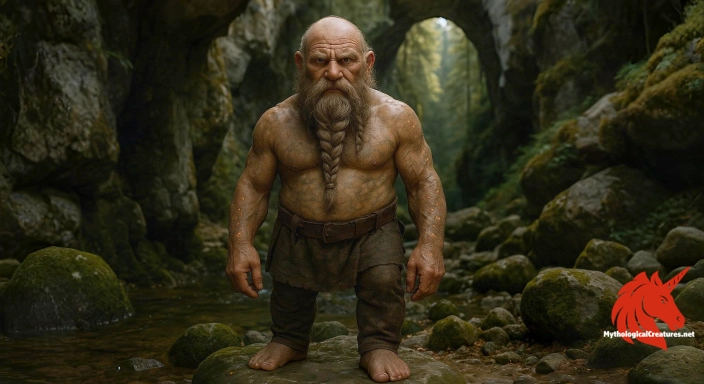
The defining physical trait of the Abarimon is their reversed feet, a feature that not only distinguishes them from ordinary human beings but also seems to confer an unexpected swiftness in their movement. Their lower limbs, adapted to this unusual anatomical twist, are described as both robust and agile, suggesting a design honed by the demands of rugged, mountainous terrain. Some depictions hint at a lithe, sinewy build that allows for rapid dashes along treacherous slopes, emphasising a harmonious integration of form and function. Their overall stature is often rendered as slightly more compact than that of typical humans, a characteristic that may have evolved as an adaptation to their remote and harsh environment. Beyond their peculiar locomotion, early travellers noted other distinguishing features such as vivid, alert eyes and weather-beaten faces that spoke of a life intertwined with the natural world. Their physical appearance is sometimes romanticised as both wild and noble, embodying a primal connection with the environment they inhabitted. Varying traditions offer slight differences in details, with some accounts depicting them as having a hue of skin or hair that blends into the rocky landscape of their valleys. Although precise measurements remain a matter of myth rather than record, the recurring emphasis on their reversed feet remains the unequivocal hallmark of their physical depiction.
Regional Faces
The myth of Abarimon displays intriguing regional variations, with differing accounts emerging from across Asia and Europe. In several accounts, these remarkable people are portrayed as inhabitants of remote Himalayan valleys where the environment itself plays a crucial role in shaping their physiology and lifestyle. Other versions from the ancient Near East and Scythia shift their origin to the rugged, isolated regions near Mount Imaus and beyond, underscoring the mutable nature of their legendary roots. In certain traditions, local lore recasts them not only as physical anomalies but as mystical guardians of isolated landscapes, with their reversed feet symbolising the inversion of common natural laws. Folk narratives in some Eastern European traditions have fused the Abarimon legend with other mythic races, creating a patchwork of tales that highlight both their physical prowess and their enigmatic isolation. Meanwhile, some medieval European maps place them at the very edge of the known world, blending geography with myth in a way that emphasised the exotic and the remote. These regional adaptations reveal a common theme: a people defined by their alien attributes and their deep connection to the wild, untamable elements of nature. The regional diversity in their description not only mirrors the geographical diversity of ancient trade and travel but also strengthens the allure of the unknown in the collective imagination.
Cultural Parallels
The Abarimon bear striking resemblances to other mythological beings whose anomalous traits serve as bridges between humanity and the untamed forces of nature. In classical mythology, similar motifs of inverted anatomy appear in the accounts of various ‘monstrous races’ that exist on the periphery of the known world, much like the Hyperboreans and other exotic tribes recounted by early Greek and Roman writers. Parallels can be drawn to other legendary figures of remote mountain regions, such as the Yeti or the Himalayan wild men, whose mystique is similarly intertwined with extreme environmental conditions. The inversion of the natural order—a reversal of the human foot—resonates as a metaphor in many cultures, suggesting that these creatures exist as a counterpoint to the orderly, civilised society. In many ways, the Abarimon encapsulate the perennial fascination with the unnatural and the other, serving as a narrative device to explore themes of difference and exception. Their myth has not only enriched the classical lore but has also found echoes in various modern depictions of fantastical races in literature and art. This comparative view underscores the idea that many cultures have long grappled with the boundaries of human nature and the enigmatic realms that lie just beyond. The symbolic inversion embodied by their reversed feet facilitates a broader dialogue about the inversion of order and the mysteries of creation, a theme that spans continents and ages.
Legacy & Modern Evolution
Over the centuries, the tale of the Abarimon has undergone a significant transformation, evolving from an ancient ethnographic curiosity into a staple of mythical geography and fantasy literature. Medieval cartographers immortalised their form by adorning the borders of maps with artistic depictions of these elusive beings, emphasising both their ferocity and the otherness they represented. The evolution of the myth has been marked by a gradual shift in perception—from a literal belief in a strange, isolated tribe to a more symbolic interpretation of human diversity and the limits of geographical knowledge. In modern times, Abarimon provides a captivating motif in literature, film, and art, inspiring contemporary creators to reimagine these people as guardians of lost or hidden realms. The concept of a people intrinsically linked to a specific landscape and air quality also prompts reflections on environmental determinism and the ties between identity and place. As modern fantasy and speculative fiction continue to explore themes of altered anatomy and uncanny adaptations, the legacy of the Abarimon endures, sparking both scholarly debate and popular intrigue. Today, their story stands as a testament to the enduring power of myth to encapsulate the human fascination with the unknown and the unexplained. In this way, the ancient narrative of the Abarimon continues to inspire a dynamic, ever-evolving canvas of cultural and creative expression.
Interesting Fact
Medieval cartographers often placed the Abarimon at the edges of the world, highlighting the era's blend of myth and geographical speculation.
For serious myth projects
Feature your work alongside the legends
From academic works to story-rich games, we highlight projects that respect world mythologies. Talk to us about a measured, long-term placement.
Start a conversationQuick Creature Info
Features:
Our Mythic Legendary Rating:

Also Sometimes Known As:
Habitat:
Supernatural Powers:
Physical Attributes:
Abilities:
Behavior:
Weaknesses:
Lore:
Related Creatures, Tales or Lore
- CCynocephali
- SSciapods
- HHyperboreans
References
Discover Another Mythical Legend You May Not Have Heard Of?
Uncover the mysteries of ancient folklore and expand your knowledge of legendary beings from cultures around the world.
Dare to Meet the Alberich....
Curated by the Mythological Creatures Team
Series editor: Mythological Creatures Directory
Primary desk: Asian & Pacific Myth Cycles Desk
(rev. November 2025)