
Abellio: Abellio is an ancient god venerated in the Garonne Valley of Gallia Aquitania.
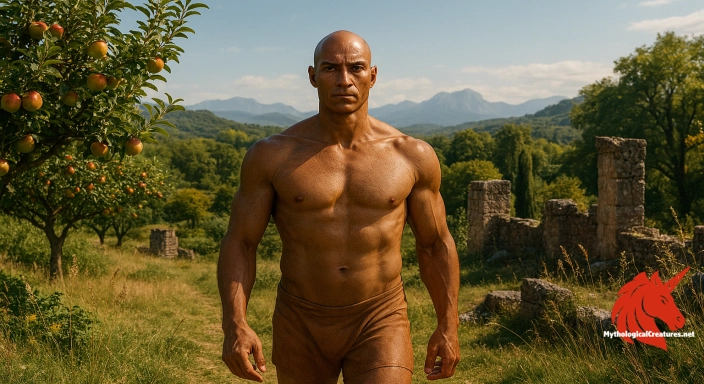
Abellio
Abellio - Abellio's cult reflects the intertwining of nature worship and solar reverence in ancient Gallia Aquitania.
Origins & First Encounters
Abellio stands as a fascinating figure from the ancient pantheon of the Garonne Valley, a deity whose worship was centred in the region now known as southwest France.
His various appellations—Abellio, Abelio, and Abelionni—reflect a fluid identity shaped by local languages and evolving religious practices.
The origins of his cult are intertwined with the pre-Roman Celtic traditions that dominated Gallia Aquitania, capturing the attention of communities who revered nature and the celestial order.
Inscriptions discovered in Comminges, nestled in the Pyrenees, offer the primary evidence of his worship and attest to his cultural importance.
While some interpret his divine attributes as relating to apple trees, others suggest a strong solar component, hinting at a rich symbolic duality.
This duality speaks to an intricate understanding of nature’s cycles, where the growth of orchards and the cycle of day and night were celebrated.
The depiction of Abellio in regional inscriptions indicates his role as a bridge between the everyday agrarian life and the broader cosmological beliefs of his people.
His cult, though sparsely documented, has inspired modern mythological investigations, merging historical intrigue with natural symbolism.
Within the mosaic of ancient Celtic deities, Abellio’s legacy echoes the deeper human pursuit of understanding and celebrating nature.
The enduring interest in his enigmatic form makes him a compelling subject for both historians and enthusiasts of ancient spirituality.
Source Texts & Tale Variants
The primary evidence for Abellio’s cult is found in a series of epigraphic inscriptions, notably discovered in the Comminges region of the Pyrenees.
These inscriptions present brief but significant references to his name in various forms, highlighting both the regional diversity and the complexity of his worship.
The texts themselves are compact, offering few narrative details but sufficient clues to suggest his association with natural elements.
Variations in the spelling of his name—such as Abelio and Abelionni—indicate localized ritual practices and linguistic adaptations that enriched his cult.
While there are no extensive mythological narratives attached to Abellio, the inscriptional evidence has prompted scholars to explore his potentially dual role as a solar deity and guardian of apple trees.
This patchwork of historical records underscores the reliance on archaeological findings to reconstruct ancient religious practices in Gallia Aquitania.
Other fragmented sources, including local folklore elements passed down orally, supplement the written inscriptions and hint at broader community involvement in his worship.
Despite the brevity of the inscriptions, each marker serves as a vital piece in understanding the deity’s role in ancient society.
The scarcity of detailed literary accounts encourages modern researchers to compare similar deities from neighbouring cultures as they piece together Abellio's divine narrative.
The collected evidence, though fragmentary, continues to foster vibrant scholarly debate about the full extent of his mythological significance.
Form & Powers
Although no complete statues or pictorial representations have survived to fully illustrate Abellio’s form, the scant archaeological remnants suggest a figure imbued with natural radiance and strength.
The implied iconography hints at a deity whose attributes aligned with both the brilliance of the sun and the fruitful abundance of apple trees.
Some reconstructions propose that he may have been depicted with a robust, manlike structure that symbolised vitality and fertility.
Artistic fragments and suggestive motifs potentially include elements such as radiant halos or solar discs, which underline his connection to the light-giving sun.
His association with apple trees might have been artistically conveyed through decorative renditions of blossoming branches or clusters of fruit.
Despite the limited physical representations, the inferred imagery resonates with broader Celtic artistic traditions that celebrate the interplay of light and nature.
The delicate balance of celestial and terrestrial symbols in his presumed depictions indicates an imaginative visual language that linked divine power with natural phenomena.
Reconstructive efforts based on parallel deities in Celtic art suggest that his appearance would have evoked both awe and a sense of life-affirming energy.
This blend of solar and arboreal iconography, though pieced together from rare clues, provides a compelling vision of Abellio’s mythic and physical essence.
The overall conjecture about his form invites ongoing creative and archaeological exploration, maintaining the mystery surrounding his divine visage.
Regional Faces
The identification and worship of Abellio exhibit notable regional nuances that reflect the diverse cultural landscape of ancient Gallia Aquitania.
In the Garonne Valley, local communities imbued his identity with elements that resonated strongly with agrarian lifestyles and the seasonal cycles of growth.
Within the Comminges region, he was revered as a protective spirit, a role that underscored both the abundance provided by apple trees and the life-sustaining light of the sun.
Variations in the inscriptional record, particularly the differing spellings of his name, suggest that regional dialects and local customs played a significant role in shaping his divine character.
Some locales may have emphasised his solar attributes, equating his presence with the dazzling energy of the sun, while others celebrated his connections with harvest and fertility.
This localized worship highlights how communities adapted a shared deity to meet their specific environmental and cultural needs.
The regional adaptations also reflect the dynamic interplay between indigenous Celtic traditions and later cultural influences, such as those encountered during Roman expansion.
These diverse interpretations made Abellio a multifaceted symbol whose significance could shift depending on local priorities and seasonal demands.
Traditional practices and oral traditions in various parts of southwest France continue to echo these ancient regional differences.
Ultimately, the regional variability of his worship underscores the adaptability and enduring appeal of his cult across different communities.
Cultural Parallels
Abellio occupies a unique niche among ancient deities, his attributes drawing intriguing comparisons with other figures across Celtic and Indo-European mythologies.
His possible role as a solar deity invites natural parallels with the esteemed Celtic god Belenus, whose radiance was celebrated in many neighbouring regions.
The symbolic interplay between apple orchards and solar energy is a recurring motif, echoed by similar deities who embody both fertility and celestial power.
This dual association resonates with broader mythological themes, where the cycles of nature are inextricably linked to divine light and growth.
In several ancient traditions, the apple has symbolised not only physical nourishment but also a mystical source of rejuvenation and renewal, a theme mirrored in Abellio’s duality.
The blending of solar iconography with arboreal symbolism finds echoes in the narratives of other cultures that honour nature’s cyclical regeneration.
Comparative analysis suggests that his attributes may have evolved through cultural exchanges along trade and migration routes, enriching his myth with layers of interpretation.
The convergence of these recurrent themes illustrates a common human fascination with the natural world and its transcendent energies.
Abellio’s character, though shrouded in fragmentary evidence, ultimately becomes a focal point for examining the intersection of agricultural fertility and celestial power across diverse mythological landscapes.
This synthesis of ideas underscores the enduring human need to connect earthly life with the cosmic order, a narrative echoed in many ancient spiritual traditions.
Legacy & Modern Evolution
The evolution of Abellio’s legacy reflects a remarkable journey from enigmatic ancient inscriptions to a modern symbol of cultural resilience and natural harmony.
In the early days of his worship, his divine attributes were directly tied to the rhythms of agrarian life and the observable patterns of the sun.
As time passed, the diffusion of Roman cultural influences and evolving religious thought led to reinterpretations of his character while maintaining his essential ties to nature.
This gradual evolution has allowed Abellio to transition from a local guardian deity to an emblem of ancient Celtic wisdom appreciated by modern enthusiasts.
The rediscovery of his inscriptions has sparked renewed scholarly interest, which in turn has permeated popular culture and the practices of contemporary neopagan groups.
Modern reinterpretations often highlight his dual roles—linking the cycles of agricultural renewal with the inexhaustible energy of the sun—as a metaphor for life’s cyclic nature.
Artistic endeavours, literary explorations, and heritage projects in southwest France serve to keep his memory alive, inviting a reinterpretation of ancient traditions in a modern context.
Though his original cult has largely faded, the echoes of his worship continue to influence regional identity and cultural narratives.
Abellio’s enduring presence in modern myth and art attests to the timeless human quest for connection with nature and the cosmos.
The evolving legacy of this ancient deity encourages ongoing investigation into the multifaceted nature of spirituality and the profound influence of early religious practices on contemporary thought.
Interesting Fact
An inscription dedicatory to Abellio suggests that his worship may have blended local nature veneration with solar symbolism, hinting at a dualistic role that is rare among ancient deities.
Mythology-aligned partners
Showcase your myth-friendly brand here
Run a store, studio, or platform that lives in the world of myth and folklore? A curated sponsor panel on these pages may fit.
Explore partnership optionsQuick Creature Info
Features:
Associations:
Our Mythic Legendary Rating:

Also Sometimes Known As:
Habitat:
Supernatural Powers:
Abilities:
Lore:
References
Discover Another Mythical Legend You May Not Have Heard Of?
Uncover the mysteries of ancient folklore and expand your knowledge of legendary beings from cultures around the world.
Dare to Meet the Vanth....
Curated by the Mythological Creatures Team
Series editor: Mythological Creatures Directory
Primary desk: Northern & European Folklore Desk
(rev. November 2025)