
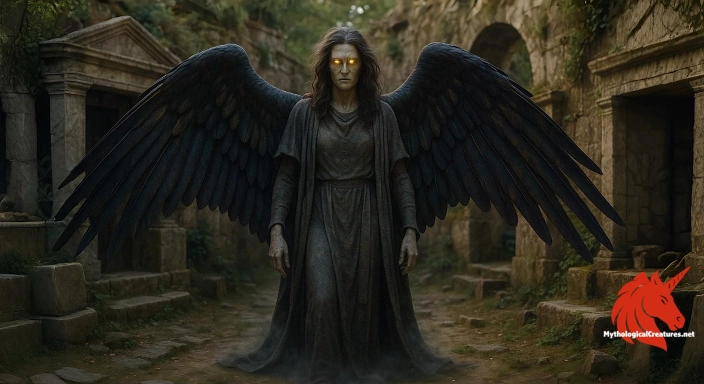
Vanth: Vanth is a chthonic figure from Etruscan mythology depicted in funerary art as an ethereal, winged guide of the dead.
Vanth
Vanth - Vanth symbolizes the passage between life and death, serving as a guide for souls in Etruscan funerary belief.
the legend in five swipes.
the legend in five swipes.
How did Vanth enter folklore?
Vanth stands as a distinctive figure in the ancient Etruscan belief system, emerging from a rich tradition of chthonic lore that celebrated the passage between life and death. His presence is primarily attested in funerary art, where his image graces tomb paintings and sarcophagi with a unique blend of awe and solemnity. Rooted in an era that viewed death as a transformative journey rather than a final cessation, Vanth embodies both warning and guidance. Early depictions draw on a complex tapestry of religious practice, where his role extended beyond a simple messenger to a mediator of the unknown. His iconography, replete with symbolic nuances, highlights a culture deeply engaged with ideas of rebirth and spiritual passage. Over time, Vanth's representation began to mirror evolving ritualistic ideas, attesting to the dynamic nature of Etruscan spirituality. The intricacy of his portrayal suggests that he was revered as both a guardian of the dead and a harbinger of existential change. His enduring image thus continues to invite modern interpretation, offering insights into how ancient societies reconciled the mysteries of mortality and the afterlife.
How did the story of Vanth change over time?
The primary evidence for Vanth’s character is embedded in the archaeological record, with numerous tomb paintings, sarcophagi, and other funerary artefacts bearing his distinctive image. These artistic sources, which span a significant period in Etruscan history, provide a window into the evolving interpretation of his role in the underworld. A variety of local burial sites contribute nuanced details to his identity, with depictions ranging from imposing guardian to ethereal guide. While the Etruscan written language remains only partially deciphered, the visual narratives left behind allow us to construct a rich mythology centered on his persona. In many instances, inscriptions, though fragmentary, accompany his images, hinting at rituals and stories that underscored his importance in the journey of the dead. The diversity of depictions across various sites suggests that local traditions played a role in shaping his iconography. Some depictions emphasise elaborate wing motifs, while others focus on facial expressions that convey empathy and solemnity. New archaeological findings continue to refine our understanding, revealing variations that challenge earlier interpretations of his myth. The spectrum of story variants associated with Vanth collectively enriches the broader tapestry of Etruscan funerary and cosmological thought.
Vanth: What Manner of Being?
Artistic portrayals of Vanth consistently highlight his otherworldly appearance, where human features merge seamlessly with supernatural attributes. A dominant characteristic in these depictions is his expansive, winged form, which serves as a visual metaphor for his ability to traverse the realms of the living and the dead. His face is often rendered with an enigmatic serenity, a quality that conveys both the inevitability of death and the comforting promise of guidance. Vanth is commonly portrayed wearing garments or accessories that blend the natural with the divine, each detail meticulously carved to underscore his role. Variations in his attire suggest that different regions or periods may have emphasised distinct aspects of his function in the journey to the underworld. The texture of his hair and the subtle contours of his features are frequently accentuated by expert craftsmanship, reflecting the high artistic standards of Etruscan creators. In many representations, his posture exudes a timeless grace, hinting at a perpetual state of motion and transformation. The dynamic interplay between realism and myth in his iconography speaks to an art form that celebrated both beauty and the ominous. Overall, the careful detailing found in his depictions invites observers to contemplate a figure who bridges mortal fragility with divine authority.
What do different regions call Vanth?
Across the varied landscapes of ancient Italy, Vanth’s depiction exhibits subtle regional distinctions that speak to local cultural and artistic nuances. In the northern heartlands of Etruria, his image is often rendered with robust and bold features, emphasising his strength and commanding presence. Conversely, depictions from central and southern regions favour a gentler treatment of his form, with delicate lines that stress his role as a compassionate guide. Local artisans frequently integrated indigenous decorative motifs into his portrayal, blending geometric patterns and natural forms to accentuate regional identity. In some areas, Hellenistic influences are evident, resulting in a smoother, more refined style that intertwines Greek artistic ideals with traditional Etruscan themes. These artistic adjustments reflect a dialogue between local customs and external cultural currents, revealing a flexible approach to myth-making. The consistent element across all regions is his symbolic association with the passage to the afterlife, a concept that resonated universally despite stylistic differences. Certain sites even present unique accessories or posture variations that hint at localized ritual practices and storytelling. Such regional diversity enriches the overall picture of Vanth, highlighting his multifaceted role in both art and ritual across ancient communities.
Do other traditions know Vanth by another name?
Vanth’s role as a guide for souls resonates with similar figures across a spectrum of ancient mythologies, creating a fascinating field for comparative analysis. His function as a psychopomp invites parallels with the Greek Hermes, who likewise escorted souls to the underworld. This shared motif of spiritual mediation is also reflected in Roman depictions of Mercury, whose iconography blends the terrestrial with the divine. Beyond the Greco-Roman world, echoes of his role can be detected in other cultural traditions where winged figures facilitate transitions between life and death. Although each culture adapts this figure to its own cosmological framework, Vanth’s representation remains distinct with its particular blend of life, death, and rebirth symbolism. The common thread among these figures is the belief in a necessary and sacred journey that transcends mortal existence, a theme that speaks universally to the human condition. Some comparisons even extend to Celtic and Near Eastern myths, where similar guides appear, albeit with differences in narrative emphasis and visual style. This cross-cultural dialogue not only enriches our understanding of Vanth but also situates Etruscan thought within a broader ancient tradition. In juxtaposing these figures, we observe a shared human preoccupation with the mysteries of mortality, even as each tradition offers its own unique interpretation.
Vanth: Then and Now
The evolution of Vanth’s image over time mirrors the changing attitudes toward death and the afterlife throughout history. Early Etruscan depictions emphasised his direct role as a guardian and guide, capturing the stark realities of mortality in a tangible form. As artistic influences shifted during the Hellenistic and later Roman periods, his image acquired additional layers of symbolism and abstraction. In modern times, Vanth continues to inspire artists and writers who see in his winged visage a powerful emblem of transformation and the ephemeral nature of existence. Contemporary portrayals often imbue his character with a timeless quality, juxtaposing ancient ritual with modern existential themes. His image has permeated various media, from literature and visual arts to film, where he is often cast as a mysterious mediator between different realms. The persistent allure of Vanth lies in his ability to encapsulate both the fear of the unknown and the hope inherent in the cycle of life and death. As a subject of renewed scholarly interest, he has come to represent not merely a relic of Etruscan culture but a universal symbol in discussions of mortality. This enduring legacy ensures that Vanth remains a potent figure, continuously reinterpreted to reflect the evolving human quest for meaning in the face of life’s ultimate transitions.
Interesting Fact
An intriguing aspect of Vanth is the seamless integration of his image into funerary art, making him both a symbolic and practical presence in the rituals surrounding death and the afterlife.
Mythological Treasures
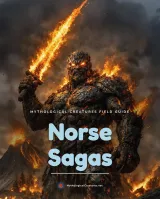
Norse Sagas: A field guide to the beasts of the Viking world
Drawn from the saga accounts themselves, with the powers, weaknesses and doom of each being set out.
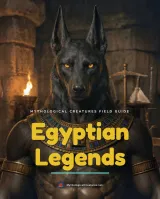
Egyptian Legends: A field guide to the gods and monsters of ancient Egypt
Guardians of the living and devourers of the dead, with the role each played in judgement.
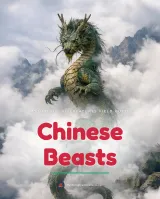
Chinese Beasts: A field guide to the dragons and demon kings of Chinese myth
From river dragons to demon kings, with the legends that shaped five thousand years of storytelling.
the legend in five swipes.
Sponsor this space
Tasteful, fixed-fee placements for myth projects
No bidding wars or flashing banners. We offer simple placements for a small set of creators and brands aligned with our readers.
Request further detailsQuick Creature Info
Associations:
Our Mythic Legendary Rating:

Habitat:
Supernatural Powers:
Physical Attributes:
Abilities:
Behavior:
Lore:
References
Discover Another Mythical Legend You May Not Have Heard Of?
Uncover the mysteries of ancient folklore and expand your knowledge of legendary beings from cultures around the world.
Dare to Meet the Bhummaso....
The Mythological Creatures Book Series
Yōkai, Greek, Norse, Egyptian & Chinese. Five illustrated field guides to the creatures the old stories either warned or told you about.
Curated by the Mythological Creatures Team
Series editor: Mythological Creatures Directory
Primary desk: Hellenic & Ancient Mediterranean Desk
(rev. November 2025)