
Achilles: Achilles was the preeminent Greek warrior of the Trojan War, renowned for his near invulnerability and exceptional martial prowess, yet fated by a single vulnerability in his heel.
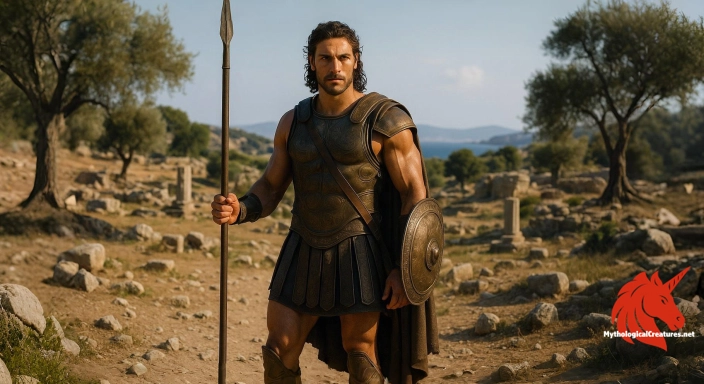
Achilles
Achilles - Achilles represents the pinnacle of heroic martial prowess and the tragic interplay between near invulnerability and a fatal weakness.
Origins & First Encounters
Achilles stands as one of mythology's most iconic warriors, a figure whose life and deeds have been celebrated since antiquity. Born of the sea-nymph Thetis and the mortal king Peleus, his origins weave together divine grace and human ambition. He first emerged in literary memory through the vivid imagery of Homer’s Iliad, a work that established him as the preeminent fighter of the Trojan War. Raised in the rugged highlands of Phthia, his upbringing was deeply imbued with a culture that prized martial excellence and heroic ideals. His tutelage under the centaur Chiron and close companionship with Patroclus further shaped him into a paragon of Greek valor. The narrative of his life, marked by extraordinary feats on the battlefield, reflects the quintessential conflicts of divine influence and mortal frailty. His story not only encompasses epic battles and personal vendettas but also mirrors the intricate interplay between fate and free will. The legacy of Achilles underscores ancient Greek cultural values, where glory, honour, and the bittersweet nature of human imperfection converge. His character endures as a symbol of both the brilliance and the inevitable limitations of the heroic spirit. Contemporary retellings continue to highlight the nuanced layers of his myth, revealing a timeless allure that resonates with audiences across ages.
Source Texts & Tale Variants
The rich tapestry of Achilles’ legend is primarily woven through the narrative fabric of Homer’s Iliad, which presents him with dramatic intensity and historical gravitas. This epic serves as the earliest literary reference, capturing both his martial prowess and the internal turmoils that drive his actions. Beyond the Iliad, fragments of other ancient texts and oral traditions further illuminate his character, enriching the myth with diverse perspectives. Later works, such as Statius’ unfinished epic Achilleid, supplement the Homeric tradition with imaginative details that have shaped the way subsequent generations perceive him. Varied literary sources present different facets of his personality, from his heroic exploits to the more vulnerable aspects of his nature. Some ancient poets and dramatists explored the duality of his persona, emphasising the paradox of his near invulnerability juxtaposed with that one fatal weakness. The evolving narrative over centuries demonstrates how Achilles became a canvas for broader cultural and moral inquiries. Interpretations of his story have been adapted and reimagined across different periods, allowing scholars and artists alike to delve into his mythological complexity. These sources collectively contribute to a layered and multifaceted portrayal that continues to engage those who explore the ancient world. The enduring nature of these accounts attests to his position as a central figure in both classic literature and mythic tradition.
Form & Powers
Achilles is frequently depicted as the epitome of heroic physicality, exuding a commanding presence and an almost superhuman build. Artists and poets alike have portrayed him as tall and striking, with a body that marries the principles of strength and grace. His features are often celebrated for their classical beauty, combining intense eyes, a chiseled visage, and flowing locks that hint at his divine heritage. Ancient artworks illustrate him clad in intricately decorated armour that underscores his role as a martial leader and a figure of near-divine perfection. Emblematic of his myth, his body is rendered as almost invulnerable, with every muscle and sinew meticulously crafted to embody the ideal warrior, except for that singular spot at his heel. Detailed descriptions in literature and art point to a physique that is both aesthetically pleasing and functionally formidable on the battlefield. The contrast between his robust exterior and the poignant vulnerability of his heel adds a layer of tragic elegance to his portrayal. This nuanced physical representation underscores the perennial theme of the delicate balance between extraordinary strength and inherent human frailty. His image continues to inspire modern notions of timeless physical perfection and heroic allure. Such depictions have left an indelible mark on the visual culture of Western civilisation.
Regional Faces
While Achilles is most famously rooted in ancient Greek mythology, his persona has experienced diverse interpretations across different regions. In the heart of Greece, he is often venerated as the ultimate warrior whose narrative encapsulates the ideals of honour and bravery. During the Hellenistic period, his myth was enriched with additional supernatural embellishments, emphasising his quasi-divine stature. Roman adaptations of his memory brought a more measured look at his character, highlighting not only his martial splendour but also the psychological costs of absolute strength. In the Eastern Mediterranean, local storytellers interwove his legend with indigenous mythic motifs, often portraying him as a symbol of both relentless valor and inevitable human vulnerability. Each regional narrative adjusted the focus of his heroic exploits to align with culturally specific values, whether they were martial honour, tragic destiny, or spiritual transcendence. These local variations allowed Achilles’ myth to become a dynamic and adaptable part of broader cultural dialogues, enriching his story with diverse interpretative layers. The adaptability of his myth allowed it to remain relevant across different cultural and historical contexts. Such regional flavours have added depth to his legend, ensuring that his appeal transcends geographical boundaries. Ultimately, these adaptations highlight the universal fascination with his character and the enduring power of his myth.
Cultural Parallels
The legendary narrative of Achilles invites fascinating comparisons with other great heroes across diverse mythological traditions. Figures such as Gilgamesh from Mesopotamian lore or even Hercules from the Greco-Roman world share with Achilles the blend of superhuman prowess and fetal vulnerability. Like many epic heroes, his tale is marked by a balance between near invincibility and a singular, critical flaw—a theme that resonates across various cultural narratives. The motif of possessing one fatal weakness, even in the midst of overwhelming strength, is a recurring archetype that ties his character to a broader tapestry of hero myths around the world. This narrative thread reflects a deep human preoccupation with the dualities of perfection and imperfection inherent in all great characters. Cross-cultural comparisons reveal that while the specifics of his legend are distinct, the underlying questions about mortality and hubris strike a universal chord. Modern portrayals continue to explore these contrasts, positioning Achilles alongside contemporary characters who are similarly wrestling with the burdens of their greatness. The shared attributes across these heroic narratives invite audience members from different cultural backgrounds to draw parallels with their own mythic traditions. In doing so, Achilles emerges not only as a uniquely Greek figure but also as part of a global dialogue on the nature of heroism and human frailty. Such comparative insights help underscore the timeless quality of myth and the universality of its themes.
Legacy & Modern Evolution
The evolution of Achilles’ myth illustrates a fascinating journey from the epic battlefields of ancient Troy to the symbolic language of modern discourse. Over the centuries, his image has been continually reinterpreted, transcending the rigid boundaries of early epic poetry to take on new cultural and aesthetic dimensions. As modern literature, cinema, and art revisit his story, the focus has expanded to explore both his heroic vigour and the poignant vulnerability encapsulated by his fabled heel. This metaphor of a singular weakness has entered the common lexicon, serving as a powerful allegory for hidden frailties in an otherwise formidable entity. Artistic representations have evolved from classical statues and ancient manuscripts to dynamic portrayals in films and graphic novels, each reflecting contemporary notions of heroism. The narrative of Achilles is now often seen as a meditation on the paradoxes of human life, where immense strength is invariably shadowed by a critical point of failure. Philosophers, psychologists, and modern storytellers alike have found in his legend fertile ground for exploring the tensions between destiny, free will, and the human condition. As new media continue to reinterpret ancient myths, his legacy is solidified as a timeless symbol of both indomitable spirit and inherent vulnerability. Such enduring relevance highlights the adaptability of myth in reflecting the changing values and struggles of society. Ultimately, Achilles remains an eternal archetype whose layered story continues to inspire and provoke reflection on the very nature of heroism.
Interesting Fact
The term 'Achilles’ heel' has transcended its mythological origins to become a common metaphor for a critical vulnerability, illustrating the enduring influence of his legend on modern language and culture.
For serious mythcraft
Your project belongs among the legends
If your work deepens how people understand, play with, or teach mythology, a sponsor placement here keeps it in front of the right readers all year.
Submit a sponsorship enquiryQuick Creature Info
Origin:
Features:
Associations:
Our Mythic Legendary Rating:

Also Sometimes Known As:
Habitat:
Supernatural Powers:
Physical Attributes:
Abilities:
Behavior:
Weaknesses:
Lore:
Related Creatures, Tales or Lore
- OOdysseus
- HHeracles
- AAjax
References
Discover Another Mythical Legend You May Not Have Heard Of?
Uncover the mysteries of ancient folklore and expand your knowledge of legendary beings from cultures around the world.
Dare to Meet the Ramidreju....

Curated by the Mythological Creatures Team
Series editor: Mythological Creatures Directory
Primary desk: Hellenic & Ancient Mediterranean Desk
(rev. November 2025)