
Akaname: The Akaname is a Japanese yōkai known for licking the filth that accumulates in bathtubs and bathrooms.
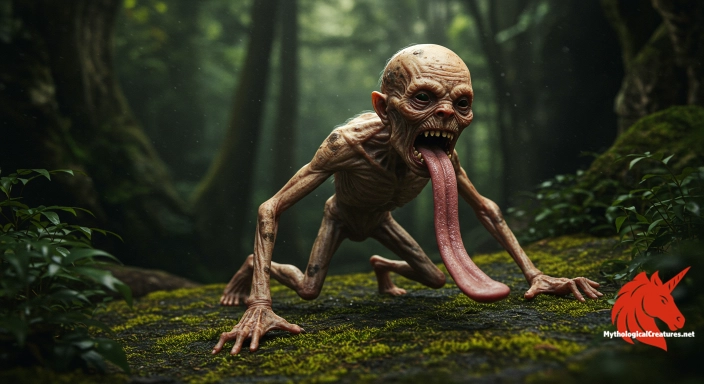
Akaname
Akaname - Highlights the interplay between cleanliness and the supernatural, serving as a cautionary emblem in Japanese culture.
Origins & First Encounters
Akaname is a peculiar figure in Japanese folklore that has intrigued and unsettled audiences for centuries. It first emerged prominently in the visual compendium of yōkai, notably in Toriyama Sekien’s 1776 masterpiece Gazu Hyakki Yagyō, although its earlier incarnation as akaneburi was recorded as early as 1686. Its name, meaning 'scum-licker' or 'filth-licker', immediately captures its uncanny association with unclean spaces. The creature is believed to haunt places where grime and filth accumulate, especially in bathtubs and bathrooms. Such an unusual focus reflects the broader cultural emphasis on purity and the fear of contamination in traditional Japanese society. The akaname embodies both a cautionary emblem against neglecting hygiene and an otherworldly presence that blurs the boundaries between the mundane and the supernatural. As part of the rich tapestry of yōkai legends, it serves as a reminder of the importance of cleanliness amid the inevitable encroachment of decay. Its enduring presence across centuries underscores not only the potency of taboo and revulsion but also the creativity with which everyday concerns are mythologised in folklore. This blend of practicality and the eerie continues to inspire both reverence and revulsion among those who encounter its tale.
Source Texts & Tale Variants
The primary source for the akaname is the famed illustration and description found in Toriyama Sekien’s Gazu Hyakki Yagyō, which cemented its place in the collective imagination of Edo period Japan. Earlier texts from as far back as 1686, where it appears under the name akaneburi, offer a glimpse into its nascent mythological role. These early sources provide succinct yet evocative details of its penchant for licking the grimy residues found in private and communal bathing spaces. Over time, additional folklore texts and regional manuscripts expanded the narrative, contributing subtle variations to its character and function. Traditional oral transmissions and later printed collections have both enriched and diversified its story. Artistic renditions across different periods have continuously reinterpreted its image, merging canonical traits with local embellishments. This evolution in depiction has ensured that the akaname remains a flexible yet recognisable component of Japanese supernatural lore. Contemporary compilations of yōkai studies continue to reference and reinterpret the creature, ensuring its perpetual relevance. The progressive layering of its story across centuries illustrates how folklore adapts to shifting cultural contexts while retaining core mythic elements.
Form & Powers
The physical depiction of the akaname is as distinctive as its singular habit of cleansing filth. It is typically rendered as a small, almost inconspicuous spirit with features designed to unsettle the viewer. Its most striking anatomical trait is an elongated, sinuous tongue, seemingly fashioned specifically to lap up the accumulated grime found in neglected baths. Depictions often present its body as scruffy and unkempt, with a mottled, rough skin that hints at decay and neglect. Artists have at times portrayed it with a slight stoop and spindly limbs, emphasising its ability to creep into shadowy spaces. The creature’s face is usually marked by a twisted expression or distorted features, which serve to heighten its eerie allure. In some artistic variants, its eyes are shown as small, glinting orbs that suggest a mischievous or even predatory awareness. Despite variations in size across different retellings—ranging from a barely perceptible spirit to a slightly more pronounced figure—the core imagery remains that of an entity inseparably linked to unclean environments. This carefully crafted physical imagery encapsulates the dual nature of its existence: both repellent and irresistibly fascinating.
Regional Faces
Regional interpretations of the akaname reveal a captivating range of adaptations and nuances across different parts of Japan. In certain rural areas, rather than being seen solely as a fearsome harbinger of filth, the creature is sometimes viewed as an eccentric household spirit with a peculiar role in domestic myth. Urban legends tend to amplify its grotesque features, associating it more explicitly with the neglected corners of communal bathhouses and public washing facilities. Local traditions have also contributed unique elements to its character, occasionally portraying it with more human-like qualities or, alternately, emphasising its animalistic traits. In regions where the rituals of bathing and cleanliness are deeply embedded in cultural practice, the spirit has even been recast as a subtle reminder of the virtues of order and hygiene. Folklore in these areas often imbues the akaname with a dual persona—a benign, almost corrective presence to reward cleanliness, or a punitive force against neglect. Variations in storytelling have led to diverse descriptions of its behaviour and appearance, with some communities stressing its nocturnal wanderings while others detail its unexpected playfulness. Such regional lenses highlight the mutable nature of folklore and its responsiveness to local values and traditions. Ultimately, despite these differences, the creature’s core identity as a cleanser of accumulated grime continues to resonate across all cultures within Japan.
Cultural Parallels
Comparative analyses reveal that while the akaname is singular in its specific function, it shares thematic parallels with other domestic and minor supernatural entities across global mythologies. Much like European household imps or goblins, it serves as a reminder of the need for order and diligence in one’s personal sanctum. Unlike many of its Western counterparts, however, the akaname’s association with sanitation is not merely mischievous but deeply symbolic of ritual cleanliness and spiritual balance. Various cultures have long employed the idea of minor spirits that reward or admonish cleanliness, yet few possess the precise and literal method of a tongue designed to clean filth. In some Slavic folklores, for example, household sprites similarly enforce domestic order, yet they rarely exhibit the overtly grotesque physicality seen in the akaname. Its precise niche within Japanese lore underscores a broader cultural preoccupation with purity, setting it apart from similar entities elsewhere. Both the akaname and comparable figures serve as metaphors for societal anxieties about decay and disorder, though their narrative functions differ markedly. This cross-cultural dialogue between homebound spirits highlights a universal human concern over domestic maintenance and moral rectitude. Ultimately, the comparison underscores that while the manifestations vary, the idea of a cleansing spirit is a near-universal response to the ever-present challenge of filth and neglect.
Legacy & Modern Evolution
The legacy of the akaname illustrates a compelling evolution from an obscure cautionary spirit to a celebrated character in contemporary pop culture. Initially rooted in meticulous Edo period illustrations and limited folklore, it has since inspired a rich array of modern representations in manga, anime, and literature. The creature’s peculiar role as a cleanser of filth has allowed it to retain symbolic relevance even as modern society’s relationship with hygiene and domesticity has transformed. Contemporary portrayals often blend the extreme eeriness of its traditional image with humourous or satirical twists, reflecting a modern sensibility that embraces the bizarre. Its enduring presence in Japanese media has contributed to a broader resurgence of interest in yōkai, imbuing the creature with both nostalgic charm and innovative reinterpretation. Modern artists reimagine the akaname in varied contexts, sometimes as a metaphor for urban decay or as a reminder of the overlooked aspects of everyday life. In doing so, they maintain a dialogue between the mythic past and the dynamism of present-day cultural trends. As symbols, such figures invite reflection on the interplay between cleanliness, cultural memory, and the supernatural. This transformation from a purely folkloric warning to an adaptable icon highlights the capacity of ancient myth to speak to contemporary issues, ensuring that the akaname remains a thought-provoking element of Japan’s cultural heritage.
Interesting Fact
A notable aspect of the Akaname is its function as a mirror of societal values on cleanliness, transforming an everyday chore into an eerie, mythological occurrence.
Partner with Mythological Creatures
Bring your myth-based world into ours
From game settings to narrative worlds, we work with partners who treat myths with care. Share your project for a potential sponsor slot.
Partner with usQuick Creature Info
Features:
Our Mythic Legendary Rating:

Also Sometimes Known As:
Habitat:
Supernatural Powers:
Physical Attributes:
Abilities:
Behavior:
Weaknesses:
Lore:
Related Creatures, Tales or Lore
References
Discover Another Mythical Legend You May Not Have Heard Of?
Uncover the mysteries of ancient folklore and expand your knowledge of legendary beings from cultures around the world.
Dare to Meet the Achiyalatopa....

Curated by the Mythological Creatures Team
Series editor: Mythological Creatures Directory
Primary desk: Asian & Pacific Myth Cycles Desk
(rev. November 2025)