
Akurra: Akurra is a great snake deity in the mythology of the Adnyamathanha people of South Australia.
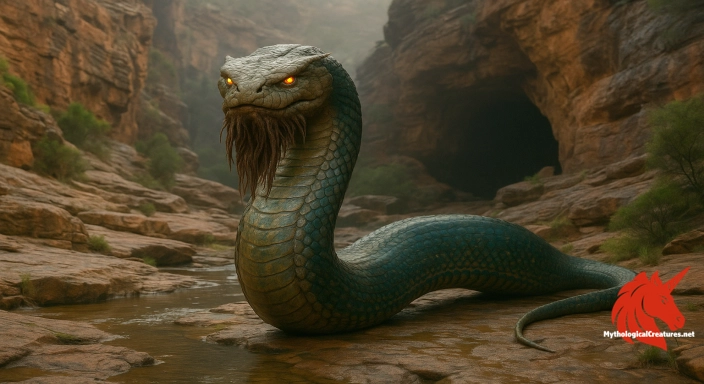
Akurra
Akurra - Akurra is central to rituals intended to summon rain and is revered for its role in shaping the land and revitalising the environment
Origins & First Encounters
Akurra emerges as a central figure in the sacred traditions of the Adnyamathanha people from South Australia, embodying the ancient power of water and the transformative energy of the land. Its origins trace back to the deep layers of Dreamtime, where natural phenomena and spirituality were woven into the fabric of creation. The deity is often revered as a great snake whose myth is as much about the life-giving properties of rain as it is about the shaping of the earth itself. Oral histories preserved by elders recount that Akurra's very movements carved out the contours of the Flinders Ranges, leaving a permanent mark on the landscape. The narrative of Akurra illustrates how the forces of nature are personified to both guide and caution the community. Every telling of its story highlights the intricate relationship between man, land, and water, reinforcing the sanctity of natural resources. The myth emphasises that only those with the proper shamanistic authority may approach this formidable being. Through countless generations, Akurra has retained its relevance as both a creative force and a guardian of environmental balance.
Source Texts & Tale Variants
The stories of Akurra have been transmitted through vibrant oral traditions and ceremonial recitations that have sustained the myth over countless generations. Elders recount the legend with vivid descriptions, offering diverse narrative threads that intertwine practical lessons with spiritual mystique. In one particularly evocative story, it is said that during times of drought, shamans would journey to the cave where Akurra dwells and extract the creature’s kidney fat to invoke rain. This act, performed with both reverence and caution, underscores the deep connection between the shaman and the deity. Other versions of the tale posit Akurra as an aspect of the broader Rainbow Serpent motif, enriching its mythic resonance across different indigenous narratives. Recorded accounts by early anthropologists have noted subtle differences in the myth’s portrayal depending on geographic and cultural contexts within South Australia. These narratives have been further layered by contemporary storytellers who blend tradition with modern reinterpretation. The enduring nature of these variants demonstrates the dynamic quality of the myth, a living tapestry that continues to evolve yet remains anchored in ancient wisdom. Contemporary retellings highlight the underlying themes of renewal and the cyclical nature of existence.
Form & Powers
Akurra is visually rendered as a magnificent water snake whose form is both awe-inspiring and enigmatic. Its body, long and sinuous, mirrors the fluidity of water and appears capable of merging seamlessly with the natural landscape. The deity’s skin is covered in resplendent scales that catch the light, reflecting earthy tones intermingled with flashes reminiscent of a fleeting rainbow. A striking feature is its beard mane, which lends an air of ancient wisdom and dignified mystery to its appearance. The creature’s eyes have been described as deep and penetrating, as though they mirror the primordial secrets of creation. Its mouth, lined with sharp fangs, speaks to the formidable nature of its power while reminding observers of the dangerous respect it commands. Some depictions suggest that its size may vary, with some accounts portraying it as vast enough to reshape entire valleys, while others focus on its stealth and subtle presence. Every detail of Akurra’s physical depiction reinforces the delicate balance between beauty and terror inherent in nature’s might. The interplay of light on its scales and the measured movement of its massive form evoke both admiration and caution for those who encounter its legend. Such descriptions have permeated traditional art and modern representations alike, ensuring that Akurra’s image remains indelibly etched in the cultural landscape.
Regional Faces
While the core myth of Akurra is deeply anchored in the lore of the Adnyamathanha people, regional adaptations reveal a rich spectrum of interpretation and emphasis. In some local narratives, the serpent deity is more closely aligned with the archetype of the Rainbow Serpent, celebrated for its multifaceted control over water and fertility. In certain communities, the focus shifts toward its role in shaping the physical landscape, with stories that detail how its movements created waterholes, valleys, and rocky formations. Variations in the tale may accentuate the deity’s benevolent aspects, portraying it as a guardian that nurtures the earth, while other versions cast it as an imposing force that must be approached only with due ritual care. The depiction of Akurra often reflects local environmental concerns, with drought-prone regions emphasising its power to summon much-needed rain. In more water-abundant areas, the myth celebrates the balance and harmony it brings to an already fertile setting. Artistic renditions and ritual practices can differ markedly from one community to another, fostering a diverse yet interconnected belief system. The regional diversity in the portrayal of Akurra underscores the adaptability of myth to regional ecologies and cultural priorities. This localisation of the myth not only enriches the narrative but also affirms the unity and diversity of Aboriginal spiritual life in South Australia.
Cultural Parallels
Akurra’s mythic essence invites intriguing parallels with other serpent deities and water spirits found throughout global mythologies. The embodiment of both creation and destruction shares common ground with the Rainbow Serpent, a powerful and recurrent motif in various Aboriginal cultures. In many Eastern traditions, serpents are revered for their association with wisdom, healing, and the cyclical nature of life, echoing the dualistic character of Akurra. Similar to Southeast Asia’s naga figures, Akurra is both a symbol of life-giving water and a reminder of the formidable forces of nature. The ancient narratives of world mythologies frequently depict serpentine creatures as gatekeepers to a realm where nature and the divine coalesce, a theme that resonates strongly in Akurra’s role. Comparisons with figures from Greek or Norse myth, though differing in cultural context, reveal a shared symbolic kinship in the portrayal of serpents as both creative and destructive. Such cross-cultural dialogues highlight the universal human fascination with the serpent form and its manifold interpretations as a divine transformer. By placing Akurra alongside these global legends, one can discern both unique and overlapping attributes that speak to the shared experience of nature’s mystery. The comparative study not only enriches the understanding of Akurra but also contributes to a broader tapestry of mythological symbolism that transcends geographical boundaries. In this way, Akurra stands as a testament to the enduring power and versatility of serpent imagery in human consciousness.
Legacy & Modern Evolution
Over time, the myth of Akurra has transitioned from sacred oral tradition to a vibrant symbol of both cultural heritage and contemporary environmental consciousness. Early transmitters of the myth, through ritual and storytelling, ensured that Akurra remained a potent figure of awe and respect. In modern times, this legendary serpent has found its way into various forms of artistic and literary expression, bridging the ancient with the contemporary. Visual art, performance, and digital media now employ the imagery of Akurra to evoke themes of renewal, conservation, and the delicate balance between humanity and the natural world. Contemporary indigenous communities continue to celebrate the myth of Akurra as an emblem of their enduring connection to the land, adapting age-old stories to articulate current environmental challenges. The deity’s narrative has evolved to encompass modern values such as sustainability and stewardship of nature. Academic and cultural discourses increasingly recognise Akurra not just as a relic of the past, but as a dynamic symbol whose interpretations continue to grow and adapt. This evolution underscores how timeless myth can serve as a bridge between ancient wisdom and modern ecological imperatives. The legacy of Akurra is a testament to the resilience of cultural narratives, inviting successive generations to reimagine their world with respect for both heritage and natural harmony. As both an inspiration and a cautionary emblem, Akurra remains a vital thread in the cultural fabric of South Australia and beyond.
Interesting Fact
Akurra uniquely blends immense physical presence with elemental magic, illustrating the deep interconnection between nature and spiritual power in Aboriginal traditions.
Limited sponsor opportunity
One slot, carefully chosen partners
We only feature a small number of relevant sponsors at any time. If you create serious myth content, we would like to hear from you.
Partner with usQuick Creature Info
Origin:
Associations:
Our Mythic Legendary Rating:

Habitat:
Supernatural Powers:
Physical Attributes:
Abilities:
Behavior:
Lore:
Related Creatures, Tales or Lore
References
Discover Another Mythical Legend You May Not Have Heard Of?
Uncover the mysteries of ancient folklore and expand your knowledge of legendary beings from cultures around the world.
Dare to Meet the Harmonia....
Curated by the Mythological Creatures Team
Series editor: Mythological Creatures Directory
Primary desk: Asian & Pacific Myth Cycles Desk
(rev. November 2025)