
Am Fear Liath Mòr: Am Fear Liath Mòr, also known as the Big Grey Man, is a spectral entity from Scottish folklore said to haunt the high peaks of the Cairngorms, particularly Ben MacDhui.

Am Fear Liath Mòr
Am Fear Liath Mòr - Am Fear Liath Mòr embodies the mystery of the Scottish Highlands, symbolising the intersection of nature and the supernatural while inspiring both awe and trepidation among those who traverse these peaks.
the legend in five swipes.
the legend in five swipes.
What are the origins of Am Fear Liath Mòr?
Am Fear Liath Mòr is an enigmatic figure embedded deeply in the tapestry of Scottish folklore, its origins rooted in the rugged peaks of the Cairngorms. The creature, whose name translates as the Big Grey Man, is primarily associated with the forbidding summit of Ben MacDhui, a place that has long inspired both awe and fear. It emerges from a cultural milieu steeped in Gaelic tradition, where the natural elements and the spiritual world are often interwoven. Local communities have passed down compelling tales over generations, emphasising the mysterious and sometimes unsettling presence that seems to govern the highlands. Early attestations are found in oral narratives which depict the Grey Man as a solitary spectre amidst the wild, storm-wracked vistas. Travelers and locals alike recall experiences that blend the tangible with the ephemeral, suggesting a phenomenon that defies easy explanation. The legend not only underscores the power of the natural landscape but also reflects the interplay between human emotion and the untamed environment. Hinted at in whispered lore and later chronicled in local history, Am Fear Liath Mòr occupies a liminal space between myth and reality, imbued with the ancient essence of the Scottish wilderness.
Which books and scrolls describe Am Fear Liath Mòr?
Accounts of Am Fear Liath Mòr have been preserved in a rich variety of primary sources, ranging from oral traditions to early mountaineering diaries. Narratives handed down through generations detail mysterious encounters on the high slopes of Ben MacDhui that continue to inspire wonder. In local folklore anthologies compiled over the centuries, the creature is portrayed with both reverence and an undercurrent of dread. Anecdotal evidence from hikers and shepherds often describes inexplicable chills and fleeting silhouettes against the backdrop of misty mountains. Some records suggest that early travellers documented unusual atmospheric phenomena that they attributed to this spectral presence. Written records, although sparse, have gradually emerged with variant descriptions that add layers to its mythos. Diverse storytellers have woven differing interpretations into the tapestry of this legend, reflecting the mutable nature of folklore across time. Modern compilations and regional studies continue to revisit these accounts, ensuring that the multiple story variants of the Big Grey Man remain a vibrant subject in Scottish cultural history.
How did the old accounts describe Am Fear Liath Mòr?
Descriptions of Am Fear Liath Mòr seldom adhere to a single, fixed form, instead offering a spectrum of impressions that enhance its mystery. The creature is most commonly portrayed as a tall, shadowy figure cloaked in an indistinct grey that mirrors the overcast skies of the highlands. Hints of an amorphous silhouette often blur the boundaries of human and spirit, making its true anatomy elusive and enigmatic. Witnesses have noted an almost spectral fluidity in its presence, as though it were composed of the very mists that envelop the peak. Its face, rarely described in clear detail, is frequently perceived as a vague countenance that lacks definitive features, contributing to its eerie persona. In some recountings, the figure is endowed with elongated limbs and a stature that seems both imposing and transient. There is occasional mention of a faint luminescence that appears to emanate from within, as if the creature carries an inner fire that battles the gloom of its surroundings. Variations in size and form across different accounts suggest an entity that adapts and evolves, maintaining a form that is as elusive as the mountain mists themselves.
Am Fear Liath Mòr: Regional Differences in the Legend
While the legend of Am Fear Liath Mòr is most vividly tied to the slopes of Ben MacDhui in the Cairngorms, regional lore has imbued the creature with various local nuances across the Scottish Highlands. Even within nearby communities, the Grey Man is sometimes portrayed as a benign protector during treacherous mountain journeys and at other times as a forewarning of impending danger. The way the myth is told can differ greatly from one valley to another, with some regions emphasising his role as a guardian spirit while others stress his ominous, solitary nature. Elements of ancient Gaelic cosmology merge with local superstitions to shape diverse narratives that reflect the unique characteristics of each part of the Highlands. In several variations, the creature is seen as an echo of past eras, a remnant of older, shamanistic beliefs that venerated the natural world. Rural villagers might interpret his presence as an indication of both the beauty and the peril inherent in the wild, unyielding landscape. Local adaptations have led to a rich mosaic of interpretations, each underscoring a different facet of the mountain’s mystique. Overall, these regional portrayals contribute to a multifaceted identity that ensures the legend remains dynamic and deeply connected to its place of origin.
Am Fear Liath Mòr: Similar Beings in World Folklore
The elusive nature of Am Fear Liath Mòr naturally invites comparisons with other spectral figures found throughout European folklore. Much like the wisps of lore encountered in Celtic and Norse traditions, the Big Grey Man occupies the threshold between the natural and supernatural realms. Similar to other guardians of wild places, his ambiguous identity reflects a universal archetype of deities and spirits born from the forces of nature. Cross-cultural parallels emerge, for instance, with figures that haunt remote mountainous terrains in Scandinavian tales, where nature and mystery converge. In both cases, the creatures embody the isolation and elemental power of their environments, serving as both protectors and warnings. The recurring motif of a shadowy presence that transcends physical boundaries resonates in diverse mythologies, highlighting a shared cultural preoccupation with the unknown. This spectral archetype has been adapted into modern narratives across various regions, underscoring the timeless appeal of such figures. Through a comparative lens, Am Fear Liath Mòr stands alongside these legends as a symbol of nature’s enigmatic beauty and the human longing to understand the unexplained.
Am Fear Liath Mòr in Books, Film and Games
The legend of Am Fear Liath Mòr has undergone a remarkable evolution from its roots in oral storytelling to its status as a modern emblem of the wild, untamed Highlands. Over the centuries, his myth has been reinterpreted by successive generations, reflecting changes in cultural attitudes toward the natural world and the supernatural. Modern portrayals often blend the traditional rugged mystique of the mountain with contemporary sensibilities, transforming the creature into a symbol of both nature’s sublime beauty and its inherent unpredictability. The Big Grey Man has captured the imagination of artists, writers, and filmmakers, ensuring his presence permeates popular culture as well as scholarly debate. In recent decades, mountaineering and paranormal enthusiasts have revisited the legend, lending it renewed credence through personal accounts and investigative documentaries. The creature’s image, rooted in Gaelic lore, stands as a bridge between Scotland’s rich mythological past and the current era’s fascination with unexplained phenomena. Tourist trails and local festivals now frequently reference Am Fear Liath Mòr, contributing to an enduring legacy that celebrates mystery and respect for the highlands. As interpretations continue to evolve, the legend adapts, reaffirming its relevance by embodying the ever-changing dynamic between myth and modernity.
Interesting Fact
Investigations into sightings of Am Fear Liath Mòr have spanned decades, with many researchers noting that the eerie encounters often defy conventional explanation, reinforcing his status as an enduring enigma of the Scottish mountains.
Mythological Treasures
Japanese Yokai: A field guide to the spirits and demons of Japanese folklore
Fifteen spirits, with the signs to watch for and what the old tales say to do if you meet one.
Greek Myths: A field guide to the monsters of ancient Greece
Every monster here earned its place in legend, and each gets a full page of artwork and the story behind it.
Norse Sagas: A field guide to the beasts of the Viking world
Drawn from the saga accounts themselves, with the powers, weaknesses and doom of each being set out.
the legend in five swipes.
Advertising opportunity
Showcase your mythology project
We offer limited sponsor placements for books, courses, games, and creators aligned with our audience.
View partnership optionsQuick Creature Info
Features:
Associations:
Our Mythic Legendary Rating:

Also Sometimes Known As:
Habitat:
Supernatural Powers:
Physical Attributes:
Abilities:
Behavior:
Lore:
Related Creatures, Tales or Lore
- TThe Banshee
- TThe Wulver
- TThe Bean Nighe
References
Discover Another Mythical Legend You May Not Have Heard Of?
Uncover the mysteries of ancient folklore and expand your knowledge of legendary beings from cultures around the world.
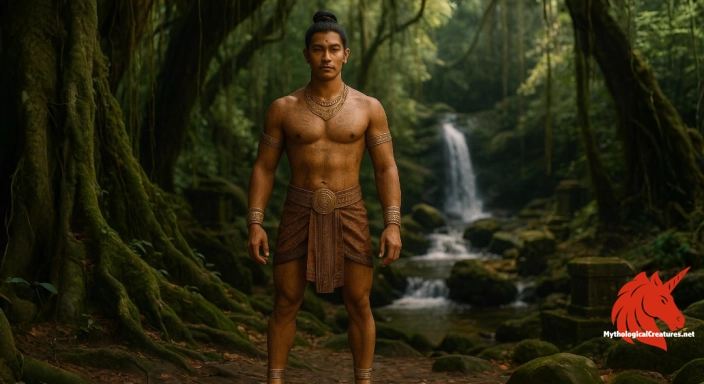
Dare to Meet the Yaksha....
The Mythological Creatures Book Series
Yokai, Greek, Norse, Egyptian & Chinese. Five illustrated field guides to the creatures the old stories either warned or told you about.
Curated by the Mythological Creatures Team
Series editor: Mythological Creatures Directory
Primary desk: Northern & European Folklore Desk
(rev. November 2025)