
Amay Gyan: Amay Gyan is a revered Burmese nat and one of the five mother nats.
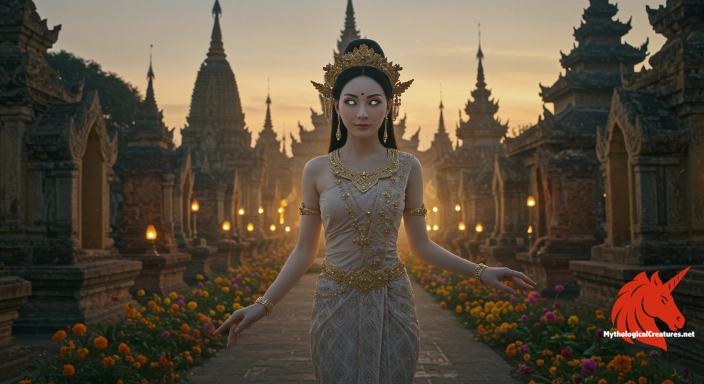
Amay Gyan
Amay Gyan - Embodies maternal protection and holds deep cultural and spiritual importance in Burmese tradition
Origins & First Encounters
Amay Gyan occupies a celebrated place within Burmese spiritual traditions as a nat whose legacy transcends mere folklore. Born as Ma Chan-Tha, her transformation into a divine entity is woven into narratives that illustrate both human frailty and transcendent strength. Her story is rooted in ancient chronicles that hint at a time when mortals and the divine communed more closely. Over the centuries, she has been revered not only as a spiritual guardian but also as a symbol of nurturing care and maternal fortitude. Her emergence as one of the five mother nats reflects a deeper cultural evolution that embraced both indigenous beliefs and elements of Buddhism. Local legends present her as a bridge between human experience and the ethereal realms, resonating with themes of protection and renewal. Annual commemorations in her honour underscore her enduring role in ritual and communal life, drawing devotees from varied backgrounds. The narrative of Amay Gyan thus serves as a living reminder of how myth and history can coalesce to create a timeless icon of care and resilience.
Source Texts & Tale Variants
The earliest accounts of Amay Gyan are preserved in a mosaic of oral traditions, court chronicles, and traditional manuscripts that have been passed down through generations. Textual fragments found in temple inscriptions and historical papyri hint at a blend of real events and mythic embellishment in her story. Diverse narrative strands reveal that her journey from a mortal to a revered nat has been a subject of both scholarly interpretation and popular lore. Many local storytellers recount episodes in which she exhibited miraculous interventions during times of hardship, lending her an air of mystique and benevolence. Some documents preserve her lineage and trace the evolution of her status among other nats, though details differ slightly from one source to another. In different regions, slight textual variants have emerged, each emphasising unique facets of her character—from her role as a nurturer to her depiction as a protector of the vulnerable. These disparate accounts contribute to a multifaceted portrayal, demonstrating that her myth was shaped by both literary and folkloric influences. As such, the myriad sources not only reveal the depth of her impact on Burmese culture but also highlight the fluidity with which myth adapts over time.
Form & Powers
Artistic depictions of Amay Gyan are rich with symbolism, blending elements of traditional Burmese aesthetics with spiritual iconography. She is often portrayed with a calm and compassionate expression, her eyes conveying both wisdom and a deep maternal warmth. In many representations, she is adorned in sumptuous traditional attire that includes intricately embroidered silks and ornate jewellery, underscoring her elevated status among the nats. Her figure is typically rendered with graceful lines and an ethereal posture, suggesting both beauty and an inner strength that transcends mortal limitations. Some images capture a delicate halo or crown hovering about her head, signifying her divine embodiment and her role as a protector. The use of vibrant colours in murals and statues serves to enhance her otherworldly appearance, linking her to nature and the cycles of life. Variations in artistic interpretations have seen her sometimes depicted amidst floral or celestial motifs, which further accentuate her connection to fertility and rebirth. Overall, the physical portrayal of Amay Gyan continues to inspire artists and devotees alike, embodying an ideal of compassion and timeless grace.
Regional Faces
The portrayal of Amay Gyan varies appreciably across different regions of Burma, reflecting regional cultural nuances. In the Mandalay Region, she is especially revered during festivals, where local narratives accentuate her role as a nurturing guardian deeply intertwined with the agricultural cycle. In Ayegyigon, where her annual festival is celebrated with particular devotion, her image is adorned with regional embellishments and unique iconographic details. In contrast, some northern communities incorporate darker, more enigmatic elements into her depiction, suggesting a backstory filled with trials and transformation. These local adaptations often infuse her myth with details that resonate with the specific cultural and environmental context of each region. Folk performances and ritual ceremonies in rural areas sometimes portray her as a protector against both natural calamities and human misfortunes. Variations in clothing, jewellery, and symbolic accessories found in artistic renditions underscore how different communities have embraced her myth in unique ways. Such regional diversity enriches the tapestry of her legend, ensuring that while the core of her narrative remains unified, its expression is as varied as the communities that honour her.
Cultural Parallels
Amay Gyan’s narrative finds intriguing parallels with similar maternal and protective deities across Southeast Asia. Her transformation from human to divine has common resonances with other nat figures and local goddesses who embody both benevolence and otherworldly power. Much like the revered mother goddesses of neighbouring regions, she is celebrated for her capacity to nurture and safeguard her devotees. Artistic and ritual depictions of Amay Gyan share common motifs with analogous deities in Thailand and even elements reminiscent of select Hindu goddesses, highlighting a cross-cultural dialogue of divine motherhood. Despite these similarities, her distinct Burmese identity emerges through specific iconographic details and ritual practices unique to the region. Comparative mythology reveals that the symbolism attached to her maternal attributes and protective qualities is part of a universal archetype, transcending geography and language. Such inter-cultural comparisons underline how mythological narratives evolve to meet universal human needs for care, protection, and continuity. The blending of indigenous beliefs with broader regional influences illustrates the dynamic nature of myth-making, where shared themes gain unique local expressions. In this way, Amay Gyan stands as a singular yet universally relatable figure in the rich panorama of spiritual traditions.
Legacy & Modern Evolution
Over time, the figure of Amay Gyan has evolved from ancient myth into a vibrant symbol of maternal care and spiritual resilience in modern Burma. Her historical narrative has been continually reinterpreted by successive generations, each adding layers to her character while preserving her essential qualities. The enduring festival held in her honour, celebrated during the waning days of Nayon, serves as a dynamic ritual that links past and present. Contemporary portrayals of her in art, theatre, and local ceremonies reflect an adaptation of ancient symbolism to modern sensibilities. Her story has been embraced by those seeking a connection to their cultural heritage, and her image is often evoked in discussions of national identity and continuity. Modern reinterpretations frequently merge traditional iconography with innovative artistic expressions, ensuring that her legacy remains dynamic and relevant. Urban cultural events and academic studies alike celebrate her as an embodiment of resilience, maternal strength, and the unyielding spirit of Burmese folklore. As Burma continues to navigate the complexities of modernity, Amay Gyan remains a potent reminder of the power of myth to underpin communal values and inspire hope across generations.
Interesting Fact
An interesting observation is that despite her ethereal and spiritual nature, Amay Gyan is celebrated with vibrant, very tangible festivals that highlight the integration of folklore with everyday cultural life in Myanmar.
For publishers and studios
Your next readers are already here
Many of our visitors are looking for books, campaigns, and resources that deepen their journey into myth. Position your title or setting here.
Discuss a placementQuick Creature Info
Origin:
Our Mythic Legendary Rating:

Also Sometimes Known As:
Habitat:
Supernatural Powers:
Physical Attributes:
Abilities:
Behavior:
Lore:
Related Creatures, Tales or Lore
- MMin Mahagiri (Burmese nat)
- TThagyamin (Burmese deity)
- YYōkai (Japanese spirit)
References
Discover Another Mythical Legend You May Not Have Heard Of?
Uncover the mysteries of ancient folklore and expand your knowledge of legendary beings from cultures around the world.
Dare to Meet the Pontoporeia....
-d0e44b33-dfe0-4f68-9119-3ff0f948d472_small.webp "Depiction of Pontoporeia")
Curated by the Mythological Creatures Team
Series editor: Mythological Creatures Directory
Primary desk: Asian & Pacific Myth Cycles Desk
(rev. November 2025)