
Amycus: Amycus, also known as Amykos, is a male centaur from Greek mythology and the son of Ophion.
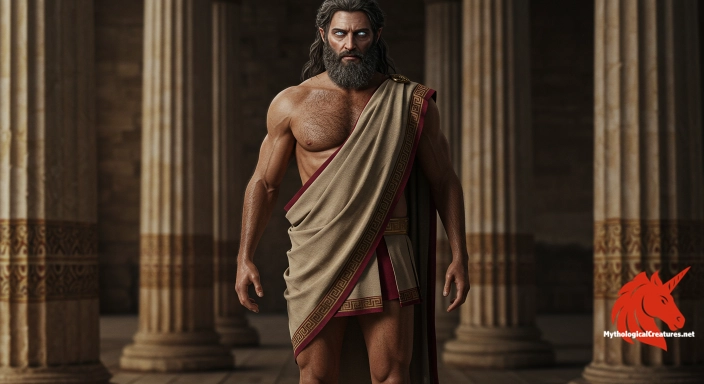
-73f8a02f-cd2a-42c1-8148-103929d9c074_small.webp "Amycus - Amycus represents the wild and untamed spirit of centaurs, and his lineage as the son of Ophion connects him to the primordial elements of Greek myth.")
Amycus
Amycus - Amycus represents the wild and untamed spirit of centaurs, and his lineage as the son of Ophion connects him to the primordial elements of Greek myth.
Origins & First Encounters
Amycus emerges from the depths of Greek mythology as a uniquely intricate figure, merging the elegance of humanity with the fierce spirit of the untamed wild. He is renowned as a male centaur, a creature that perfectly encapsulates the paradox of order and chaos that pervades mythic traditions. Born of the enigmatic Ophion, his origin story hints at a divine and primordial power that predates many later mythic conventions. His myth, though not widely chronicled in the epic cycles, marks him as an emblem of both cultural transgression and supernatural heritage. The intermingling of his human and equine traits symbolises the perpetual struggle between civilisation and raw natural impulses. Amycus also captures the imagination with his dual nature, making him a bridge between the rational world and the realm of primitive forces. His narrative, steeped in both mystery and symbolic potential, hints at deeper allegories concerning the human condition. The figure of Amycus thus stands as a testament to the ancient Greeks’ desire to explore and understand the liminal spaces within myth. His story, though fragmentary in its attestations, invites continual reinterpretation as a complex marker of mythological hybridity and inherent tension. Ancient audiences may have seen in him the unyielding power of nature juxtaposed with the frailties of man.
Source Texts & Tale Variants
The scattered references to Amycus in ancient texts offer a tantalising glimpse into a myth that has evaded full literary capture. Although he does not appear as the central character in major epics, subtle allusions to his lineage can be found in scholia and later mythographical compendiums. His name is occasionally interwoven with the more elaborate catalogues of centaur genealogies compiled by early mythographers. Some strands of tradition, particularly those resonating with Orphic ideas, hint at a narrative where his origins are tied to mystical primordial forces. This fragmented record has led to a multiplicity of story variants, wherein his role is adapted to fit local and regional mythic themes. Oral traditions, too, have preserved echoes of his presence, suggesting a collective memory that spans different communities. In some less documented accounts, Amycus is portrayed as taking part in the chaotic encounters between centaurs and mortals, emphasising nature’s indomitable aspect. The sparse but diverse primary sources enrich our understanding by allowing later interpreters to weave his character with other mythic threads. Subsequent commentaries occasionally reframe him as a symbolic cautionary figure in the struggle between order and untamed forces. His elusive presence in the ancient narrative stream continues to inspire curiosity and invites a re-examination of the minor yet meaningful figures in myth.
Form & Powers
Amycus is typically envisioned with the distinctive anatomy of a centaur, blending the noble contours of human form with the robust power of a stallion. His upper body is muscular and well-defined, reflecting a blend of human intellect and animalistic strength. His face, often depicted with fierce, determined eyes, carries both a refined elegance and a rugged wildness that hints at his supernatural ancestry. Flowing, unkempt hair crowns his visage, intertwining with the untamed mane of his equine half in a display of raw vitality. The seamless transition from torso to the powerful body of a horse is rendered with an artistry that conveys both grace and might. In many depictions, every muscle and sinew is accentuated to showcase his inherent ferocity and the potential for abrupt, violent action. There is a subtle quality to his portrayal, where hints of divinity are evident in the handling of his features, perhaps influenced by the legacy of his father Ophion. Some artistic renditions even suggest that his size surpasses that of typical centaurs, marking him as a figure of exceptional repute and ability. The interplay of human cunning and equine strength in his physical form serves as a constant reminder of his hybrid, dualistic existence. Through a variety of media, from ancient vases to modern illustrations, Amycus consistently embodies the dynamic interface of beauty, strength, and wildness.
Regional Faces
Across different corners of ancient Greece, the myth of Amycus has encountered various adaptations that colour his narrative with local nuances. In the heartland of the Greek mainland, he is often grouped seamlessly with other notorious centaurs, his story resonating with themes of uncontrolled passion and elemental chaos. In the shadowed groves and rugged hills, local traditions sometimes portray him as a guardian of wild lands, embodying nature’s indomitable spirit. Coastal areas, with their own unique mythic imaginations, have occasionally linked his essence to the mysteries of the sea, drawing parallels between the relentless tides and his stormy temperament. The subtle differences in his portrayal—ranging from a brutish aggressor to a tragic antihero—reflect the varied cultural lenses through which communities viewed the natural world. In certain regional retellings, his lineage is further elaborated with associations to local deities or ancestral spirits, thus integrating him more deeply into indigenous cult practices. Local artists have adapted his image to mirror the distinctive environmental and aesthetic values of their area, whether through the use of particular colour motifs or symbolic details that invoke regional lore. These adaptations underscore the flexibility of myth in absorbing and reflecting the beliefs of disparate communities. Amycus remains a testament to how diverse regional influences can reshape and enrich a singular mythic figure over time. The dynamic interplay between central myth and regional flavour ensures that his legacy resonates differently across various Greek cultural landscapes.
Cultural Parallels
Amycus occupies a fascinating role that invites comparisons with other hybrid creatures in world mythology. While centaurs such as Chiron are celebrated for their wisdom and tutelage, Amycus offers a contrasting example marked by a wilder and more tumultuous spirit. His complex nature draws natural parallels with other half-human, half-beast figures found in Mediterranean lore, where the fusion of disparate worlds symbolizes inherent conflicts within the human condition. Much like the enigmatic satyrs and fauns of later traditions, Amycus embodies both the allure and the peril of unrestrained natural impulses. His narrative is one among many that contrast the taming of nature with the uncontrollable forces lurking at its margins. Similar hybrid forms across cultures serve a common function by blurring the boundaries between the civilized and the savage, and Amycus fits neatly into this broader tapestry. In comparative myth structures, such characters frequently underscore the ambiguity of divinely sanctioned nature versus human order. His unique heritage and fierce depiction add a deeper layer to the discourse surrounding hybrid mythic beings. By juxtaposing his ferocity with the more measured characteristics of his centaur counterparts, Amycus enriches dialogues about identity and the dualism of existence. Ultimately, his story resonates with universal themes of transformation, otherness, and the eternal balance between creation and destruction.
Legacy & Modern Evolution
The myth of Amycus has steadily evolved from a brief mention in ancient texts to a symbol rich with interpretative potential in modern culture. Over time, his image has been reimagined in art and literature, reflecting changing attitudes toward the boundaries of civilisation and nature. In the medieval era, centaur figures became imbued with didactic moral lessons, with Amycus sometimes emerging as a cautionary example of unbridled nature. With the rise of modern fantasy and reimagined mythic narratives, his complex persona has been adapted to speak to contemporary ideas about hybridity and inner conflict. Visual representations in modern art continue to reflect his dual nature, capturing the tension between his noble human features and the raw power of his equine body. Artists and writers have found in his story a timeless metaphor for the struggle between restraint and impulse. His once obscure myth has been revived as part of a broader cultural re-examination of ancient symbols in the light of modern existential challenges. The evolving narrative of Amycus mirrors society’s own quest to reconcile the rational with the instinctive, the light with the dark. As new media explore the intersections of myth and modernity, his legacy serves as a bridge linking classical traditions to current cultural dialogues. In this way, Amycus remains a potent emblem of the enduring allure and complexity of myth in the contemporary world.
Interesting Fact
An intriguing aspect of Amycus is his direct lineage from Ophion, which connects him to the more obscure and primordial elements of Greek mythology, highlighting a legacy that predates the more familiar legends of the Olympians.
For authors, artists, and makers
Created something from the realm of myth?
If your book, deck, game, or artwork draws from legendary creatures and lore, you can showcase it here in a tasteful, year-round placement.
Share your projectQuick Creature Info
Origin:
Features:
Our Mythic Legendary Rating:

Also Sometimes Known As:
Habitat:
Supernatural Powers:
Physical Attributes:
Abilities:
Behavior:
Lore:
References
Discover Another Mythical Legend You May Not Have Heard Of?
Uncover the mysteries of ancient folklore and expand your knowledge of legendary beings from cultures around the world.
Dare to Meet the Electryon....
Curated by the Mythological Creatures Team
Series editor: Mythological Creatures Directory
Primary desk: Hellenic & Ancient Mediterranean Desk
(rev. November 2025)