
Ananke: Ananke is the Greek primordial personification of inevitability and necessity.
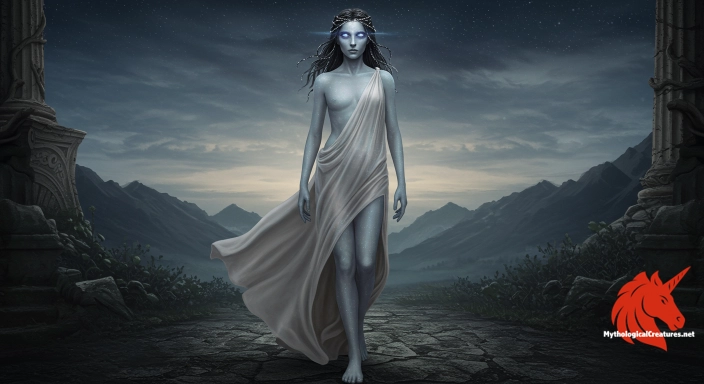
Ananke
Ananke - Represents the inescapable nature of fate and cosmic order, influencing both gods and mortals.
Origins & First Encounters
Ananke emerges from ancient Greek thought as a profound personification of inevitability and cosmic constraint, a force that predates the ordered universe. Born into existence at the very dawn of creation alongside Chronos, she marked the moment when chaos yielded to the structure of the cosmos. Her presence in the mythic narrative symbolises the inescapable design underlying both mortal lives and divine machinations. With an authority that transcends human will, she is revered by gods and men alike as the ultimate arbiter of fate. The early Orphic traditions present her as integral to the cosmogonic process, where her emergence signalled the transition from boundless randomness to measured order. Her influence is interwoven with other primordial elements, evoking a reverence that underscores the balance between necessity and freedom. The spiritual landscape of ancient Greece was profoundly shaped by her essence, inspiring rituals and iconography that celebrated the raw power of destiny. In a culture that sought to understand the mysteries of existence, Ananke stood as the vivid embodiment of the forces that drive life’s inexorable progression. Even today, her archetype invites contemplation on the interplay between fate and human endeavour.
Source Texts & Tale Variants
Accounts of Ananke are woven from the fragmented tapestry of early Orphic hymns and philosophical reflections, creating a legacy that is as enigmatic as it is influential. Early literary fragments hint at a deity of constraint, whose role was to ensure that the cosmic order was upheld from the very beginning. The ancient traveller Pausanias noted a unique shrine in Corinth where Ananke was worshiped together with Bia, thereby providing tangible evidence of her cultic significance. In various classical narratives, her presence is invoked to illustrate the supremacy of necessity over chance, and these stories offer divergent yet complementary portrayals. Some accounts stress her role as the progenitor of the Fates, positioning her as a force even they could not defy. Over time, Greek poets and philosophers reinterpreted her myth, infusing it with richer layers of meaning that extended beyond simple divinity. Each source, whether fragmentary or more developed, contributes a perspective that further elucidates her role in the cosmic order. The multiplicity of these primary sources ensures that her myth resists any single, definitive narrative, reflecting the complexity inherent in understanding the forces of destiny. Through these variants, Ananke continues to inspire interpretations that bridge the gap between the human and the divine.
Form & Powers
In artistic representations, Ananke is most recognisable by the spindle she clutches, a potent emblem of the inexorable thread that weaves fate. Visual depictions often eschew detailed human features in favour of a more abstract, almost ethereal form that underscores her role as a primordial force. Her physique is portrayed with a timeless austerity, blending both serene grace and a formidable, otherworldly authority. Iconography associated with her is imbued with subtle symbolism: the spindle, for example, not only serves as a tool but as a metaphor for the ceaseless process of creation and destruction. Sculptures and vase paintings capture her in moments of quiet command, suggesting that her presence is felt in the spaces between chaos and order. While some representations hint at a dignified, matronly bearing, others present her as a shadowy figure whose features remain elusive and undefined. The absence of elaborate ornamentation in many depictions reflects the notion that her power lies in an unfathomable, abstract inevitability rather than in physical grandeur. In essence, the clues left by classical artists have allowed posterity to glimpse a deity whose image perfectly encapsulates the dual beauty and severity of destiny. The consistent recurrence of the spindle along with minimalist features lends her an enduring and recognisable visual signature.
Regional Faces
Regional cults and local traditions across the ancient Greek world offered diverse portrayals of Ananke, each adapting her character to reflect local sensibilities. In Corinth, for instance, the joint veneration of Ananke with Bia highlighted a nuanced interpretation that combined the forces of inevitability with raw, elemental might. Various city-states imbued her with aspects that resonated with their understanding of nature and destiny, blending universal themes with local cultural nuances. Some regions elevated her role by intertwining her attributes with those of other deities, such as the celestial Aphrodite Urania, thereby creating a sophisticated tapestry of divine interrelations. In locales influenced by Orphic thought, she was often portrayed with an emphasis on the abstract principles of order, whereas in other areas her worship took on a more ritualistic dimension, emphasising her power to determine fate. Local artistic traditions, through unique stylistic motifs and symbolic choices, further differentiated her portrayal from one region to the next. These regional variations often reflect the broader dynamics of Greek religious thought, where the same deity could embody multiple layers of meaning depending on local mythic traditions. Collectively, these adaptations serve to underline the universality of her message, even as they highlight the distinct flavour of local interpretation. Each regional perspective on Ananke enriches the overall mythological landscape, demonstrating how sacred concepts evolve in tandem with communal identity.
Cultural Parallels
The myth of Ananke finds fascinating parallels in the wider corpus of global mythologies, where the forces of fate and necessity are revered in forms both similar and unique. In the Roman pantheon, her counterpart Necessitas serves much the same function as the personification of inevitability and constraint, underscoring a shared cultural preoccupation with destiny. Similar themes are explored in Norse mythology through the Norns, who weave the destiny of gods and men, revealing a common narrative thread that spans different traditions. Such deities illustrate humanity’s timeless obsession with the unseen forces that govern existence, regardless of cultural context. In both Eastern and Western thought, abstract personifications of destiny appear as pivotal figures that shape the understanding of life’s progression. The motif of weaving or spinning fate, seen with Ananke’s spindle, resonates in various mythic traditions where thread and loom are symbolic of the creation and destruction cycle. While each culture brings its own nuances to the concept of cosmic order, the similarities in these narratives highlight a fundamental human attempt to make sense of the immutable patterns of existence. Comparative analysis reveals that ideas of inescapable necessity possess both a local flavour and a universal appeal, bridging the mythologies of disparate peoples. Through such parallels, Ananke’s myth reinforces the notion that the interplay between fate and free will is a theme of enduring relevance across diverse cultural landscapes.
Legacy & Modern Evolution
The evolution of Ananke’s myth mirrors the shifting perspectives from ancient cosmogony to modern existential contemplation. Her transition from a scarcely detailed primordial force to a symbol of inevitable destiny illustrates how ancient ideas can evolve into powerful metaphors for understanding the human condition. In subsequent centuries, her imagery—most notably the spindle—has been adapted by philosophers, artists, and poets to discuss themes of predetermination and the intricacies of fate. Modern reinterpretations reimagine her as both a metaphysical concept and a timeless archetype that challenges the boundaries of free will and necessity. As the ancient world gave way to the modern era, her abstract persona provided a fertile ground for debates on determinism and the nature of cosmic order. Contemporary art and literature often evoke her presence to suggest the unavoidability of change and the relentless passage of time. In academic discourse, analyses of her myth continue to yield insights into the interplay between myth, philosophy, and the human psyche. The enduring character of Ananke invites modern audiences to reflect on the delicate balance between human aspiration and the unyielding laws of nature. Ultimately, her legacy remains a testament to the profound impact of myth in shaping our understanding of destiny, inevitability, and the mysterious forces that govern existence.
Interesting Fact
Ananke is frequently associated with Aphrodite Urania, blending the concepts of inevitability and celestial love, which underscores the intricate interplay of abstract forces in Greek mythology.
For indie creators
Give your myth project a permanent home
Indie authors, artists, small studios, and makers can secure an annual, non-intrusive sponsor slot that meets readers where they explore.
Obtain more informationQuick Creature Info
Origin:
Associations:
Our Mythic Legendary Rating:

Habitat:
Supernatural Powers:
Physical Attributes:
Abilities:
Behavior:
Lore:
Related Creatures, Tales or Lore
- CChronos
- MMoirai
- NNecessitas
References
Discover Another Mythical Legend You May Not Have Heard Of?
Uncover the mysteries of ancient folklore and expand your knowledge of legendary beings from cultures around the world.
Dare to Meet the Tur....
-d72ea10d-b97c-4013-9af8-15bb88cef081_small.webp "Depiction of Tur")
Curated by the Mythological Creatures Team
Series editor: Mythological Creatures Directory
Primary desk: Hellenic & Ancient Mediterranean Desk
(rev. November 2025)