
Anteros: Anteros is the Greek god of requited love, known for ensuring that love is reciprocated.

Anteros
Anteros - Represents the mutual exchange of love and the cosmic balance of affection.
Origins & First Encounters
Anteros emerges as a captivating figure in classical mythology, celebrated as the divine personification of reciprocated love and the guardian of balanced affection. Born from a nuanced understanding of the human heart, his very name—literally meaning 'love returned'—embodies the ideal of mutual regard. His early attestation in poetic texts and subtle iconography situates him within the ancient tapestry of myth where both passion and retribution are intricately entwined. He occupies a distinct space among the Erotes, serving as a counterbalance to the more familiar representations of unbridled desire.
In the cultural milieu of ancient Greece, Anteros symbolised not merely the joy of receiving love but also the inherent duty to reciprocate in kind, thus reinforcing moral and social harmony. His myth underscored the belief that love, when duly returned, fosters a stabilising influence on individuals and communities alike. The narratives surrounding him often blend elements of benevolence with a tempered sense of justice, warning against the disdain or neglect of genuine affection. His presence in the mythos was both a celebration of mutual adoration and a cautionary emblem against the perils of unrequited passion. In this way, Anteros continues to resonate as a figure who bridges the ethereal beauty of love with the pragmatic demands of reciprocal commitment. His enduring legacy underscores the timeless human aspiration for relationships built on equitable emotional exchange.
Source Texts & Tale Variants
The myth of Anteros is interwoven into the fabric of ancient literary and artistic sources, where his role is subtly carved out alongside more prominent deities of love. He appears in assorted poetic fragments and decorative vase paintings from the archaic period, conveying themes of reciprocation and moral balance in matters of the heart. Some ancient texts hint at his intervention in human affairs, delineating his purpose as a mediator who rectifies the disharmony caused by unreturned affections.
Later Hellenistic writings and artistic reinterpretations further enriched his persona, often elevating his function beyond mere companionship to that of a corrective force. Variations in his myth are evident as different authors and artists imbued him with qualities that oscillate between nurturing love and administering poetic justice. In certain story variants, he is portrayed as a vigilant custodian who punishes those who spurn the advances of others, thereby ensuring that love is both given and received in equal measure. The diversity of these sources underscores a dynamic tradition of myth-making where Anteros serves as a symbolic counterpoint in the complex discourse of love. His narrative, though not as extensively chronicled as that of his kin, remains a vital thread in understanding the multifaceted portrayal of emotional reciprocity in classical mythology.
Form & Powers
Artistic depictions of Anteros are rich with subtle details that elevate his presence as the divine personification of requited love. He is often portrayed as an exceptionally handsome and youthful figure, radiating an otherworldly charm that captures both beauty and a sense of measured authority. His visage typically exhibits smooth, luminous skin and gentle features, with eyes that seem to sparkle with the delicate promise of shared affection. In numerous representations, he is adorned with soft, feathered wings that symbolise the swift intervention of love and the lightness of heart he inspires.
Many ancient artworks depict him holding a modest bow and quiver of arrows, instruments that echo his role in both uniting hearts and meting out retribution to those who deny love. His physique is rendered with a graceful musculature that hints at both vitality and a latent, inherent power. Variations in his portrayal—ranging from a cherubic infant-like deity to a more mature, contemplative youth—reflect evolving artistic conventions and symbolic interpretations. Rich ornamental details and delicate drapery in sculptural and painted forms further accentuate the harmony he embodies. Overall, his physical depiction is a beautifully intricate narrative that mirrors the layered dimensions of love itself.
Regional Faces
Though rooted predominantly in Greek mythology, the character of Anteros exhibits intriguing regional variations that reflect local cultural nuances. In the Aegean and Ionian regions, for instance, certain local cults embraced him with distinctive ritual practices that emphasised the balance of love and retribution, setting him apart from his more celebrated counterpart. Some communities preferred to portray him with a softer, more inviting demeanour, aligning his imagery with the local ideals of communal harmony and emotional reciprocity.
In Roman adaptations, the essence of Anteros was frequently merged with that of Cupid, resulting in an artistic amalgamation that reinforced the universality of love’s dual forces. Regional artistic traditions sometimes highlighted unique attributes, such as subtle shifts in his attire or variations in his wing design, which served to integrate local iconographic trends with pan-Hellenic symbolism. These regional adaptations allowed communities to tailor his myth to resonate with their specific social and cultural values. The fluidity of his representation across different areas speaks to a broader ancient practice of moulding deities to embody local ideals. In every variation, Anteros retained his fundamental role as the harbinger of balanced love, illustrating how regional interpretations can both diversify and enrich a mythological canon.
Cultural Parallels
Anteros occupies a fascinating space when his attributes are juxtaposed with those of similar deities in other mythological traditions. His role as the embodiment of reciprocated love provides a counterbalance to figures like Eros and, in Roman mythology, Cupid, who often represent more impulsive or idealised aspects of affection. This duality is mirrored in other cultural narratives where the concept of love encompasses both the effusive and the measured, blending passion with a call for fairness.
In some Eastern traditions, youthful deities are celebrated for symbolising the delicate equilibrium between desire and duty, drawing an unexpected parallel with the ethos of Anteros. The comparative analysis reveals that while many love deities highlight the exuberance of unbridled emotion, Anteros is distinct in his emphasis on mutuality and the corrective dimensions of affection. His iconography, particularly the presence of wings and the bow, finds echoes in various cultures where similar symbols denote the transient yet potent nature of love. These cross-cultural connections underscore a universal appeal, where the desire for balanced emotional exchanges cuts across geographical and temporal boundaries. Contemporary reinterpretations often draw on this dual imagery to explore modern themes of love and responsibility, further enriching the dialogue between ancient myth and modern thought.
Legacy & Modern Evolution
Over the centuries, Anteros has evolved from a relatively obscure divine figure into an emblem of the ideals of mutual love and moral balance. Despite being overshadowed in early myth by more flamboyant deities of passion, his subtle yet steadfast influence has grown steadily in artistic and literary circles. During the Renaissance, the revival of classical themes breathed new life into his character, prompting a wealth of artistic interpretations that highlighted his role as the custodian of equitability in love.
The Romantic era saw his image transform into a metaphor for the powerful, redemptive qualities of reciprocal affection, where the emphasis was placed on the harmonious interplay of emotion. Modern portrayals in literature, film, and visual arts often cast Anteros as a gentle reminder of the importance of balance and reciprocity in relationships, resonating with contemporary audiences in profound ways. His myth has been reinterpreted in various creative forms, from poetic narratives to digital art, each reimagining the ancient messages for modern sensibilities. As cultural values shift towards recognising the significance of mutual respect and emotional equity, Anteros continues to inspire new generations. Today, his enduring legacy is a vibrant illustration of how ancient myths can adapt and flourish, offering timeless insights into the complexities of human connections.
Interesting Fact
An intriguing aspect of Anteros is that he was considered the exact counterbalance to Eros, exemplifying the ancient belief that love finds its true strength only when reciprocated.
For publishers and studios
Your next readers are already here
Many of our visitors are looking for books, campaigns, and resources that deepen their journey into myth. Position your title or setting here.
Discuss a placementQuick Creature Info
Origin:
Associations:
Our Mythic Legendary Rating:

Also Sometimes Known As:
Habitat:
Supernatural Powers:
Physical Attributes:
Abilities:
Behavior:
Lore:
References
Discover Another Mythical Legend You May Not Have Heard Of?
Uncover the mysteries of ancient folklore and expand your knowledge of legendary beings from cultures around the world.
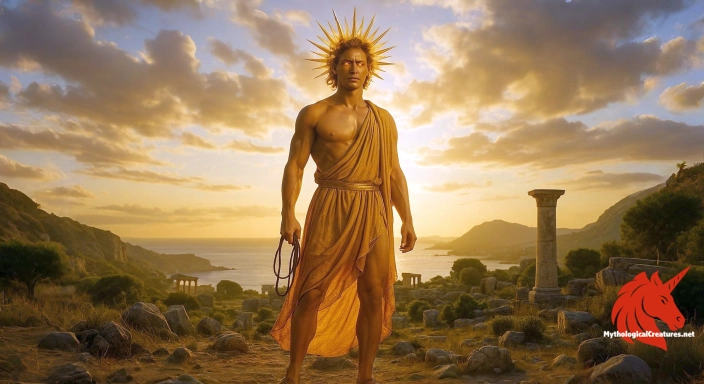
Dare to Meet the Helios....
Curated by the Mythological Creatures Team
Series editor: Mythological Creatures Directory
Primary desk: Hellenic & Ancient Mediterranean Desk
(rev. November 2025)