
Ao Ao: Ao Ao is a monstrous creature from South American, Guarani mythology known for its relentless pursuit of human prey.
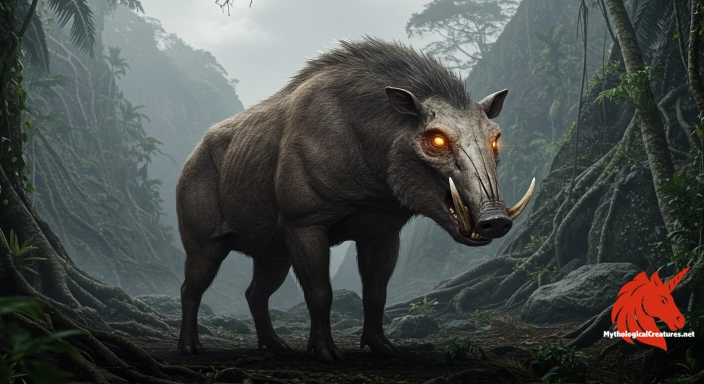
Ao Ao
Ao Ao - Ao Ao is a central mythological figure known for its terrifying predation, its cursed lineage, and its dual symbolism as both a harbinger of death and a spirit of fertility in the Guarani culture.
Origins & First Encounters
Ao Ao emerges from the rich mosaic of South American myth, a creature whose origins are interwoven with the ancient narratives of the Guarani-speaking peoples. Born as one of the cursed sons of Tau and Kerana, its existence is steeped in the dual themes of prowess and punishment, marking it as both a protector and a predator in the mythic landscape. The earliest attestations of Ao Ao trace back to oral traditions and indigenous storytelling, where its character was shaped by both fear and reverence. It occupies a liminal space, embodying the paradoxical blend of fertility and ferocity, a force that nurtures life even as it brings destruction. Its legend is a notable part of the mythological canon, reflecting the complex interplay between human vulnerabilities and the untamed aspects of nature. Over time, the creature’s narrative evolved, absorbing influences from regional variations and the socio-cultural shifts within local communities. Despite the passage of centuries, Ao Ao’s myth has retained its vibrant presence, symbolising the enduring power of folklore in explaining the mysteries of the natural world. The myth continues to inspire, serving as both a cautionary tale and a celebration of the enigmatic forces that shape human destiny.
Source Texts & Tale Variants
The origins of Ao Ao’s tale lie in a mosaic of traditional oral narratives, with its story being passed down through generations among Guarani communities. Many of the primary sources are embedded in local folklore where elders recounted the creature’s terrifying characteristics and supernatural abilities. Ancient colonial records and early ethnographic notes occasionally hint at the legend, though the fullest account resides in the living tradition of storytelling. Diverse story variants highlight differences in its portrayal, with some versions emphasising its role as a merciless hunter, while others note its association with fertility and the guardianship of natural landscapes. The narrative is enriched by the intermingling of myth and cautionary lore, especially in accounts where Ao Ao is tasked with pursuing those who stray from societal norms. Several versions even mention its connection with its brother, Jasy Jatere, thereby weaving it into a network of mythic characters. Folklorists over the years have re-collected and reinterpreted these varied accounts to better understand its standing among other regional creatures. This confluence of sources demonstrates how a single mythic entity can evolve through countless retellings, each contributing unique details and emphasising different aspects of its enigmatic persona.
Form & Powers
The physical depiction of Ao Ao is as eclectic as it is formidable, blending features from both the animal and the human realm. It is commonly portrayed as possessing a robust, sheep-like frame complemented by a massive set of fangs that immediately evoke an aura of menace. Alternate portrayals liken it to an oversized, carnivorous peccary, its body robust enough to terrify even the most stalwart defenders. The creature’s anatomy is often enhanced by details such as coarse fur and muscular limbs, which together underscore its deadly agility and endurance. Its eyes are frequently described as burning with a palpable intensity, reflecting the cursed nature of its lineage. In some narratives, its half-human origin is hinted at through subtle features that blur the boundaries between beast and man, adding another layer of horror to its monstrous visage. Descriptions often capture the dynamic posture of Ao Ao as it relentlessly pursues its prey, its form oscillating between raw power and eerie, predatory grace. Variations in size and build also exist across different tellings, with local artists and storytellers adapting its form to reflect the regional essence of the myth. These layered details contribute to an image of a creature that is at once a terrifying predator and a symbolic embodiment of nature’s untamed fury.
Regional Faces
Regional interpretations of Ao Ao illustrate how a single myth can adapt to reflect the diverse landscapes and cultural contexts of South America. In Paraguay, the legend assumes a particularly potent role in communal discipline, where parents evoke its name to caution disobedient children and instil respect for the unknown. Across various Guarani-influenced areas, local storytellers tailor the creature’s myth to the peculiar rhythms and natural features of their environment, establishing it as both a terror and a protector of the wilderness. Some accounts incorporate its relentless pursuit and distinctive howl as natural phenomena, thereby integrating the creature into the environmental soundscape of the region. The creature’s association with specific trees, especially the palm tree that offers a unique defence, also reflects local ecological wisdom and symbolic language. In several areas, Ao Ao is revered as a guardian of hills and mountains, with its cursed offspring living on as spirits tied to the land. Such regional variations underscore a dynamic interplay between cultural tradition and local geography, ensuring that the demon’s portrayal resonates with each community’s lived experience. Through these adaptations, the Ao Ao myth is continuously revitalised, blending universal themes with the distinct character of regional folklore.
Cultural Parallels
When compared with other mythological creatures, Ao Ao occupies a distinct niche that echoes several universal themes found in global folklore. Its relentless pursuit of prey and its dual role as both harbinger of fertility and agent of destruction bring to mind legendary beings such as the European werewolf, which similarly straddles the boundary between civilisation and the wild. In North American lore, the Wendigo shares a comparable monstrous hunger and involves elements of cannibalism, emphasising the dread of transgressing societal norms. Both these creatures, like Ao Ao, embody the conflict between the human and the animalistic, often serving as metaphors for unbridled nature and the dangers of moral decay. Ao Ao’s unique blend of man and beast further aligns it with global narratives that explore the consequences of cursed origins and the inevitable clash with nature. These cross-cultural comparisons highlight recurring motifs of transformation, loss of humanity, and the retribution exacted by ancient, sometimes capricious, natural forces. The creature’s myth also serves as a reminder of the common human propensity to personify nature’s violence in order to both understand and contain it. Such parallels across disparate cultures not only validate the enduring appeal of Ao Ao’s story but also offer deeper insights into the collective psyche shared by diverse communities.
Legacy & Modern Evolution
The myth of Ao Ao has undergone a remarkable evolution, transforming from a regional cautionary tale into a symbol with enduring contemporary relevance. Historically, its narrative was intertwined with practical lessons on obedience, respect for nature, and the mysterious forces that govern life and death. Over time, as modern society began to reinterpret ancient traditions, Ao Ao emerged not merely as a figure of terror but also as a metaphor for the uncontrollable aspects of human nature and the wild. Contemporary artists, writers, and filmmakers have found inspiration in the creature’s multifaceted identity, often drawing on its blend of horror and fertility to comment on modern environmental and social issues. Its image has grown to encapsulate themes of transformation, retribution, and the legacy of ancestral curses that continue to haunt modernity. Ao Ao’s enduring presence in folklore has been reinforced by modern retellings that blend traditional narrative techniques with current storytelling trends. This evolution reflects a broader cultural shift in which ancient myths are reimagined to address present-day concerns, ensuring that such legends remain vibrant and influential. The creature’s persistent allure underscores the timeless human fascination with the liminal spaces between the natural and the supernatural, a fascination that continues to spark reinterpretation and debate in contemporary cultural discourse.
Interesting Fact
A unique aspect of Ao Ao’s legend is its vulnerability to palm trees, as their mysterious protective power can force the creature to abandon its hunt, revealing an intriguing connection between nature and myth.
Mythology commerce, done carefully
Align your store with our global myth audience
If you sell myth-inspired jewellery, prints, decks, or collectibles, we can feature your brand without overwhelming the reading experience.
Partner with usQuick Creature Info
Origin:
Features:
Associations:
Our Mythic Legendary Rating:

Habitat:
Supernatural Powers:
Physical Attributes:
Abilities:
Behavior:
Weaknesses:
Lore:
Related Creatures, Tales or Lore
References
Discover Another Mythical Legend You May Not Have Heard Of?
Uncover the mysteries of ancient folklore and expand your knowledge of legendary beings from cultures around the world.
Dare to Meet the Bauchan....
Curated by the Mythological Creatures Team
Series editor: Mythological Creatures Directory
Primary desk: Americas & Indigenous Traditions Desk
(rev. November 2025)