
Apaliunas: Apaliunas is a protective deity from the Hittite tradition, attested in a treaty as the guardian of Wilusa and closely linked to the early form of the name Apollo.
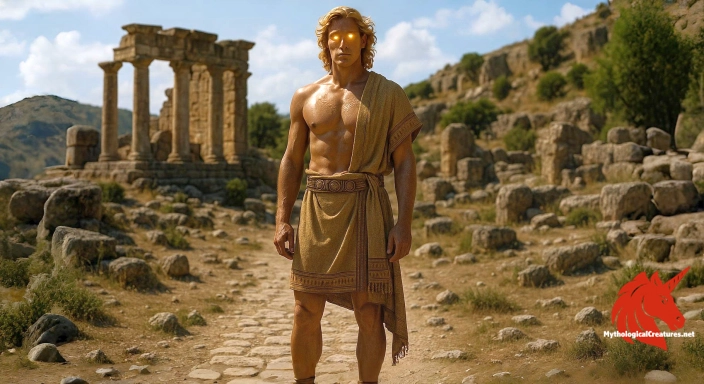
Apaliunas
Apaliunas - Represents the syncretism of Hittite and Greek religious traditions, emphasising the role of deities in political agreements.
Origins & First Encounters
Apaliunas emerges from a rich tapestry of ancient Anatolian belief systems, standing as a divine protector whose origins are interwoven with the early history of Wilusa. Attested in a Hittite language treaty circa 1280 BCE, his presence underscores the importance of protective deities in maintaining order and diplomacy. He is intimately linked with the cultural and political life of the Late Bronze Age, offering divine sanction to treaties and alliances. His name, resonating with early forms of Apollo, hints at shared mythological and linguistic connections that traverse both Hittite and Greek traditions. The deity’s function as a guardian not only secured the physical boundaries of a city but also symbolised the cosmic order. His role in the treaty between Alaksandu of Wilusa and Muwatalli II highlights a sophisticated network of divine oversight in ancient political regimes. The intricate synthesis of regional mythologies in his character points to a broader Indo-European heritage. Over time, Apaliunas has come to represent both local piety and a precursor to later, more widely recognised divine archetypes, emphasising his enduring significance.
Source Texts & Tale Variants
Primary texts that mention Apaliunas may be few, yet they offer a compelling glimpse into the theological mindset of ancient Hittite society. One of the most significant sources is a treaty document, where his name appears alongside other major deities, emphasising his role as a guardian of Wilusa. The treaty, dating to around 1280 BCE, was instrumental in establishing the divine framework that underpinned diplomatic relations between kingdoms. Beyond the formal inscriptions, later literary traditions, including fragments of epic poetry, provide variant interpretations that echo his protective qualities. Such sources also reveal a gradual assimilation of Hittite deities into the broader Greek pantheon, with Apaliunas morphing stylistically into Apollo over the centuries. The delicate interplay between treaty inscriptions and heroic narratives offers a dynamic picture of how divine roles were adapted over time. Other texts, while less direct, contribute to a cumulative understanding of his function as both a guardian and a cosmic arbiter. In all, the multifaceted textual evidence invites a nuanced consideration of Apaliunas and his evolving mythological role.
Form & Powers
Although explicit physical descriptions of Apaliunas are sparse in surviving texts, imaginative reconstructions based on related deities provide intriguing possibilities. Scholars have often drawn parallels with his later Greek counterpart, Apollo, speculating that Apaliunas might have been depicted as a youthful and aesthetically refined figure. Artistic interpretations suggest that his image would have conveyed both strength and a serene beauty, reflective of a divinity who balanced martial vigour with artistic grace. Imagined iconography may highlight a visage radiant with a subtle halo, representing his divine spark and celestial authority. Even in the absence of surviving statues or frescos, the symbolism attributed to him points toward a figure adorned with emblematic regalia, perhaps including elements such as a bow, a laurel crown, or other markers of divine favour. The interplay between light and shadow in reconstructed representations hints at a deity whose physical form symbolised both the clarity and mystery of the divine. Such inferred details, though necessarily speculative, help in constructing a vibrant visual image of Apaliunas and his mythic persona. The synthesis of scant historical references with later classical imagery ultimately provides the most compelling glimpse of his form.
Regional Faces
The identity of Apaliunas shifts subtly when viewed through the lens of varying regional traditions. In the Hittite heartland, he is revered chiefly as a protective force, inherently tied to the fortunes of Wilusa and its sovereign authority. As cultures in neighbouring Anatolia and parts of the Aegean began to intertwine, his depiction was modified to resonate with local spiritual symbology. In Cyprus and other regions influenced by early Greek language and art, his name appears in forms that closely mirror those used for Apollo, suggesting a deliberate cultural exchange. These local adaptations illustrate how deities were recalibrated to serve specific civic and religious needs, blending indigenous traditions with broader mythological narratives. In some regions, the emphasis shifted from his protective attributes to those hinting at an enigmatic hunter, as expressed by his Luwian etymological interpretation of 'The One of Entrapment.' Such variations underscore the fluidity with which ancient communities reinterpreted the divine. Regional reimaginations not only affirm his significance but also highlight the dynamic interplay between local loyalty and pan-regional myth-making.
Cultural Parallels
Apaliunas occupies a fascinating space in comparative mythology, echoing traits that would later become central to the figure of Apollo. The linguistic and functional similarities between his name and the early Greek appellation of Apollo consolidate his position as a deity whose attributes were shared across cultural frontiers. Much like Apollo, Apaliunas is associated with protection, order, and even enigmatic aspects of the hunt, suggesting a common Indo-European heritage. While the Hittite texts present him as a guardian embedded in the practicalities of statecraft, later interpretations imbue him with the poise and elegance seen in the classical Greek tradition. The merging of his martial protective role with an aesthetic and artistic dimension reflects a recurring theme in ancient mythologies, where gods were often ascribed multiple, evolving roles. Comparative analysis reveals that both figures serve as cultural linchpins, bridging the realms of human endeavour and celestial governance. Such cross-cultural parallels resonate with widespread narrative motifs where divine beings oversee not only physical safety but also the moral and artistic flourishing of communities. The dialogue between his earlier Hittite functions and the later classical representations offers rich insight into the transformation of myth in diverse ancient societies.
Legacy & Modern Evolution
Over the centuries, the legacy of Apaliunas has evolved in tandem with shifting cultural landscapes and the melding of religious traditions. Initially celebrated as a robust protective deity within the Hittite political sphere, his essence gradually interwove with the flattering imagery of Apollo as disseminated through Greek literature and art. This syncretic evolution underscores a broader process where local deities were reinterpreted to meet the aspirations of expanding civilizations. In modern scholarship, Apaliunas is often seen as a crucial precursor to the classical ideals personified by Apollo, reinforcing the idea that myth is a fluid and adaptive phenomenon. His gradual assimilation into the Greek pantheon not only highlights the permeability of ancient cultural boundaries but also invites contemporary re-evaluation of how divine paradigms shift over time. Renewed academic interest in late Bronze Age treaties and iconographic studies has cast fresh light on his role as a mediator between the tangible and the transcendent. Modern artistic and literary reinterpretations continue to draw upon his image, often portraying him as embodying both the rugged resilience of early myth and the refined grace of later classical thought. Ultimately, the enduring allure of Apaliunas lies in his capacity to encapsulate the transformation of divine iconography—from a local guardian to a global archetype—making him a timeless subject of mythological inquiry.
Interesting Fact
Apaliunas exemplifies the cultural fusion of the ancient Near East, where a Hittite protective deity became linguistically and conceptually intertwined with the Greek god Apollo.
Limited sponsor opportunity
One slot, carefully chosen partners
We only feature a small number of relevant sponsors at any time. If you create serious myth content, we would like to hear from you.
Partner with usQuick Creature Info
Features:
Associations:
Our Mythic Legendary Rating:

Habitat:
Supernatural Powers:
Physical Attributes:
Abilities:
Behavior:
Lore:
References
Discover Another Mythical Legend You May Not Have Heard Of?
Uncover the mysteries of ancient folklore and expand your knowledge of legendary beings from cultures around the world.
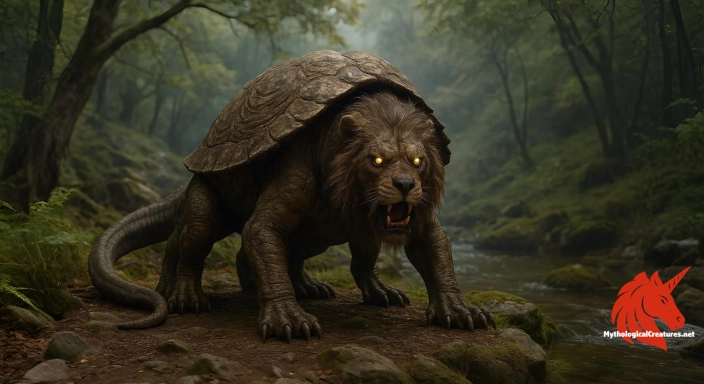
Dare to Meet the Tarasque....
Curated by the Mythological Creatures Team
Series editor: Mythological Creatures Directory
Primary desk: Hellenic & Ancient Mediterranean Desk
(rev. November 2025)