
Apsonsi: Apsonsi is a half-woman half-lion mythical creature from Thai mythology, renowned as a guardian figure.
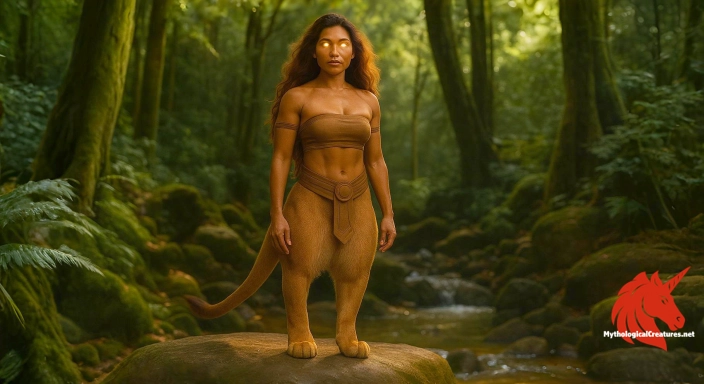
Apsonsi
Apsonsi - Apsonsi is revered as a guardian who protects sacred sites, symbolizing the union of divine beauty and beastly strength in Thai culture.
the legend in five swipes.
the legend in five swipes.
The First Records of the Apsonsi
The Apsonsi emerges as an enigmatic figure in Thai mythology, a captivating fusion of celestial charm and leonine might. Its origins lie in the vibrant milieu of ancient South and Southeast Asian folklore, where the mingling of divine beauty and untamed power was a recurrent theme. Early depictions show this hybrid creature in sacred temple murals and timeless iconography, marking its first attestation in cultural artefacts. The creature is believed to have roamed the mystical Himavanta, a hidden forest deep within the Himalayas that has long been revered in local lore. Traditionally, Apsonsi symbolises not only protection but also the harmonious union of contrasting forces—a gentle nymph merged with the raw, majestic strength of a lion. Its various appellations, including Apsonsingh and Apsarasingha, speak to its deep-rooted presence in myth and the diversity of its interpretations. Over time, its imagery has been closely linked with the guardianship of sacred spaces such as Wat Phra Kaew. The reverence for Apsonsi continues to inspire both ancient narratives and contemporary cultural expressions, underlining its enduring power and mystical allure. This creature stands as a testament to the rich narrative heritage of the region, blending beauty and ferocity into one timeless emblem.
Which books and scrolls describe the Apsonsi?
Ancient temple inscriptions and intricate carvings offer early glimpses into the legend of the Apsonsi, capturing its dual essence as both nurturer and protector. Various folklore sources, preserved over generations, have shaped its narrative through oral traditions and ceremonial recitations. Sacred texts and illustrated manuscripts from historical periods reveal that Apsonsi was celebrated as a guardian figure commissioned to ward off evils. These narratives, though varied, often highlight its role as a sentinel in sacred realms, bridging the terrestrial with the divine. In temple complexes, meticulously detailed depictions evoke a sense of awe, suggesting that the creature occupied a revered place in spiritual iconography. Alternate versions of its story appear in regional chronicles, each adding layers of symbolic significance to its form. Cultural narratives often recount encounters with the Apsonsi, emphasising its protective intervention during times of cosmic peril. Over the centuries, as artistic styles evolved, new story variants emerged that underscored different facets of its myth, yet the core themes of guardianship and mysticism persisted. The diverse primary sources collectively affirm the creature’s integral role in the mythic fabric of the region.
What does the Apsonsi look like?
The physical portrayal of the Apsonsi is an arresting blend of feminine grace and leonine power. Its upper form is fashioned with the delicate features of a celestial nymph—arresting eyes, a finely contoured face, and a mien that radiates otherworldly serenity. In contrast, its lower half mirrors the robust anatomy of a lion, complete with a flowing, majestic mane and a muscular build that exudes strength and agility. Every artistic rendition pays detailed attention to the juxtaposition of soft, human attributes with tactical, animalistic prowess. Ornamental elements such as intricate jewellery and finely carved headdresses further enhance its regal presence. Some representations embellish its form with elaborate body markings and subtle nuances that hint at both vulnerability and a latent ferocity. The creature’s stance and proportions are often exaggerated to symbolise its supreme authority over chaotic forces. This meticulous interweaving of delicate elegance and raw power not only celebrates its hybrid nature but also reflects the symbolic duality inherent in many mythic narratives. The harmonious combination of human beauty and beastly might endures as a powerful visual testimony to its legendary status.
Where is the legend of the Apsonsi strongest?
In its journey through diverse cultural landscapes, the image of the Apsonsi has been adapted and reinterpreted to align with local mythological ideologies. Within the Thai tradition, it is predominantly revered as a benevolent guardian of sacred sites, yet neighbouring cultures have offered their own nuanced variations to its persona. In regions such as Burma, a related figure known as the Manussiha adapts the motif of a lion hybrid, albeit with a slightly masculine emphasis. Artistic depictions also vary, with some communities accentuating the creature’s human elegance and others highlighting its formidable, raw power. Local narratives sometimes incorporate additional symbolic elements—ranging from celestial motifs to natural forces—that render each regional version uniquely vibrant. Traditional celebrations and religious rituals in different parts of Southeast Asia have embraced these regional adaptations, thereby ensuring the legend evolves with time. The trans-regional diffusion of the Apsonsi myth underlines its versatility and broad cultural resonance. Each iteration not only reflects a community’s particular aesthetic values but also mirrors the universal desire to find balance between beauty and strength. Consequently, the creature serves as a dynamic emblem that unites disparate cultural identities under a shared mythic heritage.
Legends Comparable to That of the Apsonsi
The dual nature of the Apsonsi finds interesting parallels across a spectrum of mythological traditions beyond Thailand. Its synthesis of human beauty and bestial power draws comparisons to hybrid creatures in various cultures that symbolise divine protection and mystic strength. In Burmese lore, for instance, the Manussiha exhibits similar characteristics, despite subtle differences in gender portrayal, underscoring a shared narrative of guardianship. The motif of combining elegance with ferocity is not unique; ancient Greek depictions of hybrid beings and the Hindu goddess Durga—often represented astride a lion—evoke a comparable interplay between tenderness and might. These cross-cultural echoes underscore a broader mythological archetype whereby creatures assume roles that bridge the earthly with the celestial. Each comparative narrative reinforces the idea that the fusion of human and animal traits can serve as a powerful metaphor for the coexistence of beauty and violence. This thematic recurrence across disparate traditions highlights how such mythical creatures address universal human concerns about protection, identity, and the natural order. The convergent imagery and symbolism thus provide a compelling framework for understanding how disparate cultures celebrate the union of contrasting forces. In this context, the Apsonsi stands out as a particularly striking example of this timeless and cross-cultural mythological phenomenon.
Where does the Apsonsi appear in films and games?
The legacy of the Apsonsi demonstrates the dynamic evolution of myth as it gracefully navigates epochs and cultural shifts. Ancient carvings and temple murals that once immortalised its form now coexist with contemporary artistic interpretations, reinforcing its timeless allure. Over the years, the creature has been reimagined as a potent emblem of both historical heritage and modern identity. Its presence in revered sites such as Wat Phra Kaew lends a tangible connection to the past, while modern visual arts, literature, and media continue to draw inspiration from its mythical imagery. The Apsonsi has emerged as a symbol of protection and resilience, imbued with layers of cultural meaning that transcend simple visual representation. Contemporary artists and designers often invoke its image to explore themes of duality and the interplay between the human and the divine. Cultural festivals and national celebrations in Thailand sometimes feature the Apsonsi as a reminder of the enduring power of myth. The creature’s evolution from a sacred guardian of olden times to a modern cultural icon underscores the continuous dialogue between heritage and innovation. In every reinterpretation, the Apsonsi reinforces the enduring power of myth to adapt and resonate across generations and societal changes.
Interesting Fact
Apsonsi not only guards revered temples but also exemplifies the cultural synthesis of South and Southeast Asian mythology, merging humanistic beauty with wild, animalistic strength.
Mythological Treasures
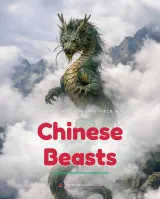
Chinese Beasts: A field guide to the dragons and demon kings of Chinese myth
From river dragons to demon kings, with the legends that shaped five thousand years of storytelling.
Japanese Yokai: A field guide to the spirits and demons of Japanese folklore
Fifteen spirits, with the signs to watch for and what the old tales say to do if you meet one.
Greek Myths: A field guide to the monsters of ancient Greece
Every monster here earned its place in legend, and each gets a full page of artwork and the story behind it.
the legend in five swipes.
Sponsor this space
Tasteful, fixed-fee placements for myth projects
No bidding wars or flashing banners. We offer simple placements for a small set of creators and brands aligned with our readers.
Request further detailsQuick Creature Info
Origin:
Features:
Our Mythic Legendary Rating:

Also Sometimes Known As:
Habitat:
Supernatural Powers:
Physical Attributes:
Abilities:
Behavior:
Lore:
Related Creatures, Tales or Lore
References
Discover Another Mythical Legend You May Not Have Heard Of?
Uncover the mysteries of ancient folklore and expand your knowledge of legendary beings from cultures around the world.
Dare to Meet the Dero....
-238bfd65-d546-4741-8234-00820ed2efde_small.webp "Depiction of Dero")
The Mythological Creatures Book Series
Yokai, Greek, Norse, Egyptian & Chinese. Five illustrated field guides to the creatures the old stories either warned or told you about.

Curated by the Mythological Creatures Team
Series editor: Mythological Creatures Directory
Primary desk: Asian & Pacific Myth Cycles Desk
(rev. November 2025)