
Archangel: Archangels are the highest rank of angels in the Christian hierarchy, renowned as divine messengers and warriors.
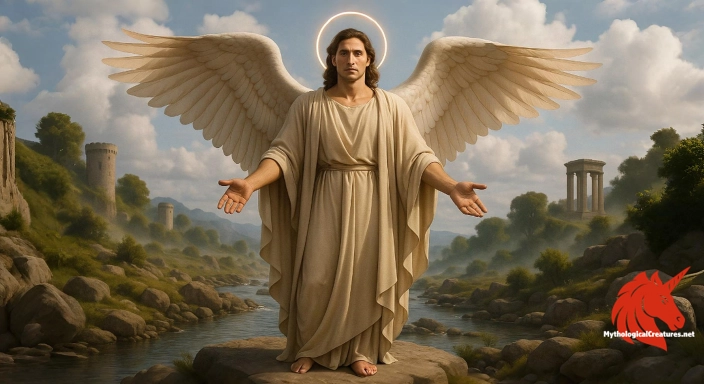
Archangel
Archangel - Represents divine authority and protection in Abrahamic religions
Origins & First Encounters
This celestial being occupies a central place in spiritual traditions as an embodiment of divine authority and benevolence. Emerging from early medieval attempts to systematise the ethereal realms, archangels were initially conceptualised as the chief messengers and protectors of the divine order. Their designation, derived from the Greek for 'chief angel', underscores a role that transcends mere intermediary functions. Early Christian writings, notably those from the late antique period, present these beings as agents of both cosmic warfare and sacred intervention. Over time, the symbolism of archangels has expanded to represent the interface between the transcendent and the earthly. Their first attested formal descriptions can be traced to theological works that aimed at mapping the celestial hierarchy. The evolution of their image reflects a melding of classical influences with emerging religious paradigms during periods of deep spiritual transformation. Classical depictions often interweave elements of martial duty with the gentleness of a spiritual guide, emphasising their dual roles. The rich iconography associated with archangels resonated with the social and cultural aspirations of communities seeking order amid chaos. As a result, these figures have come to epitomise both the brilliance of divine light and the moral compass guiding human endeavours.
Source Texts & Tale Variants
Ancient texts and evolving oral traditions have long served as fertile ground for the diverse portrayals of archangels. Influential works such as the De Coelesti Hierarchia by Pseudo-Dionysius provided one of the earliest structured depictions of these exalted beings. Although the biblical canon is sparing in explicit references, key passages in texts like Daniel have been reinterpreted over time to underscore the high rank these figures possess. Subsequent apocryphal writings and mystical literature further diversified their narrative roles and responsibilities. The scant biblical mentions have been enriched by later theological treatises that embed archangels within a broader celestial hierarchy. Variations in narrative detail are found in different manuscript traditions, with each reflecting the unique concerns of its cultural and historical moment. Other literary works, most notably in the realm of Renaissance literature, have expanded on these motifs to include dramatic depictions of cosmic battlefields and divine guidance. In many folklore traditions, oral narratives have layered additional dimensions, portraying archangels as both distant enforcers of divine justice and benevolent guardians of human fortune. These multiplicities of source material continue to inspire scholarly debates and artistic reinterpretations. Ultimately, the convergence of strictly scriptural references with later imaginative expansions has ensured that archangels remain captivating figures in both theological and popular discourse.
Form & Powers
Artistic depictions of archangels are imbued with qualities that evoke both celestial radiance and formidable presence. They are most commonly envisioned with expansive, diaphanous wings that suggest an ability to transcend the physical realm. Their faces are often rendered with an expression of serene determination, combining a gentle serenity with an unmistakable aura of strength. Traditional portrayals typically include garments or armour that blend flowing robes with elements of battle-ready regalia, symbolising a dual capacity for both spiritual guidance and martial protection. The use of luminous halos or a glow of ethereal light further accentuates their elevated status and divine origin. While canonical texts offer little in the way of physical description, the recurring motifs in art serve to consolidate their image as both radiant messengers and warriors. Rich colours such as gold and silver are frequently used in paintings and stained glass to communicate their otherworldly nature. The interplay of light and shadow in these works often underscores the mysterious and transcendent qualities attributed to archangels. Some representations even suggest a variability in size, with depictions ranging from monumental figures dominating a canvas to more intimate portrayals intended to bridge the divine and the mortal. In modern representations, digital media and contemporary art continue to explore and reimagine these age-old symbols of divine beauty and power.
Regional Faces
The portrayal of archangels differs markedly across cultural and regional traditions, each imbuing them with distinctive traits that reflect local values and artistic preferences. In Jewish tradition, they are revered as princely beings whose titles and roles are emphasised in mystical and scriptural texts such as the Book of Daniel. In contrast, medieval Christian art often positions archangels within a hierarchical framework that underscores their roles as both celestial warriors and messengers of divine wisdom. Islamic culture offers a parallel through the figure of Jibril, whose narrative emphasises the transmission of holy revelation and spiritual purity. Eastern Orthodox iconography further enriches the visual lexicon, with intricate depictions that blend symbolic gesture with spiritual mysticism. Even within the Western world, artistic interpretations are far from monolithic, as regional folklore and local liturgical practices often colour the portrayal of these celestial beings. Diverse cultural settings have adapted the imagery of archangels to mirror social and political realities, whether as guardians during times of turbulence or as symbols of hope in periods of renewal. Some Mediterranean traditions, for instance, have integrated local legends with canonical imagery to produce a more accessible figure of divine intercession. These regional variations highlight a broader tendency for sacred iconography to be reshaped by a community’s unique historical and cultural experience. As such, the archangel serves as a versatile symbol that is continually revitalised in the mosaic of global spiritual heritage.
Cultural Parallels
Across the globe, figures analogous to archangels emerge in various mythologies, reflecting a shared human fascination with celestial intermediaries. Comparable to the divine messengers of the Abrahamic faiths, many ancient traditions feature heroes or deities tasked with mediating between the gods and mortal realms. In Islamic tradition, the role of Jibril mirrors that of Gabriel in Christian narratives, underscoring a common archetype of the holy communicator. Classical Greek mythology, for instance, presents Hermes as a psychopomp and messenger, echoing the dual qualities of guidance and guardianship seen in archangels. Similarly, aspects of divine intervention in Zoroastrianism find resonance in the responsibilities and symbolic functions attributed to archangels. These cross-cultural parallels demonstrate a convergence in the way communities understand and visualise the forces that govern cosmic order. Artistic and literary traditions from disparate regions frequently employ similar iconographic elements—radiance, uplifted postures, and regalia—that underscore the universality of such figures. The consistent emergence of these archetypes across cultures speaks to an enduring human need to personify the abstract qualities of wisdom, justice, and protection. Beyond their immediate religious roles, archangels and their counterparts are often emblematic of the broader quest for meaning in the cosmic order. The comparative study of these figures not only enriches our understanding of individual traditions but also highlights the interconnectedness of the world’s mythic narratives.
Legacy & Modern Evolution
The depiction of archangels has transformed significantly through the centuries, adapting to the shifting paradigms of theology, art, and popular culture. Early medieval and Renaissance artworks laid the foundation for a robust visual language that combined religious symbolism with humanistic ideals. Over time, these images evolved, incorporating elements of both warfare and mercy that reflected the multifaceted roles ascribed to these divine beings. Modern reinterpretations in literature, film, and digital media have reinvigorated the archetype by infusing it with contemporary motifs and a more personal, accessible mysticism. Today, archangels are not only revered in traditional religious practices but also celebrated in new spiritual movements and pop culture, often depicted as modern-day guides or protectors. This evolution mirrors broader societal shifts, where the quest for spiritual meaning is increasingly interwoven with artistic expression and media narratives. As creative industries continue to explore myth and metaphysics, the symbology of archangels remains a potent source of inspiration across a variety of platforms. Their legacy is evident in everything from blockbuster films to online communities that view these figures as emblems of hope and transformation. In reimagining ancient celestial hierarchies, modern culture pays homage to an enduring tradition while simultaneously adapting it to address contemporary concerns. As a result, the archangel persists as a dynamic symbol, continually redefined to articulate the human experience in a multifaceted and ever-changing world.
Interesting Fact
A common misconception is that archangels constitute the highest rank of angels solely based on etymology, while in traditional scripture their hierarchy is more nuanced.
For serious myth projects
Feature your work alongside the legends
From academic works to story-rich games, we highlight projects that respect world mythologies. Talk to us about a measured, long-term placement.
Start a conversationQuick Creature Info
Origin:
Associations:
Our Mythic Legendary Rating:

Also Sometimes Known As:
Habitat:
Supernatural Powers:
Physical Attributes:
Abilities:
Behavior:
Lore:
Related Creatures, Tales or Lore
- SSeraphim
- CCherubim
- TThrones
References
Discover Another Mythical Legend You May Not Have Heard Of?
Uncover the mysteries of ancient folklore and expand your knowledge of legendary beings from cultures around the world.
Dare to Meet the Cockatrice....
Curated by the Mythological Creatures Team
Series editor: Mythological Creatures Directory
Primary desk: Hellenic & Ancient Mediterranean Desk
(rev. November 2025)