
Árvakr and Alsviðr: Árvakr and Alsviðr are the legendary Norse horses that pull the sun’s chariot across the sky.
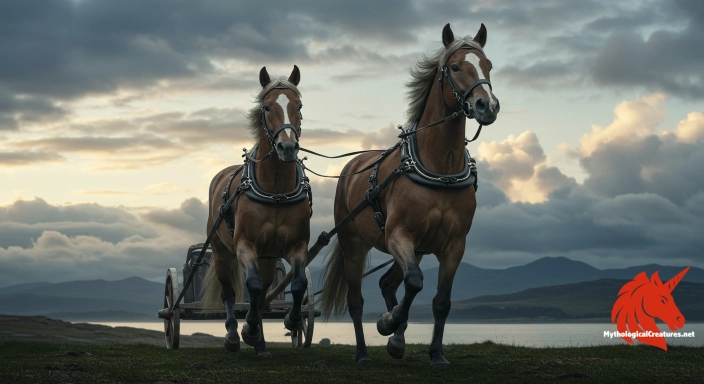
Árvakr and Alsviðr
Árvakr and Alsviðr - Their role is vital in maintaining the daily cycle of day and night, symbolizing the intersection of nature and divine order in Norse cosmology.
Origins & First Encounters
The myth of Árvakr and Alsviðr occupies a celebrated niche in the mosaic of Norse cosmology, where these divine steeds are entrusted with the task of escorting the radiant sun across the sky. Their names, meaning 'early awake' and 'very quick', evoke a sense of dynamic energy that mirrors the vigorous rejuvenation of each new dawn. Emerging from the tapestry of medieval Scandinavian literature, these horses appear in seminal texts that have shaped the understanding of cosmic order. They are not mere beasts of burden, but potent symbols deeply intertwined with the celestial cycles of day and night. Their existence in myth underscores a belief in a universe where every element—from the blazing sun to its swift charioteers—plays an integral role in the grand scheme of things. The cultural context in which they emerged places high value on wit, endurance, and the mysterious interplay between human perception and natural phenomena. Their presence is a testament to a time when the manifestations of divine power were observed in the very rhythms of nature itself. Over time, Árvakr and Alsviðr have come to epitomise the balance between the human and the divine, the transient and the eternal, inspiring awe among followers of Norse tradition. Another layer of meaning is added by their connection to the Aesir, further embedding them within a broader narrative of cosmic responsibility. Ultimately, their myth invites us to reflect on the eternal interplay between light and darkness, encapsulating a belief system where every element is imbued with profound significance.
Source Texts & Tale Variants
Ancient texts such as Gylfaginning and Grímnismál serve as the primary literary vessels through which the tale of Árvakr and Alsviðr is conveyed. These works offer succinct yet potent snapshots of the horses’ roles in steering the sun’s chariot, capturing the imagination of those who listen to the ancient echoes of cosmic order. In these sources, the vivid imagery of their swift gallop and the ingenious placement of cold iron bellows under their shoulders is retained as a striking detail. Some accounts hint at varying aspects of their nature, with one narrative accentuating their raw speed, while another underscores the endurance they display against the relentless heat of the sun. Subtle differences in the recensions suggest that early storytellers were inclined to weave multiple layers of symbolism into the depiction of these celestial steeds. Additional skaldic verses and later folkloric tidbits have further enriched their portrayal, even if these later sources are less systematic in their detailing. In various manuscript traditions, the myth has been subject to reinterpretation and creative embellishment, adding depth to their character. The surviving narratives have thus not only preserved the initial myth but have also allowed for a spectrum of story variants to flourish, each echoing different facets of the ancient worldview. The layered transmission of these texts highlights the importance of oral tradition in shaping the mythic legacy, ensuring that each retelling captures a sliver of the divine mystery inherent in the celestial journey of the sun. Through these sources, the horses have transcended the realm of mere myth to become enduring symbols in the cultural memory of Norse society.
Form & Powers
Árvakr and Alsviðr are depicted as remarkable embodiments of otherworldly power and grace, their forms resonating with an almost tangible luminescence. Their sleek, muscular bodies are often imagined in hues of silver or gold, reflecting the brilliance of the sun they tirelessly escort. Every aspect of their anatomy, from their lean limbs to their finely chiseled haunches, has been crafted in myth to embody the ultimate fusion of strength and speed. A particularly striking detail is the divine contrivance of cold iron bellows affixed beneath their shoulders, a device intended to shield them from the searing heat of the solar chariot. Their eyes, imbued with an enigmatic glow, are said to mirror the vast expanses of the cosmos, hinting at their connection to the celestial order. The contrast between the ethereal quality of their coats and the hard, utilitarian material used in their adornment serves to symbolise a balance between divine beauty and the harshness of cosmic reality. They are described as possessing an agility that defies the natural constraints of earthly horses, enabling them to manoeuvre gracefully across the sky. Moreover, depictions of these steeds often highlight their imposing presence, suggesting that their physical appearance is as much a statement of cosmic endurance as it is of sublime speed. This amalgamation of aesthetic allure and functional design underscores the depth of symbolic meaning embedded in their character. In every stroke of mythic illustration, Árvakr and Alsviðr are rendered not simply as creatures of flesh and blood, but as manifestations of a deeper, mystical order.
Regional Faces
While the myth of Árvakr and Alsviðr is firmly rooted in Norse tradition, subtle regional variations have emerged over the centuries, each infusing the tale with distinctive local flavours. In certain Scandinavian regions, particularly within Icelandic folklore, the horses are portrayed with an added layer of mysticism, often regarded as spectral beings whose appearance coincides with the turning of the seasons. Local storytellers have occasionally highlighted the horses’ uncanny ability to bridge the gap between the earthly and the divine, attributing to them qualities that transcend mere physical prowess. Variations in artistic tradition have led to depictions where the colours and contours of the steeds differ, influenced by the region’s unique natural environment and cultural aesthetics. Some communities view these charioteers as guardians of liminal spaces, serving as intermediaries between the realms of mortal existence and the ethereal dominion of the gods. In these retellings, the magical cold iron bellows are sometimes elaborated upon, being portrayed as objects of transformative power in their own right. Folk narratives have expanded the role of the horses to include portents of significant cosmic change, reflecting local interpretations of the prophetic nature of Ragnarök. Each regional adaptation enriches the myth by blending core traditional elements with local symbolism, creating a dialogue between the ancient myth and the lived experiences of diverse communities. Ultimately, these variations demonstrate the dynamism of myth, as each culture reimagines the celestial journey in a way that resonates with its own environmental and spiritual contexts. The enduring adaptability of the myth reflects the timeless allure of these divine horses, whose legacy continues to evolve with each new cultural interpretation.
Cultural Parallels
The story of divine steeds guiding the sun is a motif that resonates beyond the boundaries of Norse mythology, drawing fascinating comparisons with similar figures in other ancient cultures. Much like Árvakr and Alsviðr, the Greeks envisioned a chariot drawn by powerful horses, initially steered by Helios and later by Apollo, underscoring a shared fascination with celestial transport. In the realms of Persian and Phrygian lore, the divine responsibilities rested on figures such as Mithras and Attis, whose associations with the sun mirror the energy and speed celebrated in Norse myth. This cross-cultural echo extends to the Indo-European tradition at large, where the portrayal of magical horses is a recurring theme often linked with ideas of rebirth and the cyclic nature of time. The similarities extend not only to the roles the horses play but also to the symbolic integration of technology—in the Norse case, the ingenious cold iron bellows—to enhance their divine function. In essence, these parallel narratives reflect a universal human desire to understand the mechanics of the cosmos through familiar natural imagery. The interplay between celestial vehicles and solar deities is a narrative sweet spot that various mythologies have independently cultivated. Such comparative analysis reveals that these mythic animals, regardless of the cultural lens through which they are viewed, often embody the transient beauty of light and the relentless march of time. By drawing these parallels, one gains insight into how different cultures have utilised similar symbols to express complex cosmic phenomena. Thus, Árvakr and Alsviðr not only enrich our understanding of Norse myth but also contribute to a broader, interwoven tapestry of mythological tradition across the ancient world.
Legacy & Modern Evolution
The myth of Árvakr and Alsviðr has journeyed far beyond the medieval narrative, evolving into a symbol replete with modern interpretations and enduring cultural resonance. Over the centuries, the divine steeds have been reimagined by artists, writers, and modern practitioners of Norse-inspired spirituality, who have sought to capture the essence of their swift passage through the heavens. This myth has notably influenced literary creations such as James Shirley’s play, The Triumph of Peace, where the chariot of the sun becomes a metaphor for both hope and the inexorable flow of time. In contemporary artistic circles, the image of these horses continues to inspire a wide range of creative expressions, from digital art and fantasy literature to immersive theatrical productions. Neo-pagan and Asatru communities have embraced Árvakr and Alsviðr as potent symbols of natural cycles and cosmic order, often invoking their legacy during seasonal celebrations. Modern reinterpretations tend to highlight not only their physical splendour but also their symbolic embodiment of resilience in the face of universal change. The shifting portrayals of these steeds, from classical depictions to avant-garde renditions, illustrate the dynamic nature of myth in a rapidly changing cultural landscape. Their narrative serves as a reminder of the timeless human quest to decode the mysteries of the cosmos, using allegory and metaphor as guiding lights. The evolution of their myth underscores the capacity of ancient symbols to adapt and thrive in new eras, always reflecting contemporary values and aspirations. Ultimately, the legacy of Árvakr and Alsviðr is a vibrant testament to the enduring power of myth, bridging the gap between age-old traditions and modern creative impulses.
Interesting Fact
An intriguing aspect of their myth is the use of cold iron bellows to protect them from the sun’s heat, underscoring the ingenious ways in which the gods mitigated the challenges of their divine tasks.
Sponsor this space
Tasteful, fixed-fee placements for myth projects
No bidding wars or flashing banners. We offer simple placements for a small set of creators and brands aligned with our readers.
Request further detailsQuick Creature Info
Origin:
Features:
Associations:
Our Mythic Legendary Rating:

Habitat:
Supernatural Powers:
Physical Attributes:
Abilities:
Behavior:
Lore:
Related Creatures, Tales or Lore
References
Discover Another Mythical Legend You May Not Have Heard Of?
Uncover the mysteries of ancient folklore and expand your knowledge of legendary beings from cultures around the world.
Dare to Meet the Menippe....
-45a9e145-b77f-4245-be32-6a7cf3a34923_small.webp "Depiction of Menippe")
Curated by the Mythological Creatures Team
Series editor: Mythological Creatures Directory
Primary desk: Northern & European Folklore Desk
(rev. November 2025)