
Asterodia: Asterodia is a multifaceted figure in Greek mythology, appearing as an Oceanid nymph, a Phocian princess, and a potential spouse to notable figures.

Asterodia
Asterodia - Asterodia exemplifies how recurring names in mythology can represent multiple, sometimes divergent, traditions within the same cultural framework, reflecting the complex genealogies of Greek myth.
Origins & First Encounters
Asterodia is a multifaceted figure woven into the rich tapestry of Greek myth, her name resonating in various legendary roles. Her earliest traces emerge from ancient narrative traditions that recount her diverse lineage as both a celestial nymph of the Oceanids and a distinguished mortal princess. In one tradition, Asterodia is portrayed as a radiant Caucasian nymph, the beloved daughter of Oceanus and Tethys, and the mother of a heroic offspring by the figure Aeetes. Another account depicts her as a Phocian princess whose noble heritage is intertwined with regal bloodlines and dramatic familial rivalries. These varying identities highlight the fluid nature of mythic characters and the dynamic interplay of divine and mortal traits in Greek tradition. Her potential marriages to iconic figures such as Endymion and Icarius further underscore the versatility of her mythic presence. As myth evolved, Asterodia became a symbol of both natural beauty and the complex, interwoven fates that characterised ancient lore. Her legend reflects a broader cultural context in which oral storytelling and shifting genealogical records celebrated the mysterious and sacred. Through her many incarnations, Asterodia remains an emblematic representation of the multifarious nature of myth and the enduring power of ancient narratives.
Source Texts & Tale Variants
The primary attestations of Asterodia are found in a mosaic of ancient texts where fragmented accounts paint her in varied roles across the mythic tradition. Classical compendiums document her as part of the Oceanid lineage, linking her to the elemental forces embodied by Oceanus and Tethys. Brief mentions in genealogical records provide clues to her importance, despite the limited details, and suggest her involvement with both divine and heroic figures. Other traditions position her as a Phocian princess, weaving her narrative into the tapestry of mortal royal sagas that often carry hints of internal strife and destiny. The recurrence of her name across different manuscripts, sometimes under the variant Asterodea, illustrates both the evolution of her character and the complexities of mythic authorship. Later commentaries and scholia on classical texts have added subtle interpretations, enhancing the ambiguity and richness of her story. Additionally, loose allusions to her unions with figures such as Endymion and Icarius have emerged in peripheral myth cycles that further complicate her legend. These diverse narrative strands illustrate the challenges of pinning down a singular portrait of Asterodia. Modern scholars continue to revisit and debate her story, underscoring the layered and adaptive nature of her myth.
Form & Powers
Artistic impressions of Asterodia, particularly in her guise as an Oceanid, often render her with an otherworldly beauty that speaks of divine origin and natural splendour. She is typically envisioned with a luminous complexion and softly glowing skin, echoing the reflective quality of a calm sea under moonlight. Flowing tresses, as fluid as water itself, are imagined to cascade in gentle waves around her shoulders, enhancing her ethereal presence. When depicted as a mortal princess, her features are rendered with a refined, stately elegance that conveys both noble lineage and a quiet grace. Her eyes, deep and reflective, are thought to mirror the timeless mysteries of the cosmos and the subtle depth of the ancient waters. The soft interplay of light and shadow in many ancient artworks suggests that her form was celebrated for its delicate balance of strength and fragility. Some portrayals hint at an almost imperceptible radiance—an aura that transcends mortal beauty and hints at her celestial ties. Variations in her depiction may also indicate regional artistic choices, with some emphasising her diaphanous qualities and others her regality. This combination of natural grace and refined aristocracy invites viewers to contemplate the convergence of the earthly with the divine in her persona.
Regional Faces
Across the ancient Greek world, the figure of Asterodia was adapted to reflect the cultural and geographical sensibilities of distinct regions. In the Caucasian tradition, where she is celebrated as a luminous Oceanid, local narratives imbue her with the raw, untamed qualities of watery landscapes and rugged nature. Here, her myth is tightly interwoven with the elemental forces, and she is often depicted amidst rocky shores and flowing, natural springs. In contrast, central Greek traditions, particularly those emerging from Phocis, emphasise her status as a princess, focusing on themes of royal lineage, human emotion, and domestic drama. Such regional interpretations highlight the duality of her existence, where divine origin meets the intricacies of mortal life. Her associations with figures like Endymion and Icarius receive varied treatments, with local storytellers accentuating different aspects of her character. While some regions celebrate her as an ethereal nymph with a mystic aura, others craft her as a symbol of noble beauty and tragic domesticity. This regional diversity underscores the adaptability of her myth, allowing communities to project local values onto an otherwise ambiguous figure. Ultimately, these variations demonstrate how Asterodia became a dynamic canvas for exploring the intersections between the natural world and human society.
Cultural Parallels
Asterodia’s multifaceted identity naturally invites comparisons with other mythological figures who straddle the realms of the divine and the mortal. In her Oceanid aspect, she shares similarities with other water nymphs such as Calypso or Thetis, whose ethereal beauty and secretive depths captivated the ancient imagination. The overlap with figures like Asteria further reinforces her connection to celestial themes and the abstract quality of star-like luminescence that marks divine intervention. When viewed through the lens of mortal lineage, her role as a Phocian princess draws parallels with other noble figures like Europa or Io, whose stories are steeped in both regal splendour and poignant suffering. Cross-cultural comparisons also reveal echoes in the enigmatic nature of mythic feminine archetypes, as seen in Celtic and Nordic folklore where water deities are revered and mystified simultaneously. The blend of divine radiance and human frailty in her narrative provides a rich ground for comparative mythology, reflecting recurring motifs across disparate cultures. Just as many ancient myths adapt over time, her character too mirrors the archetypal journey from liminality to a more defined persona. This comparative approach highlights how similar themes of beauty, conflict, and transformation resonate universally. In this way, Asterodia serves as a bridge between the unique intricacies of Greek myth and broader, culturally transcendent narratives.
Legacy & Modern Evolution
Over the centuries, the legend of Asterodia has undergone a remarkable transformation, evolving from cryptic ancient references to a subject of vibrant modern reinterpretation. Her portrayal in art and literature has shifted in response to changing cultural ideals and aesthetic sensibilities, reflecting the evolving perspective on myth itself. During the Renaissance, reimaginations of classical themes breathed new life into her story, where the fusion of nature and nobility was celebrated with a fresh, psychological nuance. Modern artistic movements have rediscovered Asterodia as an emblem of duality, embodying both ethereal beauty and the impermanence of human existence. Contemporary authors and visual artists have drawn on her elusive persona to explore themes of identity, transformation, and the eternal interplay of light and shadow in human life. Her myth has also found resonance in the realms of neo-pagan and mythopoeic literature, where the ancient boundaries between the divine and the mundane are re-examined and redefined. Academic interest continues to unravel the socio-cultural dynamics embedded in her myth, highlighting how her narrative adapts to the needs of each passing era. These dynamic reinterpretations ensure her story remains a living dialogue between the past and the present. In sum, Asterodia’s enduring legacy is a testament to the timeless allure of myth and its ability to reflect the shifting contours of human belief and creativity.
Interesting Fact
The recurrence of the name Asterodia in Greek mythology illustrates how a single mythological figure can embody diverse roles, from immortal nymph to mortal princess, reflecting the evolving narratives of ancient Greek cultural identity.
Curated sponsor space
One subtle banner. Thousands of myth lovers.
We offer a small number of curated sponsor spots for relevant books, courses, games, and art. No clutter, just well-matched partners.
Partner with usQuick Creature Info
Origin:
Associations:
Our Mythic Legendary Rating:

Also Sometimes Known As:
Habitat:
Supernatural Powers:
Physical Attributes:
Abilities:
Behavior:
Lore:
References
Discover Another Mythical Legend You May Not Have Heard Of?
Uncover the mysteries of ancient folklore and expand your knowledge of legendary beings from cultures around the world.
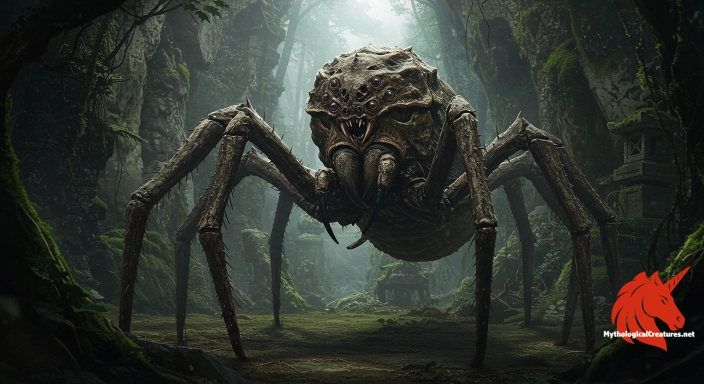
Dare to Meet the Tsuchigumo....
Curated by the Mythological Creatures Team
Series editor: Mythological Creatures Directory
Primary desk: Hellenic & Ancient Mediterranean Desk
(rev. November 2025)