
Avatea: Avatea, also known as Vatea, is a lunar deity and the father of gods and men in Cook Islands mythology.
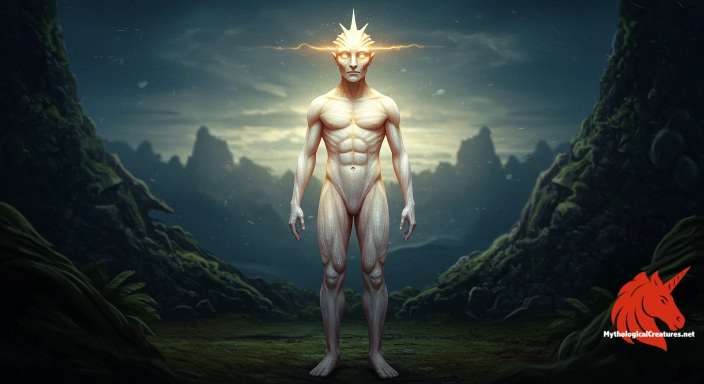
Avatea
Avatea - Avatea is vital in the origin story of the Mangaian people and signifies the unity of celestial forces.
Origins & First Encounters
Avatea emerges from the vibrant lore of the Cook Islands as a figure of radiant divine authority and creative power. His legacy as a lunar deity and the forefather of gods and men breathes life into the ancient narratives that have shaped indigenous identity. Born from the mystical interplay of light and darkness, his myth provides a bridge between the celestial and the earthly realms. The very name Avatea, echoing the words for 'noon' and 'light', underlines his enduring association with brilliance and renewal. His presence is interwoven with stories of cosmic balance, where the sun and moon converge in his visionary eyes. Celebrated in Mangaian myth, he occupies a central role in the origin stories that cement his status as the progenitor of divine lineage. The rich oral traditions of the islands have long kept his tale alive, imbuing each recounting with spiritual and moral significance. Embedded in the cultural fabric of the Cook Islands, his story resonates as much with historical memory as with the enduring mysteries of existence. His myth not only recounts a creation narrative but also inspires a continual reimagining of cosmic beauty and power.
Source Texts & Tale Variants
The narrative of Avatea is sustained by a diverse array of oral recitations and traditional chants that have been transmitted through generations. Various versions of his origin, particularly the Mangaian myth, provide insight into his role as the paternal figure of gods and men while highlighting his celestial attributes. Early chroniclers and later anthropologists have helped to consolidate his myth, capturing its lyrical quality and the symbolic merging of light and darkness. Although written records are sparse, the enduring oral heritage offers a robust tapestry of his story through folkloric song and ceremonial storytelling. Some accounts place greater emphasis on his relationship with the lunar cycle, while others accentuate his connection to the solar realms. Traditional narratives often shift nuances to accommodate local beliefs, resulting in distinctive regional variations that reflect the dynamic nature of his persona. Carved motifs and ritual performances across the Cook Islands further enrich the primary sources that detail his cosmic essence. Storytellers continue to adapt his myth to contemporary cultural contexts, ensuring that his divine biography remains a living tradition. The multiplicity of sources underscores the intricacies of his character and the rich diversity of the mythic tradition in which he resides.
Form & Powers
In artistic depictions, Avatea is portrayed as a resplendent being whose very form shimmers with the light of the cosmos. His eyes, imbued with the dual fire of both the sun and the moon, command attention as gateways to the celestial realm. Traditional carvings and illustrative art capture his form with an ethereal quality, often highlighting luminous features that set him apart from mortal figures. His countenance is typically rendered with smooth, almost iridescent skin that reflects the clear brilliance of a sunlit sky. In many illustrations, strands of his hair cascade like beams of light, symbolising the flow of day into night. The physical attributes of his form are enriched with symbolic embellishments, including heraldic patterns that echo the phases of the moon and the rhythmic cycles of the tide. Sculptures and paintings alike reveal a figure of majestic proportion, radiating both benevolence and solemn authority. His athletic yet otherworldly build conveys strength tempered by the gentle luminescence of his divine lineage. Across various artistic traditions, every detail reinforces his identity as a personification of light and the eternal cycles of nature.
Regional Faces
Across the breadth of Polynesian narratives, the character of Avatea is celebrated with subtle yet distinct regional variations. In some island traditions, his identity is more closely aligned with the solar aspects of light, while in others he embodies both the nurturing glow of the sun and the enigmatic allure of the moon. Local storytellers adapt his myth to mirror the natural rhythms and astronomical observations unique to their environment. Certain regional adaptations embellish his origins with additional mythic feats, reinforcing his stature as the progenitor not only of gods but also of human endeavours. In a few communities, ceremonial performances and dance recitals attribute to him unique attributes reflective of local flora, fauna, and cosmic cycles. The artistry in wood carvings and tattoo designs may reveal regional motifs that echo the specific environmental features of each island. These local renditions ensure that while the essential character of Avatea remains unchanged, his narrative harmonises with the varied cultural expressions found across the Pacific. Each island community, by weaving its own observations into his legend, affirms the adaptability and universal appeal of his myth. Thus, the regional adaptations of his story highlight the dynamic interplay between tradition and local identity in the wider Polynesian cultural landscape.
Cultural Parallels
Myth across the world often mirrors the dualistic nature of Avatea’s character, where the interplay of creation and illumination finds reflection in various cultural deities. Similar to figures found in other mythic traditions, his composite qualities remind one of the dual aspects present in many creation stories where celestial light is both a guide and a guardian. Comparable to certain Polynesian divinities such as Tangaroa and Maui, his myth emphasises the role of divine progenitors as both ancestry and cosmic regulators. His radiant eyes that echo the solar and lunar bodies find a subtle parallel in other mythologies that fuse celestial observation with divine insight. Across disparate cultures, the motif of a father figure whose essence is imbued with light permeates ancient lore, establishing a cross-cultural dialogue on creation and order. In the broader context of global myth, his narrative resonates with the universal symbolism of light as a life-giving force and as a beacon of hope. The comparative analysis reveals that while his myth is distinctly Polynesian, its underlying themes are shared with other indigenous narratives around the world. The transformation of natural phenomena into symbols of divinity provides a compelling reflection on the human need to explain and venerate the cosmos. In exploring these parallels, one finds that Avatea’s legacy is interwoven with a pan-cultural tapestry of celestial myth and creative inspiration. This synthesis of mythic themes underscores the common human quest to understand the interplay between light, life, and the divine.
Legacy & Modern Evolution
Over the centuries, the portrayal of Avatea has undergone a fascinating evolution, reflecting shifts in cultural perceptions and artistic expression. His early depictions as a primordial source of light and life have gradually been reinterpreted through the lens of contemporary artistic and cultural movements. Modern visual artists and writers draw upon his imagery to connect ancient traditions with current themes such as environmental stewardship and cultural resilience. The enduring symbolism of his luminous eyes, representing both the sun and the moon, continues to inspire reinterpretations that celebrate duality and cosmic harmony. Contemporary Polynesian art frequently revisits his myth, infusing it with modern design sensibilities while respecting its ancestral roots. His myth has transcended its traditional boundaries to become a touchstone in discussions about identity and heritage in the Pacific region. Festivals, exhibitions, and cultural revival programmes often feature Avatea as a central figure, highlighting his role in the cultural renaissance of the Cook Islands. As academic and artistic communities engage anew with his legend, his story is seen as a living bridge that connects the past with the present. This ongoing dialogue between ancient myth and modern interpretation ensures that Avatea’s legacy remains as vibrant and illuminating as the light he so famously personifies.
Interesting Fact
Avatea’s unique portrayal, where his eyes embody both the sun and the moon, underscores a sophisticated understanding of cosmic duality in Cook Islands mythology.
For indie creators
Give your myth project a permanent home
Indie authors, artists, small studios, and makers can secure an annual, non-intrusive sponsor slot that meets readers where they explore.
Obtain more informationQuick Creature Info
Origin:
Features:
Associations:
Our Mythic Legendary Rating:

Also Sometimes Known As:
Habitat:
Supernatural Powers:
Physical Attributes:
Abilities:
Behavior:
Lore:
Related Creatures, Tales or Lore
- TTagaloa
- IIo
- RRangi
References
Discover Another Mythical Legend You May Not Have Heard Of?
Uncover the mysteries of ancient folklore and expand your knowledge of legendary beings from cultures around the world.
Dare to Meet the Helhest....
Curated by the Mythological Creatures Team
Series editor: Mythological Creatures Directory
Primary desk: Asian & Pacific Myth Cycles Desk
(rev. November 2025)