
Azukibabaa: Azukibabaa is a mysterious Japanese yōkai known as the bean hag, appearing as an old woman whose eerie sound mimics the washing of azuki beans.

Azukibabaa
Azukibabaa - Embodies the enigmatic and eerie aspects of rural Japanese folklore, serving as a cautionary and mysterious figure in regional myth.
Origins & First Encounters
Azukibabaa, commonly known as the Bean Hag, emerges as an enigmatic figure within Japanese folklore, her legend echoing the soft and unusual sound of azuki beans being washed. Born from the rural traditions of Miyagi Prefecture, she has long captivated local imaginations and found her place within the wider tapestry of yōkai lore. Her origins are steeped in oral traditions where the mundane act of washing beans transforms into an eerie ritualistic event, signalling the presence of something otherworldly. Early attestations of her story appear in local lore and regional whispers, hinting at a time when every household sound might harbour a spectral secret. Her depiction as an old woman with a mysterious aura reflects a complex interplay between domestic familiarity and the uncanny, embodying both a cautionary symbol and a vessel of lost traditions. Over time, these narratives have been passed down from one generation to the next, preserving not only the sound but also the spirit of rural mysticism. The legend of Azukibabaa resonates deeply as it bridges once ordinary domestic practices with the realm of supernatural influence. The Bean Hag remains a potent reminder of the era when every creak and whisper might be a sign of a hidden, spectral presence. Her enduring myth highlights how the quotidian can be transformed into a canvas for cultural symbolism. Even today, her legacy continues to provoke thought about the relationship between everyday life and the mysterious world beyond.
Source Texts & Tale Variants
The story of Azukibabaa is recorded in a myriad of regional folktales and sporadic historical documents that capture the imagination of those who cherish Japanese yōkai mythology. Various local manuscripts from past centuries, often collected during the Edo period, offer fragmented yet compelling glimpses into her mysterious character. Oral accounts, passed down through generations, have further enriched the narrative with subtle variances that shift her character between benevolence and forewarning. Some of these texts include early compilations of yōkai illustrated in traditional emakimono, where the Bean Hag is depicted with an ambiguous expression. In other sources, her presence is interwoven with the daily rituals of rural households, turning a simple sound into a symbol of both routine and the supernatural. The variations in the recorded sources reveal a cultural flexibility, as some tales highlight her as a guardian of domestic space while others emphasise a more menacing aspect. Printed compendiums of regional legends have also contributed to a collective memory that keeps her tale alive in modern retellings. Story variants often diverge on details such as her motivations and the precise circumstances under which her signature sound is heard, making her legend a mosaic of communal belief. Historical archives, though limited, provide enough literary evidence that her myth was not confined to a single narrative but was instead a living story that evolved with its tellers. The diverse sources collectively celebrate the Bean Hag as both a keeper of mystery and a mirror of cultural evolution.
Form & Powers
Azukibabaa is typically visualised as an elderly woman whose appearance is as enigmatic as the sound she produces. Her visage is marked by deep wrinkles and a weathered expression that hints at the passage of countless, secretive years. Often, she is draped in a tattered kimono that seems to have lost its vibrant hues to the ravages of time, with the fabric appearing almost fluid in the shadowy light of night. Her hair, unkempt and silvered with age, cascades in loose, disorganised strands that contribute to her spectral presence. Eyes that are both piercing and distant seem to hold the memories of forgotten eras, while her thin, gnarled hands evoke a sense of both frailty and otherworldly power. Some depictions even suggest that her form can shift unpredictably, a trait that underscores the mutable nature of yōkai beings. The iconic sound of azuki bean washing is so closely associated with her that some artistic renditions include visual representations of sound waves, linking her auditory signature with her physical manifestation. In certain interpretations, her figure may appear diminutive or, on rare occasions, unnaturally large, illustrating the transformative quality inherent in her myth. The physical features of the Bean Hag serve as a canvas for the interplay between decay and mysticism, symbolising the transient boundary between the world of the living and that of the spirits. Overall, her appearance is a compelling blend of the familiar and the uncanny, making her both a relatable elder and a figure of eldritch mystery.
Regional Faces
In the regions surrounding Miyagi Prefecture, the legend of Azukibabaa has undergone a fascinating transformation, adapting to local social and environmental nuances. While her core identity as the Bean Hag remains intact, varying regional retellings inject unique elements that reflect the diverse tapestry of Eastern Japanese folklore. In some neighbouring areas, she is portrayed with a softer demeanor, almost a benign matron who cautions rather than curses, adding layers to her character beyond the stereotypical image of horror. Other communities emphasise her eerie attributes, portraying her as a harbinger of misfortune whose presence is intrinsically tied to the cyclical rhythms of rural life. Urban legends have also emerged, where modern settings provide a new stage for her traditional narrative, blending historic superstition with contemporary anxieties. Often, these retellings address local practices and communal events, sometimes linking her mysterious sound to specific regional festivals or rituals. Cultural adaptations have led to remarkable variations, such as associating her with the transition of seasons or the natural decay seen in abandoned rural homesteads. The essence of her myth is fluid enough that even slight geographical shifts encourage storytellers to modify her character to suit local tastes. This regional diversity highlights how the myth remains vibrant and responsive to the cultural dynamics of individual communities. Ultimately, the evolving portrayals of Azukibabaa across different areas underscore the adaptability of folklore in maintaining its relevance through time and place.
Cultural Parallels
The character of Azukibabaa finds intriguing parallels with various mythological figures across global traditions, reflecting a shared archetype of the mysterious crone whose presence blurs the line between safety and peril. Much like the hag figures in European folklore, her persona embodies both the wisdom and the ominous power often attributed to the older generation. In East Asian mythology, similar spectral old women are found in diverse narratives, each serving as both cautionary figures and symbols of transformation. The Bean Hag’s reliance on a distinctive, everyday sound as her hallmark sets her apart, linking her directly to the familiar rhythms of home life, unlike many counterparts whose supernatural expressions are more overtly visual or dramatic. Comparative analysis reveals that while Western legends often focus on curses and witchcraft, the Japanese yōkai tradition, represented by Azukibabaa, tends to merge the supernatural with the quotidian. In this light, she functions as a liminal figure, bridging the gap between the mundane world and that of mysterious affectations. Artists and storytellers have drawn comparisons between her subtle, sound-based manifestation and other mythic figures whose influence is felt rather than fully seen. These similarities underscore a universal human fascination with ageing, transformation, and the fear of what lies beyond ordinary experience. The Bean Hag’s narrative thus resonates with global themes of mortality, the uncanny, and the transformative power of folklore. In essence, Azukibabaa stands as a uniquely Japanese interpretation of a widely recognised mythological archetype, enriched by the specific cultural context from which she arises.
Legacy & Modern Evolution
Over the centuries, the legend of Azukibabaa has morphed from a whisper in the dark of rural vigils to a celebrated emblem of Japan’s rich folklore heritage. In earlier times, her eerie presence served as both a warning and a mysterious explanation for unexplained sounds within the household. As society modernised, the narrative surrounding the Bean Hag evolved, absorbing contemporary themes that reflect shifts in societal values and the constant interplay between tradition and modernity. Modern media, including manga, anime, and literature, have embraced her character, often reimagining her in ways that blend traditional mystique with modern sensibilities. In these new portrayals, she sometimes appears as a misunderstood figure far removed from the purely malevolent image of old tales, adding emotional depth to her character. The iconic sound associated with her remains a powerful symbol, evoking nostalgia for fading customs while also serving as a metaphor for the persistence of cultural memory. Her appearance in digital storytelling and modern art highlights how adaptable folklore can be when recontextualised for contemporary audiences. Traditional festivals and local cultural events continue to feature her myth, underscoring how deeply embedded she is within the regional identity. This enduring transformation emphasizes a broader trend in which ancient stories are given new life, resonating with audiences who are equally drawn to the mysterious heritage of the past. Ultimately, Azukibabaa’s legacy is a living testament to how folklore can endure and thrive by consistently adapting to the changing currents of time.
Interesting Fact
Azukibabaa's unique auditory signature, which mimics the sound of azuki bean washing, distinguishes her from other yōkai and underscores the creativity of regional Japanese folklore.
Sponsor this space
Tasteful, fixed-fee placements for myth projects
No bidding wars or flashing banners. We offer simple placements for a small set of creators and brands aligned with our readers.
Request further detailsQuick Creature Info
Features:
Our Mythic Legendary Rating:

Also Sometimes Known As:
Habitat:
Supernatural Powers:
Physical Attributes:
Abilities:
Behavior:
Lore:
Related Creatures, Tales or Lore
- YYuki-onna
- YYamamba
- KKuchisake-onna
References
Discover Another Mythical Legend You May Not Have Heard Of?
Uncover the mysteries of ancient folklore and expand your knowledge of legendary beings from cultures around the world.
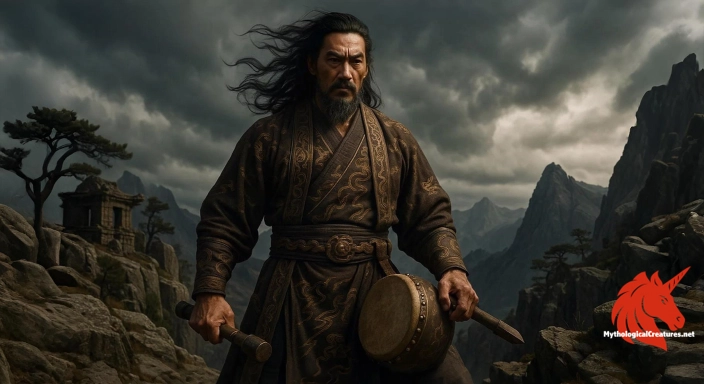
Dare to Meet the Leigong....
Curated by the Mythological Creatures Team
Series editor: Mythological Creatures Directory
Primary desk: Asian & Pacific Myth Cycles Desk
(rev. November 2025)